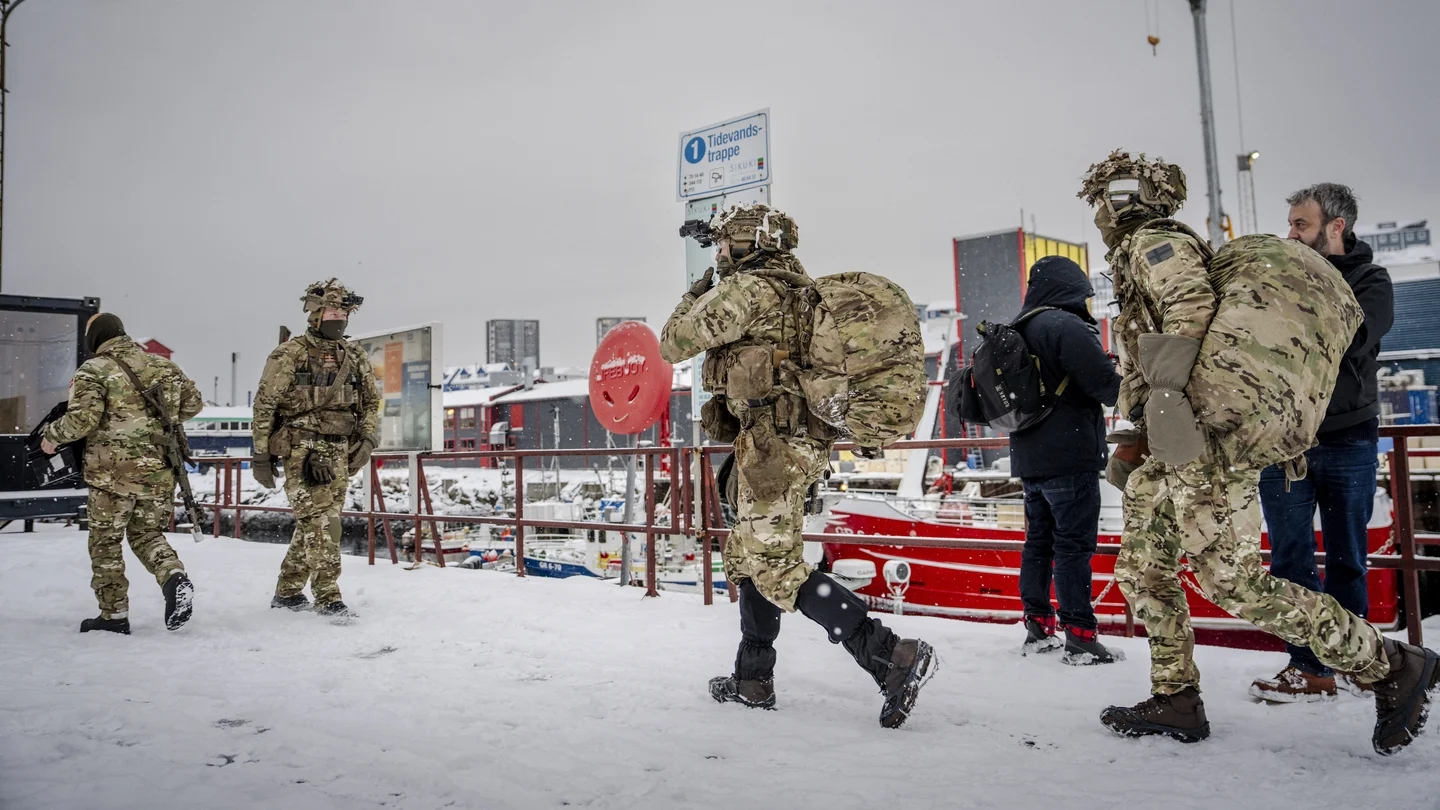
Germany has withdrawn its entire military deployment from Greenland in a move widely seen as a direct response to U.S. President Donald Trump’s decision to impose a 10 percent tariff on goods imported from the European Union. Although the deployment consisted of just 15 soldiers, the decision carries significant political and diplomatic weight.
The troop withdrawal comes shortly after Trump announced the new tariffs, a move that has already begun to strain relations between Washington and its European allies.
While Germany’s military presence in Greenland was small and largely symbolic, it represented Berlin’s commitment to NATO cooperation in the strategically sensitive Arctic region. Its removal signals growing frustration in Europe over unilateral trade actions by the United States and their wider implications for alliances.
Germany’s Defence Ministry described the decision as a “strategic reassessment” rather than a complete retreat from NATO operations. Officials emphasized that Berlin remains committed to the alliance but is reviewing how and where it deploys its forces amid shifting political and economic realities.
Trump’s tariff announcement has revived trade tensions that defined much of his earlier presidency. With his renewed political influence, European governments appear increasingly unwilling to absorb economic pressure without responding in diplomatic or strategic ways. Germany’s move, though modest in military terms, reflects a broader pushback against policies seen as disruptive to long-standing transatlantic cooperation.
Greenland, an autonomous territory within the Kingdom of Denmark, has gained increasing geopolitical importance in recent years. Melting ice due to climate change is opening new Arctic shipping routes and access to natural resources, drawing the attention of global powers including the United States, Russia, and China. European visibility in the region has therefore taken on added strategic value.
By pulling its troops from Greenland, Germany risks reducing Europe’s footprint in the Arctic at a time of growing competition. At the same time, the move highlights how quickly economic disputes can spill over into military and security decisions, reshaping alliances and regional dynamics.
As trade tensions between the U.S. and the EU resurface, Germany’s action serves as a reminder that economic policy and security cooperation are deeply intertwined—and that even symbolic military gestures can send powerful messages on the global stage.
Discover more from Scoop Hub
Subscribe to get the latest posts sent to your email.