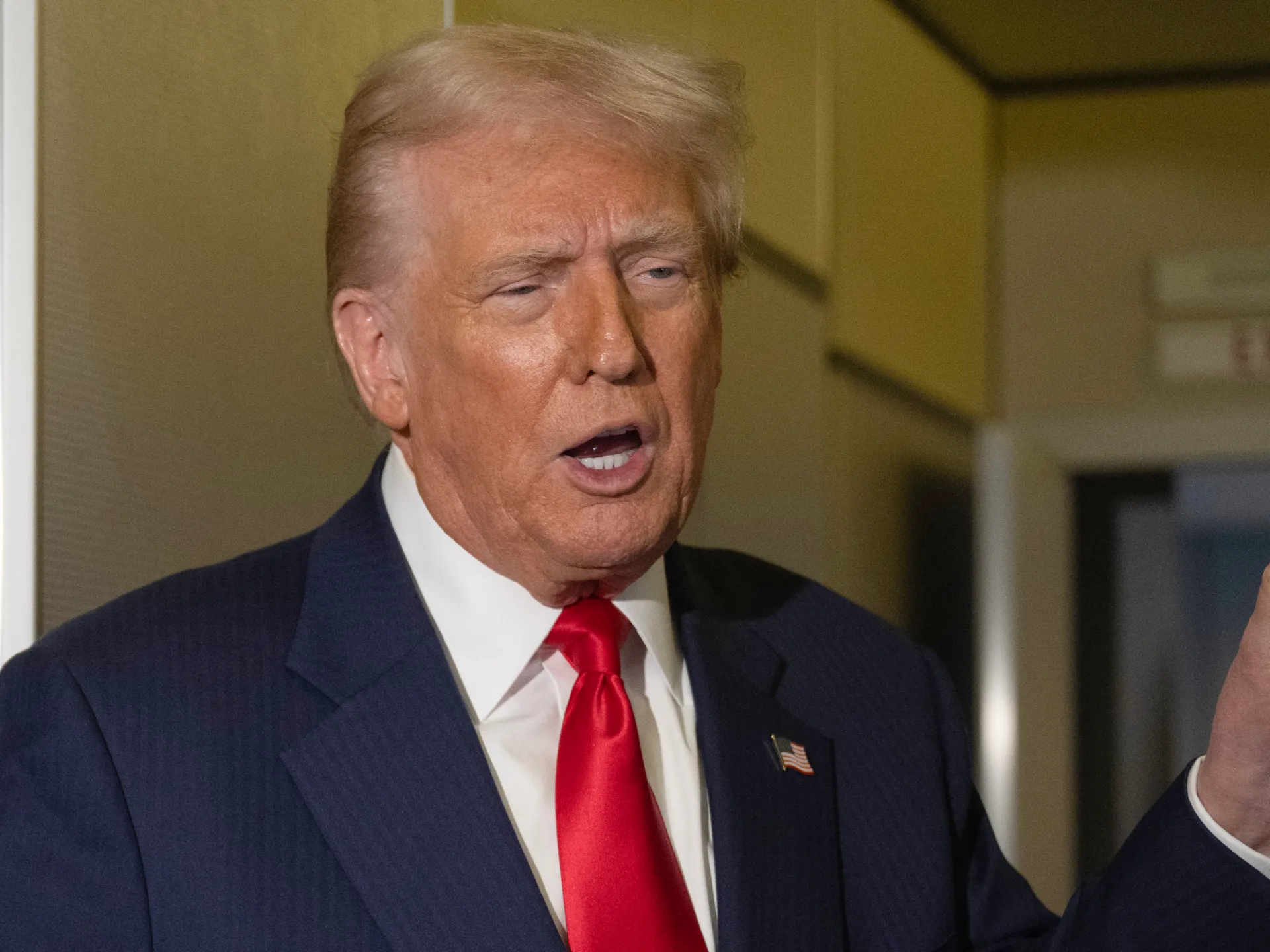
U.S. President Donald Trump has reignited global controversy after declaring there would be “no going back” on his ambition for the United States to take control of Greenland, a move that has unsettled European allies and raised fresh concerns about NATO unity.
Speaking on Tuesday after a conversation with NATO Secretary General Mark Rutte, Trump framed Greenland as a strategic necessity, arguing that the Arctic island is essential to both American and global security. In a statement shared on social media, he insisted that his position was non-negotiable, saying Greenland was “imperative for National and World Security.”
The comments came amid a series of provocative social media posts, including AI-generated images showing Trump standing in Greenland with a U.S. flag and another depicting him addressing leaders beside a map that portrayed Greenland and Canada as part of the United States. The imagery, along with Trump’s rhetoric, has intensified diplomatic unease across Europe.
Greenland is an autonomous territory under the sovereignty of Denmark, a fellow NATO member. Trump’s refusal to rule out the use of force to gain control of the island has therefore been viewed by many European leaders as a direct challenge to the alliance that has underpinned Western security for decades.
Behind closed doors, officials have struggled to formulate a unified response, wary of escalating tensions while defending established international norms.
Trump’s stance has also revived fears of renewed trade conflict between the United States and Europe. The president has a history of using tariffs as leverage, and he recently threatened to impose duties as high as 200 percent on French wines and champagnes.
Although his Treasury Secretary, Scott Bessent, sought to calm markets by dismissing what he called “hysteria” over Greenland, investors and companies remain cautious, recalling the prolonged market volatility caused by past transatlantic trade disputes.
Adding to the diplomatic drama, Trump leaked private messages from world leaders, including French President Emmanuel Macron, who reportedly questioned Trump’s intentions over Greenland. The unusual disclosure further strained relations at a time when European governments are already grappling with how to respond to Washington’s increasingly confrontational tone.
As the situation unfolds, Trump’s renewed focus on Greenland highlights broader questions about U.S. foreign policy, alliance politics, and Arctic geopolitics. With climate change opening new shipping routes and increasing access to natural resources in the Arctic, Greenland’s strategic importance has grown significantly.
However, Trump’s blunt approach has left allies uneasy, fearing that the dispute could weaken NATO cohesion and destabilize long-standing diplomatic and economic ties between the United States and Europe.
For now, European leaders are treading carefully, balancing the need to defend sovereignty and alliance principles against the risk of provoking further escalation from Washington.
Discover more from Scoop Hub
Subscribe to get the latest posts sent to your email.