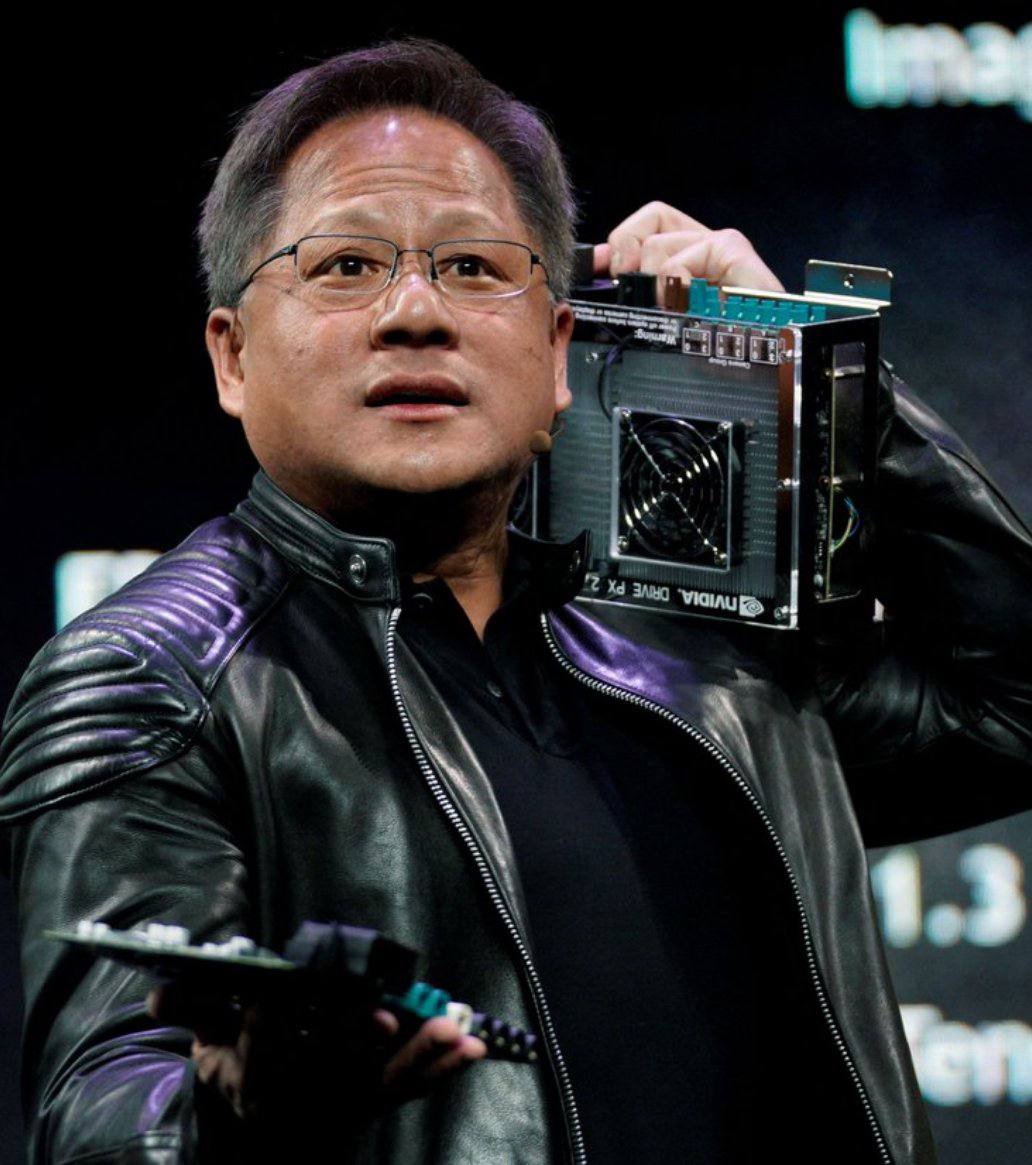
Nvidia CEO Jensen Huang has credited Microsoft Windows as a key reason behind the founding of Nvidia, saying the technology helped inspire the vision that eventually turned the company into a global leader in graphics processing and artificial intelligence.
Huang made the remarks on October 7, 2026, during an event in San Francisco alongside Microsoft CEO Satya Nadella, where the companies showcased new Windows computers powered by Nvidia technology. Reflecting on Nvidia’s early beginnings, Huang explained that the idea for the company took shape in late 1992, when Windows 3.1 was helping redefine what personal computers could become.
“If not for Windows, Nvidia wouldn’t have been founded,” Huang said, highlighting the long-standing relationship between the two technology companies.
Nvidia was founded in 1993 by Jensen Huang, Chris Malachowsky, and Curtis Priem. At the time, the founders envisioned a future in which personal computers could deliver advanced 3D graphics, run sophisticated video games, and support professional design work.
Huang recalled that he and his co-founders had primarily worked with workstations and powerful computing systems before imagining how personal computers could evolve.
Windows helped make that vision more practical by creating an environment in which graphics hardware could become an essential part of the personal computing experience. Although Nvidia is now widely associated with artificial intelligence chips, its early ambitions were closely connected to computer graphics and the growing gaming industry.
Huang explained that Microsoft’s Windows 95 played an important role in enabling graphics processing units, or GPUs, to connect with personal computers and support increasingly sophisticated applications. Another major milestone was Microsoft’s DirectX technology, particularly Direct3D, which allowed software developers to access and use the capabilities of graphics hardware.
The collaboration between Microsoft and Nvidia continued as graphics technology advanced. Huang highlighted their work around DirectX 8 and programmable shaders, which helped establish the technological foundations for Nvidia’s later innovations.
This development paved the way for Nvidia’s GeForce graphics cards, which became popular among gamers, creators, and computer enthusiasts. The relationship between software and hardware proved crucial: powerful graphics chips needed software capable of taking advantage of their capabilities.
The influence of that early collaboration eventually extended beyond gaming and computer graphics. Nvidia later developed CUDA, a software platform that allows developers to use its GPUs for general-purpose parallel computing rather than graphics alone.
CUDA became an important tool for researchers and developers working on machine learning, scientific computing, and artificial intelligence.
Huang argued that without the earlier evolution of Windows, GeForce graphics technology and CUDA might never have emerged in the same way. He also connected this technological progression to the computing capabilities that helped researchers advance deep learning.
Today, Nvidia GPUs are central to the development and deployment of many AI systems, illustrating how technology originally advanced for one purpose can eventually become essential to an entirely different industry.
Huang’s comments also underscored the decades-long relationship between Nvidia and Microsoft. During the event, Nadella joked about the difference in the companies’ market values, suggesting that Huang should transfer some of Nvidia’s market capitalization back to Microsoft.
The exchange reflected the companies’ shared history and the changing balance of power in the technology industry. While Microsoft helped provide the software environment that supported Nvidia’s early growth, Nvidia’s graphics processors and AI computing platforms have become increasingly important to Microsoft’s own cloud and artificial intelligence ambitions.
The partnership continues to evolve as both companies invest in technologies designed to bring more advanced AI capabilities to personal computers.
Jensen Huang’s remarks offer a reminder that even the world’s most influential technology companies often emerge from partnerships and ideas that develop over many years. For Nvidia, the early vision of bringing advanced 3D graphics to personal computers helped launch a journey that eventually extended into gaming, scientific computing, and artificial intelligence.
Discover more from Scoop Hub
Subscribe to get the latest posts sent to your email.