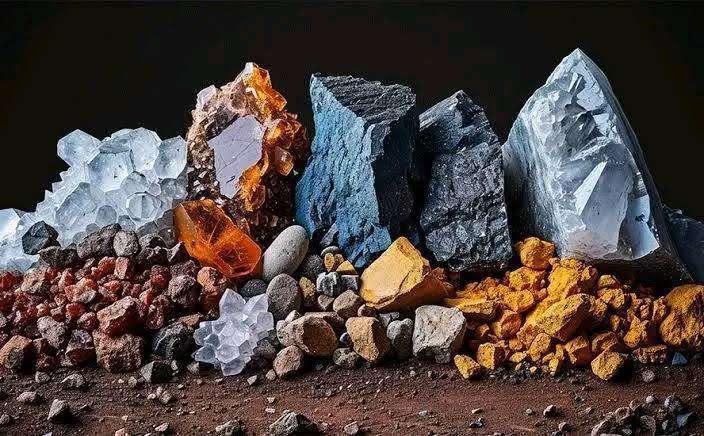
Nigeria has recorded a major breakthrough in its mining sector following the discovery of significant deposits of platinum group metals, gold, nickel, copper, lithium, and rare earth elements in Kaduna State.
The announcement was made by the Minister of Solid Minerals Development, Dele Alake, during the opening ceremony of the African Natural Resources and Energy Investment Summit 2026 in Abuja. The summit, held under the theme “One Africa, One Resource Vision,” brought together stakeholders from across the continent to discuss investment opportunities and sustainable resource development.
According to the minister, the newly identified mineral province was verified by the Nigerian Geological Survey Agency (NGSA) and represents one of the most important mineral discoveries in the country in recent years. He revealed that the discovery was made by a private exploration company working in collaboration with the agency.
Alake described the find as a world-class polymetallic mineral province containing exceptionally high-grade deposits of strategic minerals that are increasingly in demand globally due to their critical role in clean energy technologies, electric vehicle production, advanced manufacturing, and modern industrial applications.
The minister stated that the discovery has the potential to position Nigeria among the world’s emerging destinations for critical minerals and mining investments, especially at a time when global demand for lithium, rare earth elements, and other strategic resources continues to surge.
The announcement coincided with another significant development in the mining sector, as Steron Mining and Company Limited unveiled an estimated 3.3 million metric tonnes of lithium reserves at its Abuja mining site. The revelation further highlights the growing momentum in Nigeria’s mineral exploration activities and the government’s efforts to transform the country into a major player in the global critical minerals market.
Alake noted that the Federal Government is implementing sweeping reforms aimed at repositioning the mining sector as a key driver of economic growth and industrialization. He explained that the administration of President Bola Tinubu has identified solid minerals as a central pillar of its economic diversification strategy and is actively promoting policies designed to attract investors, strengthen transparency, and encourage local value addition.
According to the minister, Nigeria is moving away from the long-standing practice of exporting raw minerals and is instead focusing on domestic processing, refining, and manufacturing. He emphasized that new mining lease applicants are now required to submit comprehensive value-addition plans before obtaining approvals.
The policy shift is already producing results, with billions of dollars flowing into mineral processing projects across the country. Alake disclosed that investors have committed approximately $800 million to a lithium processing project, while another $600 million lithium processing facility is being developed in Nasarawa State.
He also revealed that a $200 million lithium processing plant near Abuja has been completed and is awaiting commissioning, while another company has finalized a $50 million lithium factory in the Federal Capital Territory and is expanding its refining operations.
Beyond lithium, the government is also witnessing increased investments in gold refining and other mineral processing facilities. Alake pointed to a $1 billion iron ore-to-steel project in Kogi State as another example of the type of industrial investments that are helping reshape Nigeria’s economy and create stronger linkages between mining and manufacturing.
The minister further highlighted the impact of recent reforms on government earnings from the sector. According to him, mining revenue has grown significantly, rising from about N6 billion before the current administration took office to over N38 billion in 2024. By the end of 2025, revenues had surpassed N70 billion, reflecting growing investor confidence and increased activity within the industry.
The discovery in Kaduna is expected to strengthen Nigeria’s position in the global race for critical minerals, attract fresh investments, create jobs, and support the country’s ambition to build a more diversified and industrialized economy driven by value-added resource development rather than raw material exports.
Discover more from Scoop Hub
Subscribe to get the latest posts sent to your email.