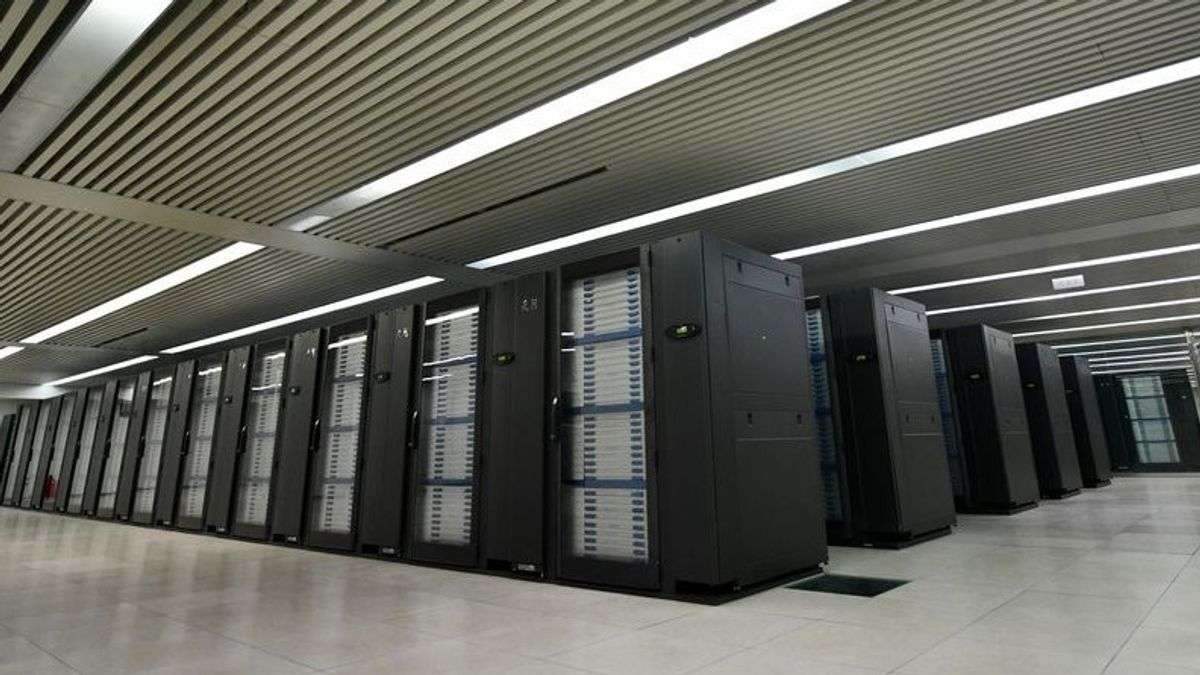
China has reclaimed the top position in the global supercomputing race after its LineShine system was ranked as the world’s fastest supercomputer, surpassing the United States’ El Capitan and marking the country’s return to the top of the prestigious TOP500 rankings after a three-year absence.
The LineShine supercomputer, located at the National Supercomputing Centre in Shenzhen, secured the number one spot in the latest edition of the TOP500 list, a globally recognized ranking published twice a year to evaluate the performance of the world’s most powerful supercomputers.
A notable aspect of the achievement is that LineShine is powered entirely by domestically designed Chinese chips, highlighting Beijing’s ongoing efforts to strengthen technological self-reliance amid increasing competition with the United States in advanced computing and artificial intelligence.
The victory comes at a time when both nations are investing heavily in next-generation technologies, including artificial intelligence, semiconductor development, and quantum computing. The growing rivalry was further underscored this week when U.S. President Donald Trump signed an executive order aimed at accelerating America’s leadership in the emerging field of quantum computing.
By topping the TOP500 rankings, LineShine dethroned El Capitan, the U.S. supercomputer housed at Lawrence Livermore National Laboratory. El Capitan is used by the U.S. government for critical scientific and national security research, including maintaining and developing the country’s nuclear weapons stockpile.
Despite China’s achievement, technology experts caution that leading the TOP500 list does not necessarily mean China possesses the most powerful system for artificial intelligence workloads. The ranking primarily measures performance on traditional scientific computing tasks rather than the AI-focused applications that increasingly dominate today’s technology landscape.
In fact, LineShine ranked fourth on a separate benchmark designed to evaluate computing systems on tasks more closely related to artificial intelligence. This distinction has led some analysts to argue that the race for AI dominance cannot be measured solely by traditional supercomputing rankings.
For decades, supercomputers were primarily developed by governments, research institutions, and universities to tackle complex scientific problems such as climate modeling, nuclear simulations, and advanced physics research. The TOP500 benchmarks were created to assess performance in these types of high-performance computing environments.
However, the rapid rise of artificial intelligence has transformed the industry. Technology giants such as Microsoft, Amazon, and Google have built enormous computing infrastructures optimized specifically for AI training and inference, creating a new category of systems that often operate outside traditional supercomputing rankings.
As a result, while China’s latest achievement represents a major milestone in high-performance computing and demonstrates significant progress in domestic chip development, experts say the broader competition in artificial intelligence remains far more complex.
Nevertheless, LineShine’s rise to the top signals China’s growing technological capabilities and reinforces the country’s ambition to become a global leader in advanced computing technologies. As the battle for technological supremacy intensifies, supercomputing, AI, and quantum computing are expected to remain at the center of strategic competition between the world’s two largest economies.
Discover more from Scoop Hub
Subscribe to get the latest posts sent to your email.