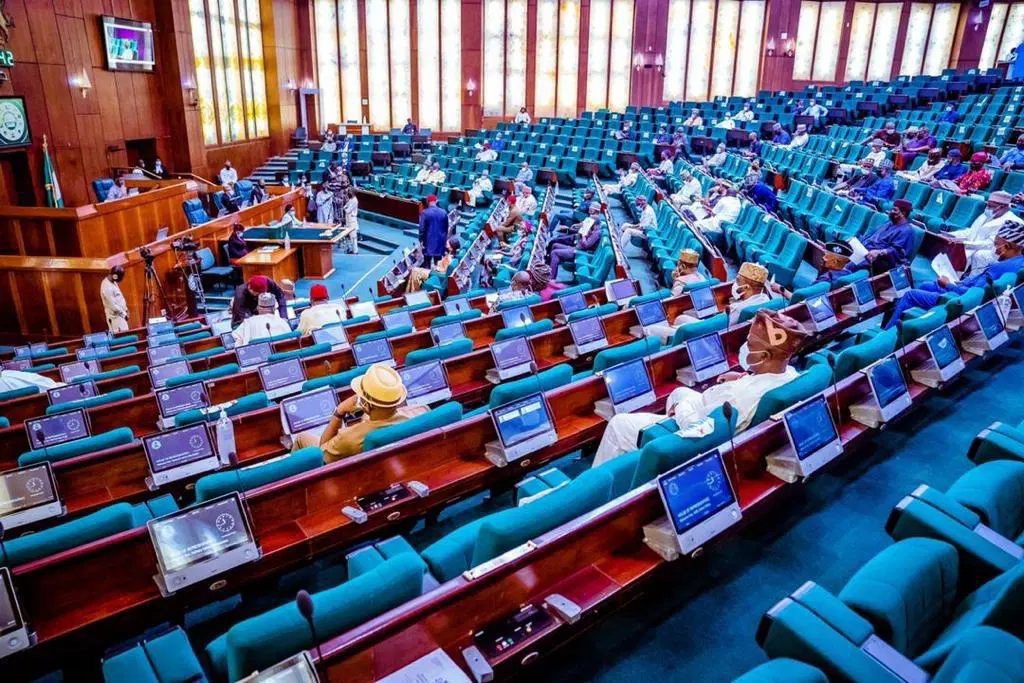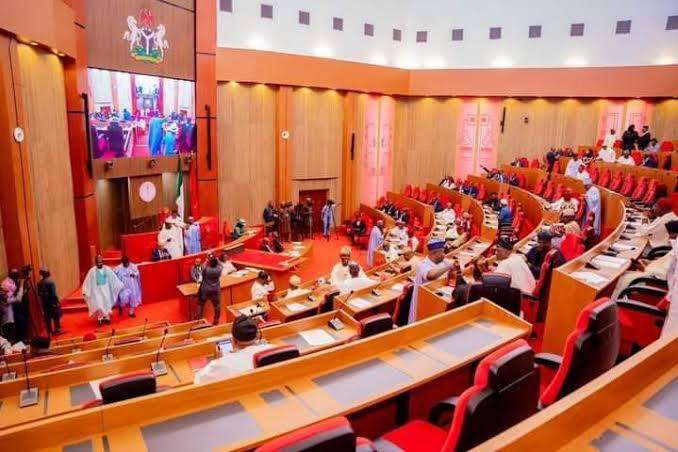
The Nigerian Senate has passed a landmark constitutional amendment bill seeking to establish state police across the country, marking a significant milestone in the long-running debate over decentralizing Nigeria’s policing system to tackle growing security challenges.
The bill was approved on Wednesday after an extensive clause-by-clause review and a manual voting process in which more than two-thirds of senators voted in support of the proposal. The development represents one of the most consequential constitutional reforms undertaken by the 10th National Assembly and could fundamentally reshape Nigeria’s security architecture if it completes the remaining constitutional requirements.
Senate President Godswill Akpabio announced the passage of the legislation during plenary after lawmakers overwhelmingly backed the proposal. The Senate acted on the report of the Committee on the Review of the Constitution, presented by Deputy Senate President and committee chairman, Barau Jibrin.
Before the final vote, senators considered the bill’s provisions in the Committee of the Whole, paving the way for its adoption and eventual passage. Senate Leader Opeyemi Bamidele spearheaded the debate, urging lawmakers to support what he described as a critical reform designed to strengthen internal security and improve responses to local threats across the country.
The proposed legislation seeks to create a dual policing structure that would allow state police services to operate alongside the existing federal police system. If fully implemented, it would end the exclusive control of policing by the Federal Government and give states greater authority over law enforcement within their jurisdictions.
One of the key provisions empowers state governors to appoint Commissioners of Police for their respective states, subject to confirmation by state Houses of Assembly. While the Nigeria Police Force would continue to be headed nationally by the Inspector-General of Police, each state police service would have its own commissioner responsible for overseeing operations within the state.
The bill also defines the relationship between governors and state police commands. Under the proposed framework, governors would be able to issue lawful policy directives relating to public safety and order within their states, while operational activities would remain subject to legal safeguards and oversight mechanisms.
To address longstanding concerns that state police could be used as political tools, lawmakers incorporated provisions aimed at protecting civil liberties and democratic freedoms. The legislation specifically prohibits state police authorities from arresting, detaining, investigating, or deploying force against individuals, political parties, or groups solely for criticizing government actions, except where such actions are carried out in accordance with existing laws and due process.
Supporters of the reform argue that Nigeria’s current centralized policing structure has become overstretched and is no longer sufficient to effectively address security threats such as banditry, terrorism, kidnapping, communal violence, and organized crime. They believe a decentralized system will improve intelligence gathering, strengthen community policing, and allow faster responses to security incidents at the local level.
The Senate’s approval came after lawmakers abandoned plans to use an electronic voting system due to concerns that technical issues could prevent some senators from participating. Instead, members adopted an open manual voting process, allowing each senator to publicly declare their position on the bill.
Several top government officials witnessed the historic proceedings, including Kaduna State Governor Uba Sani, Ogun State Governor Dapo Abiodun, Ondo State Governor Lucky Aiyedatiwa, and the Chief of Staff to President Bola Tinubu, Femi Gbajabiamila.
While advocates have celebrated the passage as a major victory for security reform, critics continue to warn that state-controlled police forces could potentially be abused by governors to target political opponents or suppress dissent. These concerns have remained at the center of debates surrounding state policing for years.
With the Senate’s approval secured, the bill has now crossed a major legislative hurdle. However, it must still receive the support of state Houses of Assembly and complete other constitutional processes before becoming law.
If eventually enacted, the legislation would bring Nigeria closer than ever to establishing state-controlled police services operating alongside the federal police system, potentially ushering in a new era of security governance and law enforcement across the federation.
Discover more from Scoop Hub
Subscribe to get the latest posts sent to your email.