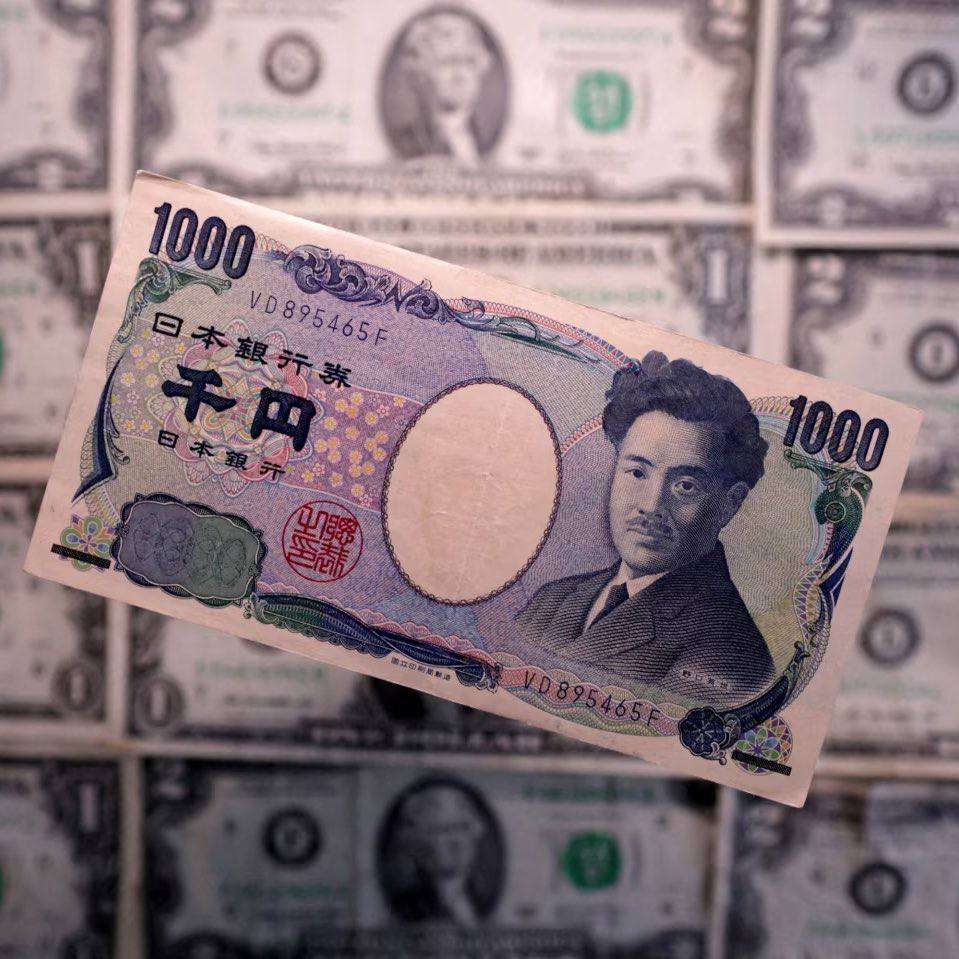
Japan still has significant financial firepower to intervene in currency markets if the yen comes under renewed pressure, with Goldman Sachs estimating that the country holds close to $1 trillion in foreign exchange reserves.
The assessment comes as the yen has weakened again after recovering sharply from last month’s intervention. The Japanese currency moved back toward ¥160 per dollar this week, giving up roughly half of the gains recorded following the intervention.
According to Goldman Sachs, around $200 billion of Japan’s reserves is held in cash or cash-equivalent assets, giving Tokyo substantial liquidity that could be deployed to support the yen if necessary.
Speaking on Goldman Sachs’ Exchanges podcast, strategist Karen Fishman said Japan would not need to use the majority of its reserves to replicate the scale of its previous intervention.
The country may also have access to an additional source of dollar liquidity through the Federal Reserve’s FIMA repo facility. The arrangement allows foreign central banks to obtain dollars by using US Treasury securities as collateral.
That mechanism could potentially give Japan access to a much larger portion of its reserves without forcing it to sell large amounts of US government bonds directly into the market.
The availability of the facility has already influenced currency traders’ expectations. According to Praneet Shah, Goldman Sachs’ head of foreign exchange options trading, investors became more confident about Japan’s ability to defend the yen after recognising that the facility could provide access to its broader reserve holdings.
However, Goldman Sachs argues that the longer-term direction of the yen will continue to depend heavily on the difference between Japanese and US interest rates.
US 10-year Treasury yields were around 4.69 per cent this week, compared with approximately 2.839 per cent for Japan’s 10-year government bonds. The wide yield gap continues to make US assets relatively more attractive to investors and encourages capital flows toward dollar-denominated investments.
The Bank of Japan’s next policy decisions could therefore play an important role in determining whether pressure on the yen intensifies. Financial markets are currently pricing in roughly a 65 per cent probability of a 25-basis-point interest rate increase by the Bank of Japan in September.
Fishman warned that a decision to keep rates unchanged could put fresh pressure on the yen, potentially increasing expectations that Japanese authorities may need to intervene again.
On the other hand, weaker-than-expected US inflation or employment data could reduce upward pressure on the dollar. Such a development could strengthen the yen and potentially revive market expectations of another intervention by Tokyo.
Japan and the United States coordinated their intervention efforts in July, marking the first joint defence of the yen by the two countries since 1998. The move came after the Japanese currency weakened toward ¥164 per dollar, its lowest level in about four decades.
Japan reportedly deployed approximately $85 billion during the first two days of that operation, making it the country’s largest two-day currency intervention outside the period following the 2011 Fukushima disaster.
With almost $1 trillion in reserves and access to additional dollar liquidity mechanisms, Goldman Sachs believes Japan has considerable capacity to act again if necessary. The bigger challenge for Tokyo, however, may be addressing the underlying interest-rate gap that continues to influence investors in favour of the US dollar.
For now, markets are watching the Bank of Japan, the Federal Reserve and incoming economic data closely. Any significant shift in interest-rate expectations could determine whether the yen stabilises or comes under renewed pressure toward the ¥160-per-dollar level.
Discover more from Scoop Hub
Subscribe to get the latest posts sent to your email.