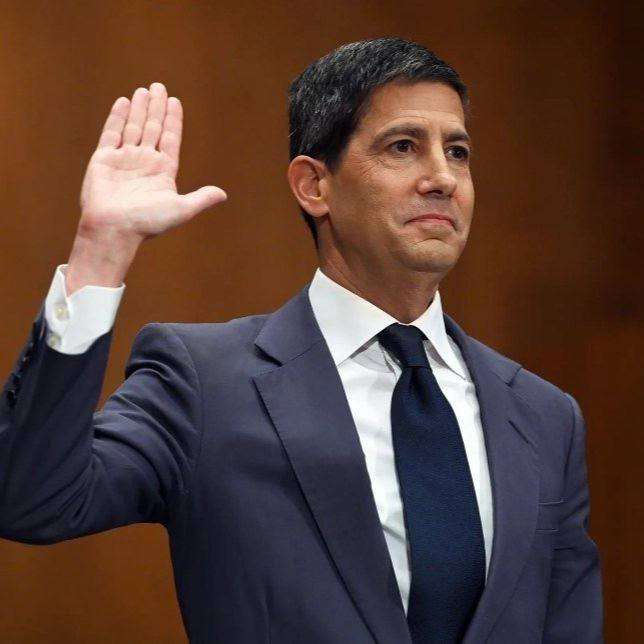
Kevin Warsh has officially been sworn in as the new Chair of the Board of Governors of the Federal Reserve System, replacing Jerome Powell in one of the most influential economic leadership positions in the world.
The swearing-in ceremony took place on Friday at the White House, where Donald Trump praised Warsh and expressed confidence in his leadership abilities during remarks delivered from the East Room.
Warsh, 56, now begins a four-year term at a critical moment for the U.S. economy, with inflation pressures, geopolitical tensions, rising fuel costs, and financial market volatility creating significant uncertainty for policymakers and investors alike.
Speaking during the ceremony, President Trump described Warsh as a highly respected figure with exceptional economic insight, saying he believes the new Federal Reserve chair could become one of the most impactful leaders in the institution’s history.
Warsh also used the occasion to signal that major changes could be coming to the Federal Reserve under his leadership.
In brief remarks after taking the oath of office, he stated that he intends to lead a “reform-oriented” Federal Reserve focused on learning from past successes and failures while moving beyond outdated economic models and frameworks.
His appointment comes at a particularly sensitive period for the American economy. Rising geopolitical instability, including tensions linked to the ongoing U.S.-Israel conflict involving Iran, has contributed to growing economic pressure globally.
The resulting oil market disruptions have reportedly pushed gasoline prices sharply higher, while mortgage rates have climbed to their highest levels in nearly nine months. Inflation has also surged to levels not seen in three years, increasing pressure on the Federal Reserve to carefully manage monetary policy.
Warsh was originally selected by Trump earlier this year at a time when many analysts expected inflation to continue cooling and economic growth to stabilize. However, changing global conditions have significantly altered the economic outlook since his nomination.
As chairman of the Federal Reserve, Warsh will oversee decisions related to interest rates, inflation control, banking regulation, and broader monetary policy — areas that directly impact businesses, financial markets, and millions of Americans.
His leadership will likely be closely watched not only in the United States but across global markets, given the Federal Reserve’s enormous influence on the international economy.
The transition also comes amid ongoing debates about the independence of the central bank, with political pressure on the Federal Reserve increasing in recent years as economic conditions have become more challenging.
With Warsh now officially taking office, investors, economists, and policymakers will be paying close attention to how his vision for reform shapes the future direction of the U.S. economy during an increasingly unpredictable period.
Discover more from Scoop Hub
Subscribe to get the latest posts sent to your email.