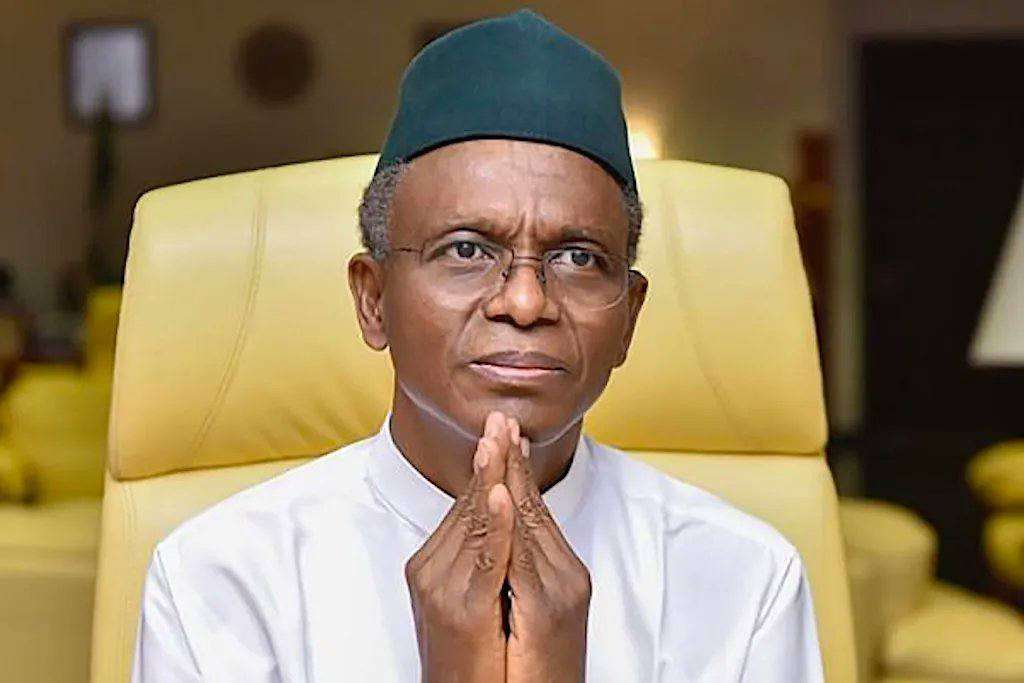
Fresh controversy has erupted surrounding former Kaduna State Governor Nasir El-Rufai after his family alleged that officials of Nigeria’s Department of State Services (DSS) took him into custody shortly after a Federal High Court in Abuja granted him bail.
The development, which unfolded on Monday, has sparked legal and political concerns, with family members accusing security operatives of disregarding existing court directives regarding El-Rufai’s detention.
According to the family, El-Rufai appeared earlier in the day before Justice Joyce AbdulMalik of the Federal High Court in Abuja, where he was granted bail. The matter was subsequently adjourned until 1 p.m. for continuation.
However, during the court recess, his family claimed he was briefly transported to a DSS facility despite two standing court orders from a Kaduna court directing that he remain in the custody of the Independent Corrupt Practices and Other Related Offences Commission (ICPC).
Speaking to journalists outside the DSS office, El-Rufai’s second wife, Hasiat El-Rufai, described the incident as deeply distressing for the family. She said they have been living under intense psychological pressure, alleging constant threats, surveillance, and intimidation.
According to her, the family regularly receives warnings suggesting that various security agencies may raid their residence. She also alleged that their phones are under surveillance and that family members are being monitored.
Hasiat recounted that El-Rufai resisted being moved to DSS custody, insisting that existing court orders required him to remain with the ICPC. She said he questioned the reason for the transfer, arguing that there had already been an agreement regarding which agency should keep him in custody.
After reportedly objecting to the move, he was initially returned to the ICPC. However, following the afternoon court session, where prosecutors sought an adjournment and the judge fixed the matter for the next day, the family alleged he was once again taken to the DSS facility instead of being returned to ICPC custody.
As of the time the family addressed reporters, Hasiat said El-Rufai had refused to leave the vehicle transporting him, maintaining his objection to the transfer.
Adding to the controversy, El-Rufai’s son, Bello El-Rufai, a member of Nigeria’s House of Representatives, described the entire situation as politically motivated. He questioned what he characterized as unusually strict bail conditions, suggesting they were intentionally structured to be difficult or impossible to fulfill.
The family also raised concerns over El-Rufai’s health and access to medical care. Hasiat disclosed that the former governor has been in custody for 91 days and alleged that authorities denied him access to his personal physicians despite an order from Justice Aikawa of the Kaduna State High Court granting him unrestricted access to both legal counsel and medical doctors.
She further stated that after El-Rufai underwent recommended medical tests following an evaluation by an ICPC doctor, arrangements had been made for his doctors to review and discuss the results with him.
The latest development has intensified public scrutiny over the legal battle involving the former governor, as questions continue to mount over compliance with court orders, detainee rights, and the role of Nigeria’s security agencies in high-profile political cases.
As proceedings continue, attention is expected to remain fixed on the Federal High Court in Abuja, where the matter is scheduled to resume. The incident has already triggered wider conversations about judicial authority, due process, and the intersection of law enforcement with politics in Nigeria.
Discover more from Scoop Hub
Subscribe to get the latest posts sent to your email.