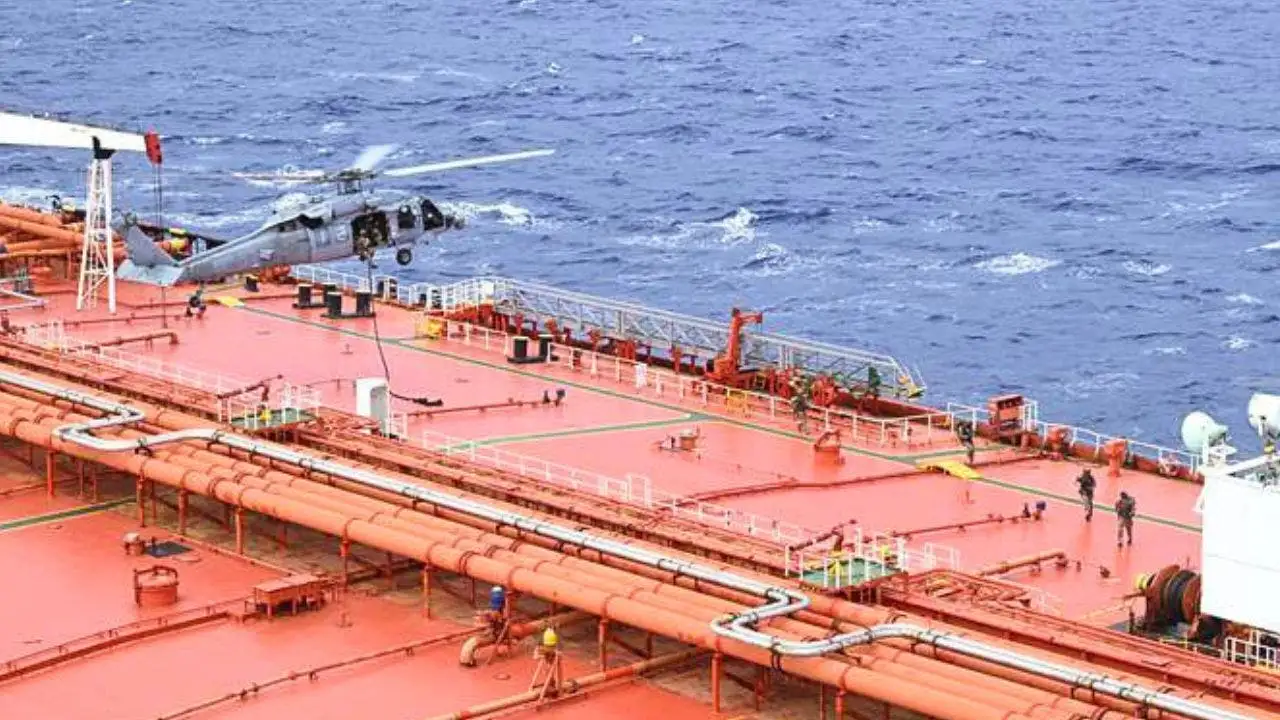
The United States military has confirmed the interception and boarding of a sanctioned vessel, marking another step in its expanding efforts to disrupt global illicit maritime networks tied to Iran. The operation, carried out overnight, involved the vessel identified as the M/F Tifani, which U.S. officials described as “stateless” and connected to smuggling activities.
According to the Pentagon, the mission was conducted under the authority of United States Indo-Pacific Command, which oversees U.S. military operations across the Indian and Pacific Oceans. This is notable because the region falls outside the traditional scope of Middle Eastern operations, typically handled by U.S. Central Command.
Despite the geographic distance from the Persian Gulf, U.S. officials stated that the intercepted vessel had links to Iranian smuggling networks, reinforcing Washington’s position that enforcement of sanctions is not limited by location. The Pentagon emphasized that such actions are part of a broader global strategy aimed at cutting off financial and logistical support channels tied to Tehran.
In a statement following the operation, U.S. authorities made it clear that international waters will not serve as safe zones for sanctioned vessels. The military reiterated its commitment to tracking and intercepting ships suspected of aiding illicit activities, regardless of where they operate.
The boarding of the Tifani highlights a shift toward more proactive maritime enforcement, with the U.S. increasingly willing to act beyond traditional hotspots. It also underscores the growing complexity of global shipping routes, where vessels linked to sanctioned entities may attempt to operate far from expected regions to avoid detection.
As tensions involving Iran continue to influence global security and trade, operations like this signal that the U.S. is intensifying its efforts to monitor and control maritime activity tied to sanctioned networks. The move is likely to have broader implications for international shipping and enforcement policies, particularly as global powers seek to maintain oversight of increasingly interconnected trade routes.
Discover more from Scoop Hub
Subscribe to get the latest posts sent to your email.