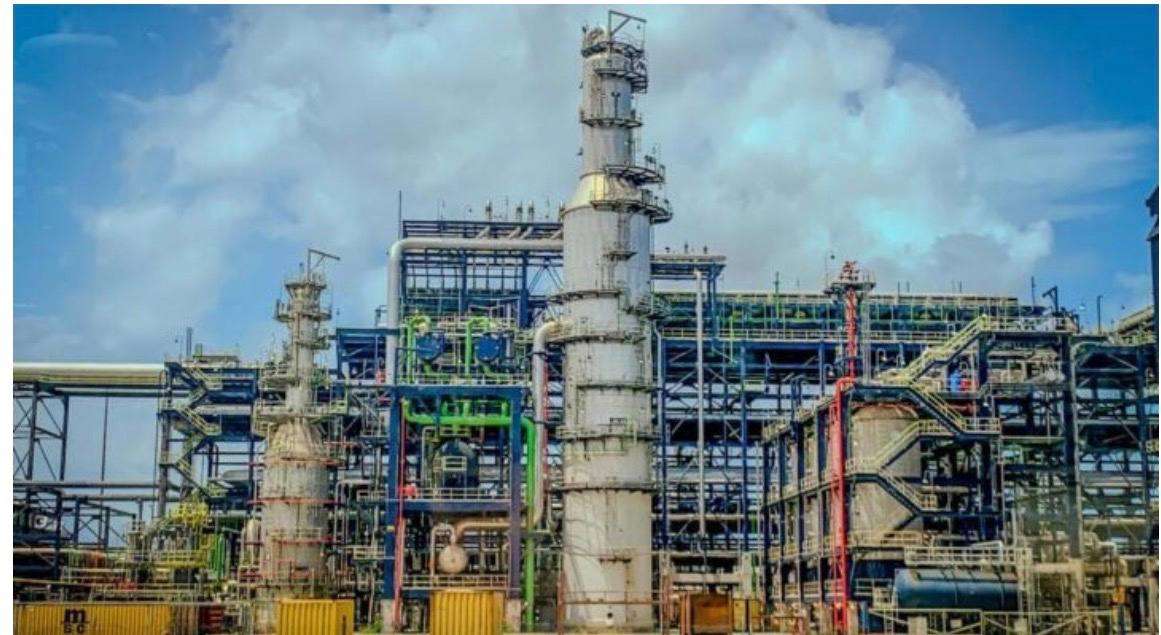
The Dangote Group has taken a major step into upstream oil production, announcing it has achieved its first oil and is on track to begin commercial crude output in the coming weeks. The milestone marks a significant expansion of the conglomerate’s footprint in Nigeria’s energy sector, as it pushes toward building a fully integrated oil and gas value chain.
According to Devakumar Edwin, Vice President of Dangote’s oil and gas division, the company has already begun testing crude from its Niger Delta assets. Speaking from the Dangote Petroleum Refinery, he revealed that drilling preparations are underway, with a rig already secured for a broader campaign in the region.
The project is currently producing around 4,500 barrels of oil per day from the Kalaekule field, located within Oil Mining Lease 72. This follows the long-awaited commencement of operations in December 2025. Output is expected to increase significantly in the near term, with projections pointing to 15,000 barrels per day within weeks, according to Olajumoke Ajayi, CEO of Dangote’s upstream joint venture, West African E&P.
Dangote holds an 85% stake in the upstream venture, which in turn maintains a 45% working interest in Oil Mining Leases 71 and 72. The remaining stakes are shared with the Nigerian National Petroleum Corporation and First E&P, the latter serving as the operator of the assets. Located in shallow waters about 22 kilometers from the Bonny export terminal, the fields have a long history, with discoveries dating back to 1966.
Edwin noted that the company has already opened a well and initiated standard testing procedures, which are expected to conclude within weeks. Once completed, Dangote plans to ramp up production while continuing to drill additional wells to boost capacity.
The move is strategically aligned with the company’s refining ambitions. The Dangote refinery, now operating at its full nameplate capacity of 650,000 barrels per day, could benefit from a steady supply of locally sourced crude. David Bird, CEO of the refinery, explained that while the upstream assets may not fully meet the plant’s demand, they could provide a reliable and cost-efficient supply stream.
Beyond production, Dangote is also exploring the development of its own shipping capabilities. This would help reduce logistics costs and ensure more consistent crude delivery, further strengthening its vision of a vertically integrated energy operation—from production to refining and distribution.
Industry projections from S&P Global Energy suggest that output from the oil blocks could reach a plateau of around 43,000 barrels of oil equivalent per day by 2036. While this represents only a portion of the refinery’s needs, it reinforces the company’s long-term strategy of reducing dependence on external suppliers.
In the meantime, the refinery continues to diversify its crude sourcing, importing blends from countries like the United States and Angola. Plans are also underway to expand the range of crude grades processed, as Dangote aims to optimize efficiency and maintain high utilization rates.
This latest development signals a turning point for the Dangote Group, positioning it not just as a refining giant, but as a growing force in upstream oil production—one that is steadily reshaping Nigeria’s energy landscape.
Discover more from Scoop Hub
Subscribe to get the latest posts sent to your email.