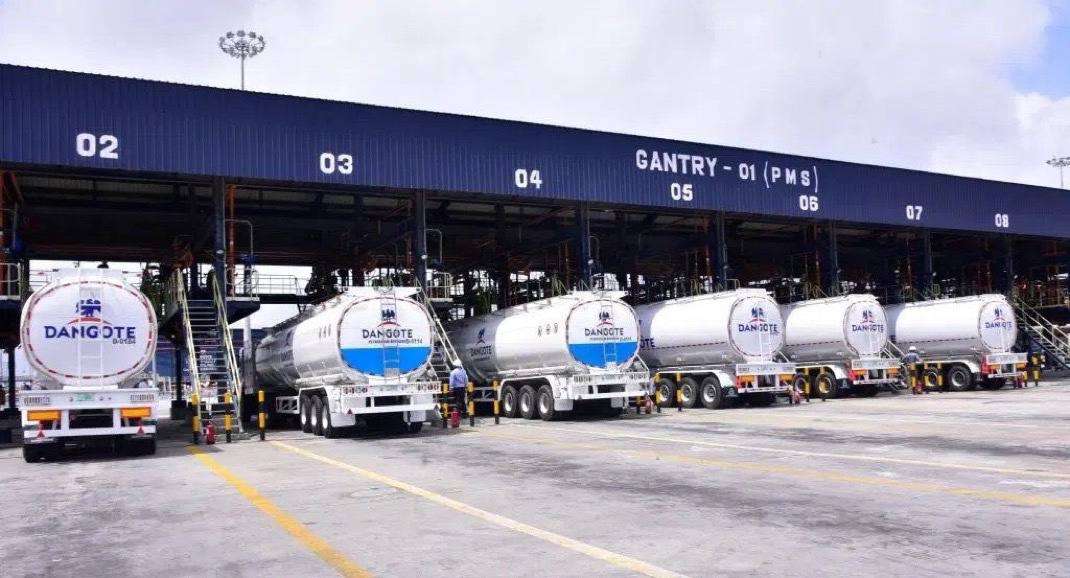
Nigeria’s fuel market is facing renewed pressure as the Dangote Petroleum Refinery has increased the gantry prices of petrol and diesel, a move that is likely to ripple across the economy in the coming days.
According to sources within the refinery, the latest adjustment reflects ongoing shifts in global crude oil prices and broader market realities. Petrol has been raised by ₦75 per litre to ₦1,275, marking an increase of just over five percent. Diesel, on the other hand, saw a sharper jump of ₦200 per litre, bringing its new price to ₦1,950.
This marks a noticeable rise from last month’s pricing, when petrol stood at ₦1,200 per litre and diesel at ₦1,750. With diesel now edging closer to the ₦2,000 mark, businesses that rely heavily on fuel—especially in transportation, manufacturing, and logistics—are expected to feel the strain even more.
Industry data has confirmed the increase at the gantry level, reinforcing concerns that marketers will soon adjust pump prices upward to reflect the new costs. For everyday Nigerians, this could translate into higher transportation fares, increased food prices, and a general rise in the cost of living.
The refinery attributes the hike largely to international factors. Ongoing geopolitical tensions in the Middle East—a region critical to global oil supply—have contributed to volatility in crude oil prices. Since refined fuel pricing in Nigeria is closely tied to global benchmarks, any disruption or uncertainty in the international market quickly impacts local prices.
Despite being a major oil-producing nation, Nigeria operates a deregulated downstream sector, meaning fuel prices are largely determined by market forces rather than government controls. Factors such as exchange rates, logistics, and global crude prices all play a role in shaping what consumers ultimately pay at the pump.
When the Dangote Refinery came on stream, many stakeholders hoped it would significantly reduce Nigeria’s dependence on imported fuel and bring greater price stability. While it has boosted local refining capacity, experts say the country remains vulnerable to global price swings as long as crude oil continues to be priced internationally.
The latest increase comes at a difficult time for many households already dealing with rising energy and transportation costs. As the market adjusts to the new pricing, the broader economic impact will likely become clearer, with inflationary pressures expected to intensify in the short term.
Discover more from Scoop Hub
Subscribe to get the latest posts sent to your email.