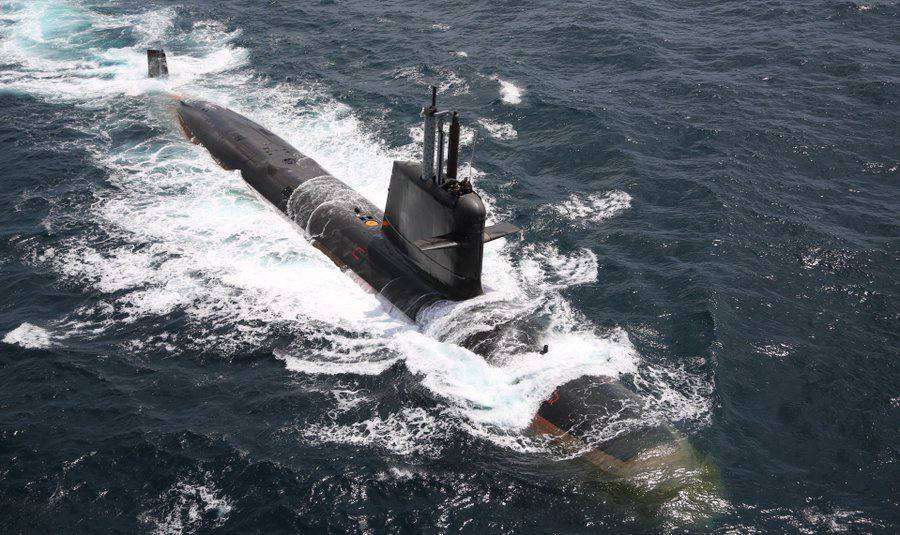
France’s Scorpène submarine design already has an established presence in the Indian Navy, with six Kalvari-class submarines built in India under a technology-transfer partnership between France’s Naval Group and Mazagon Dock Shipbuilders Limited (MDL).
The programme, known as Project 75, began with a 2005 agreement for six submarines to be constructed at MDL in Mumbai with French technology and technical assistance. The programme was also intended to strengthen India’s domestic submarine-building capabilities.
The first submarine, INS Kalvari, entered service in 2017, while the sixth and final boat, INS Vagsheer, was commissioned in January 2025. MDL says it has now delivered eight submarines in its history, including the six Scorpène-derived boats.
The Scorpène programme has left India with more than submarines already in service. The technology-transfer arrangement helped MDL develop expertise in submarine construction, including hull fabrication, outfitting and system integration.
Naval Group’s partnership with MDL also involved qualifying Indian companies to establish a local submarine supplier base. That existing infrastructure is relevant as India considers how to expand and modernise its conventional submarine fleet.
France has also been involved in discussions over additional Scorpène submarines for India. However, reports indicate that the proposed follow-on order has remained under discussion rather than representing an already completed acquisition.
India’s broader submarine programme includes Project 75(I), which is intended to acquire another six conventional submarines with air-independent propulsion (AIP). That programme has faced delays and technical requirements involving both Indian shipyards and foreign technology partners. Naval Group withdrew from the competition in 2026, saying conditions in the tender prevented it from participating.
This creates an important distinction in India’s submarine choices: the Scorpène family already has an operating fleet, trained personnel, established maintenance experience and an Indian production ecosystem behind it, while alternative designs would involve additional development, technology integration and industrial work before reaching the same level of maturity in India.
For New Delhi, the decision is therefore not simply about comparing submarine specifications. It also involves questions of production continuity, technology transfer, industrial capacity and how quickly India can expand its underwater fleet.
Discover more from Scoop Hub
Subscribe to get the latest posts sent to your email.