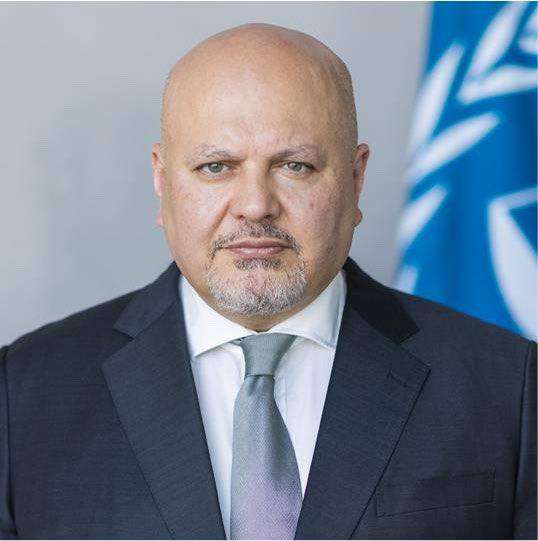
The International Criminal Court (ICC) has officially removed Karim Khan from his position as Chief Prosecutor after a majority of member states voted in favor of his dismissal during a closed-door session of the court’s governing body.
The decision was reached through a vote by the 125-member Assembly of States Parties (ASP), the body responsible for overseeing the administration of the ICC. Member states elected Khan to a nine-year term as prosecutor in 2021, but the Assembly voted to end his tenure before the completion of his mandate.
Announcing the outcome, the President of the Assembly stated that 82 member states supported the motion to remove Khan from office. According to the Assembly, the decision was based on findings that he had committed serious misconduct and a serious breach of duty.
While confirming the outcome of the vote, the Assembly emphasized the importance of respecting the dignity, privacy, and rights of everyone involved in the process.
With Khan’s removal now official, the Assembly of States Parties is expected to begin the process of electing a new prosecutor to lead the court’s Office of the Prosecutor.
Established in 2002 under the Rome Statute, the International Criminal Court serves as the world’s first permanent international tribunal dedicated to prosecuting individuals accused of genocide, crimes against humanity, war crimes, and the crime of aggression.
Over the years, the ICC has handled several high-profile investigations and prosecutions involving world leaders and senior officials. Among its most notable actions was the 2023 arrest warrant issued for Russian President Vladimir Putin, followed by the 2024 arrest warrant for Israeli Prime Minister Benjamin Netanyahu. Both cases attracted widespread international attention and generated significant diplomatic debate.
Since its establishment, the court has secured seven convictions and is currently managing 34 active cases, reflecting its ongoing role in addressing some of the world’s most serious international crimes.
Despite its global mandate, the ICC relies heavily on the cooperation of member states to enforce its decisions. The court does not maintain its own police force and therefore depends on national governments to execute arrest warrants and facilitate investigations.
Although 125 countries are parties to the Rome Statute, several major nations remain outside the court’s jurisdiction. Among them are the United States and Israel, both of which signed the treaty in 2000 but have never ratified it, meaning they are not full members of the court.
Relations between the ICC and some non-member states have remained strained in recent years. In 2025, the United States imposed sanctions on nine ICC officials, including judges, the prosecutor, and deputy prosecutors, over investigations involving alleged war crimes linked to Israel and U.S. personnel.
Karim Khan’s removal marks a significant leadership change for the International Criminal Court at a time when it continues to oversee complex investigations involving conflicts and alleged international crimes across several regions of the world. The appointment of a new prosecutor is expected to play a critical role in shaping the court’s future direction and its pursuit of international justice.
Discover more from Scoop Hub
Subscribe to get the latest posts sent to your email.