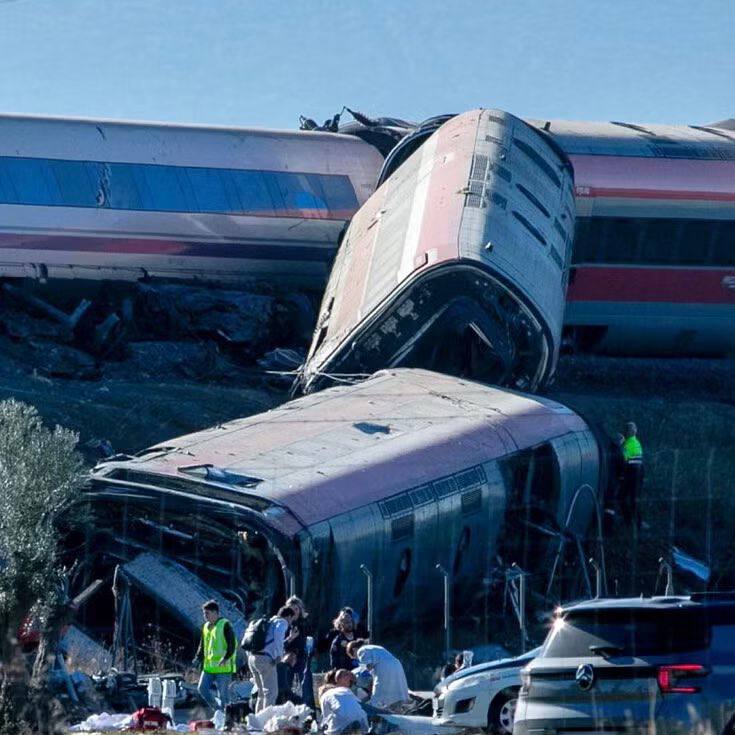
At least 68 people have been killed and dozens more injured after two high-speed trains collided in central Spain, in a devastating railway disaster that has prompted an emergency response and renewed concerns about rail safety.
The collision occurred shortly before 9 a.m. on Wednesday, October 28, 2026, near Urda in Toledo province, approximately 130 kilometres south of Madrid. Emergency teams rushed to the scene as passengers were evacuated from the damaged trains and rescuers searched through the wreckage for victims.
Authorities warned that the death toll could rise as rescue operations continued. The crash has been described as one of Spain’s deadliest railway disasters in recent years.
According to reports, the accident involved a high-speed AVE train operated by Spain’s state-owned railway company, Renfe, and a train operated by private rail company Iryo.
The Renfe train struck the rear of the Iryo train, which had stopped on the tracks. The impact caused several carriages to derail, with some tumbling down an embankment beside the railway line. Both trains were travelling on the Madrid–Andalusia route, which connects the Spanish capital with cities in the southern part of the country.
The two trains were carrying more than 500 passengers combined, according to regional authorities. The severity of the collision left emergency workers facing a difficult rescue operation as they worked to reach passengers trapped inside damaged carriages.
Emergency services deployed firefighters, medical personnel, ambulances and other rescue workers to the crash site. Survivors described scenes of confusion and destruction immediately after the collision, with passengers thrown from their seats and debris scattered around the damaged trains.
Some injured passengers managed to escape from the carriages, while others required assistance from rescue workers. Medical teams transported victims to nearby hospitals, and authorities coordinated emergency operations to locate missing passengers and identify those who had died.
Regional officials reported that dozens of people had sustained injuries, including some in serious condition. Rescue workers continued searching the wreckage as authorities worked to establish the full extent of the disaster.
Spanish authorities have launched an investigation to determine what led to the collision.
Initial reports pointed to problems involving railway signalling and the movement of trains following a technical disruption. Spain’s transport minister, Óscar Puente, said a technical failure affected the automatic control system before traffic resumed under arrangements that are now being examined.
Investigators will need to establish the sequence of events, including why the Renfe train was allowed to continue while the Iryo train remained stationary on the track.
The precise circumstances surrounding the collision remain subject to investigation, and the initial explanations should not be treated as a final determination of responsibility.
The disaster has raised fresh concerns about the safety of Spain’s high-speed rail network, which is among the largest in the world. The latest collision comes just nine months after another deadly railway accident near Adamuz in southern Spain killed 46 people.
The two incidents have intensified public attention on railway operations, infrastructure maintenance and the systems used to manage train movements.
Authorities will face pressure to establish what went wrong and determine whether additional safety measures are needed to prevent similar tragedies. However, any conclusions about the causes of the latest crash will depend on the findings of the official investigation.
Spanish Prime Minister Pedro Sánchez expressed support for the victims and their families as the government monitored the emergency response. Political activities were suspended or scaled back following the disaster, while regional authorities announced plans for mourning.
Messages of condolence also came from officials across Europe as the scale of the tragedy became clearer. For the families affected, the immediate priority remains identifying victims, locating missing loved ones and supporting those recovering from their injuries.
Discover more from Scoop Hub
Subscribe to get the latest posts sent to your email.