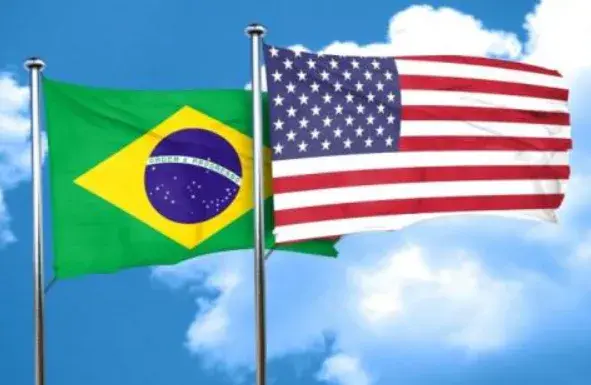
Brazil has denied entry visas to two senior officials from the United States Department of State, further escalating diplomatic tensions between Brasília and Washington ahead of the country’s presidential election scheduled for October.
The decision, confirmed by Brazil’s Ministry of Foreign Affairs on Saturday, follows reports that the U.S. officials planned to visit Brazil to discuss issues related to election integrity and democratic governance.
According to the Brazilian government, the visa applications submitted by Riley M. Barnes, an Assistant Secretary at the U.S. State Department, and Samuel Samson, a Deputy Assistant Secretary, were officially rejected after being filed on July 20. The visas were denied on Friday, although Brazil’s Foreign Ministry did not publicly disclose the specific reasons behind the decision.
The issue gained international attention after reports suggested that Brazilian authorities believed the planned visit could be perceived as an attempt to influence or cast doubt on the credibility of Brazil’s upcoming presidential election.
The development comes amid increasingly strained relations between the governments of Brazilian President Luiz Inácio Lula da Silva and U.S. President Donald Trump. President Lula is seeking another term in office and is expected to face Senator Flávio Bolsonaro, a prominent opposition figure and son of former Brazilian President Jair Bolsonaro.
Political relations between the two countries have become more complicated in recent months. Senator Flávio Bolsonaro and his brother, Eduardo Bolsonaro, previously traveled to Washington, where they held meetings with senior U.S. officials, including President Trump.
Shortly after those engagements, the Trump administration designated two of Brazil’s largest criminal organizations—First Capital Command (PCC) and Red Command (Comando Vermelho)—as foreign terrorist organizations, a decision that drew criticism from President Lula’s administration.
The United States has also introduced tariffs of up to 37.5 percent on thousands of Brazilian exports, citing concerns over unfair trade practices and allegations related to forced labor. The Brazilian government has strongly rejected those accusations, arguing that the measures are politically motivated and could influence the country’s electoral environment.
Responding to the controversy, the U.S. State Department stated that Barnes and Samson had planned to visit Brasília between July 27 and July 30 for what it described as a routine diplomatic mission. According to the department, the officials intended to meet with government representatives, religious leaders, and civil society organizations to discuss issues including election integrity, religious freedom, and freedom of expression.
The State Department also dismissed suggestions that the visit was intended to interfere in Brazil’s democratic process, describing such claims as unfounded and insisting the trip formed part of regular diplomatic engagement. The latest dispute also revives longstanding debates surrounding Brazil’s electronic voting system.
Former President Jair Bolsonaro spent years questioning the reliability of the country’s electronic voting machines without presenting evidence of widespread fraud. Brazil has used electronic voting technology for more than two decades, and electoral authorities have consistently defended the system as secure and transparent.
Jair Bolsonaro is currently serving a 27-year prison sentence under house arrest following his conviction for involvement in an attempted coup after leaving office.
Although his son, Senator Flávio Bolsonaro, has recently echoed concerns about Brazil’s electoral process, he avoided repeating allegations against the electronic voting system during the official confirmation of his presidential candidacy by the Liberal Party in São Paulo.
The visa denial highlights growing diplomatic friction between Brazil and the United States at a politically sensitive moment. As the October presidential election approaches, relations between the two nations are expected to remain under close international scrutiny, with election integrity, trade disputes, and foreign policy likely to remain central issues in the months ahead.
Discover more from Scoop Hub
Subscribe to get the latest posts sent to your email.