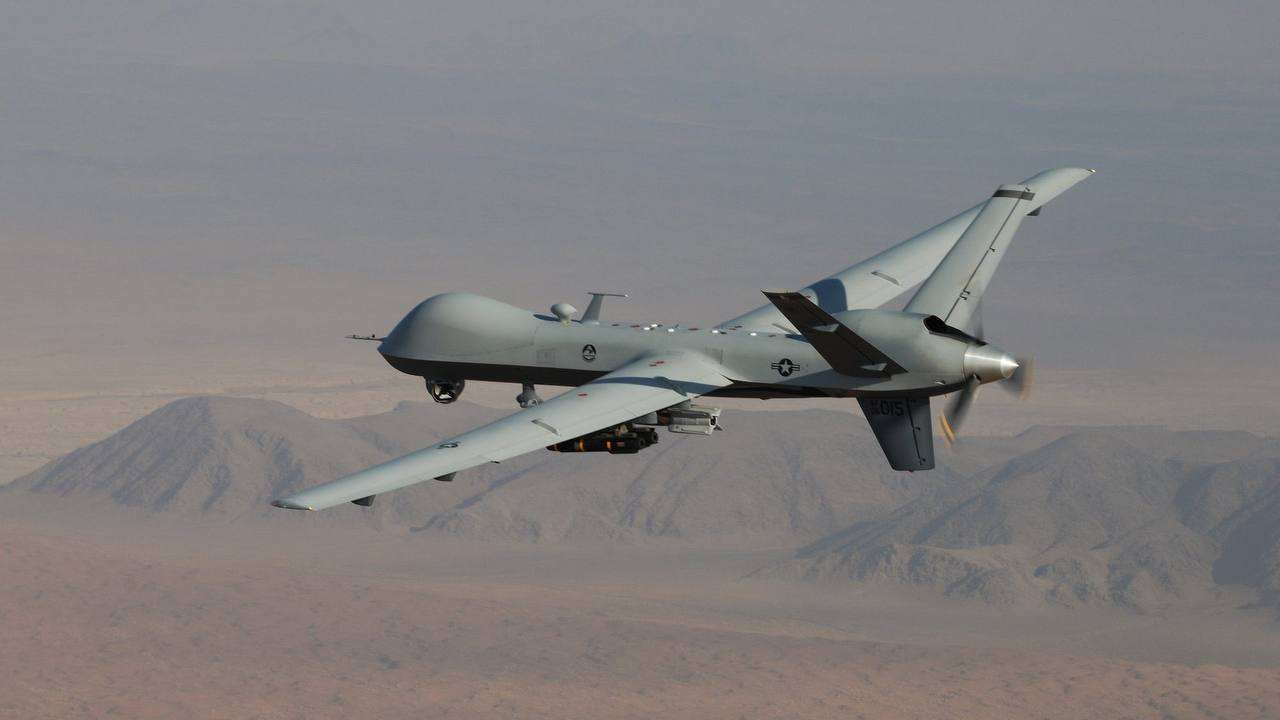
The conflict between Iran and the United States intensified after Iranian authorities claimed to have shot down another US MQ-9 Reaper drone, adding to a series of aerial confrontations that have marked the ongoing hostilities between the two countries.
According to Iranian state media, the drone was brought down over southern Iran during military operations on Wednesday. Iranian officials also stated that another MQ-9 Reaper had been shot down during US strikes carried out on Tuesday.
A US official, speaking on Wednesday, said that approximately 30 MQ-9 Reaper drones have been lost since the conflict began, underscoring the increasing challenges facing one of the US military’s most widely used unmanned aircraft.
The MQ-9 Reaper, which entered service with the US Air Force in 2007, has played a central role in American military operations across the Middle East and other regions. Designed primarily for intelligence gathering, surveillance and precision strikes, the drone became a key asset during the wars in Iraq and Afghanistan and has remained one of the US military’s most relied-upon unmanned aircraft.
However, the aircraft was originally developed to operate in environments where the United States maintained air superiority. As the conflict with Iran has intensified, that operational advantage has been increasingly challenged by advanced air defence systems and evolving battlefield conditions.
The production of the MQ-9 Reaper officially came to an end last year after manufacturer General Atomics completed the construction of 575 aircraft. The US Air Force had announced its final five-year procurement contract for the drone in 2020. According to the manufacturer, the most recent batch of four Reapers was acquired at an average cost of approximately $16 million per aircraft.
Despite the reported losses, senior US military officials continue to describe the MQ-9 Reaper as one of the country’s most effective combat platforms. During a congressional budget hearing in May, General Kenneth Wilsbach, the US Air Force’s top officer, referred to the drone as the “most valuable player” in the conflict with Iran, citing its extensive role in conducting precision strikes.
He noted that the Air Force had carried out numerous successful operations using the platform, adding that no other aircraft had matched its level of operational effectiveness in the campaign.
The latest developments come as the United States launched another round of airstrikes against Iranian targets following renewed tensions that have undermined efforts to maintain a ceasefire. Although previous diplomatic initiatives had sought to reduce hostilities, repeated exchanges of military action have continued to fuel instability across the region.
In a statement released on Wednesday, US Central Command (CENTCOM) said the latest operations were intended to hold Iran accountable for what it described as recent attacks against commercial shipping and civilian vessels operating in a key international maritime corridor.
The ongoing conflict has also resulted in additional military losses for the United States. Earlier in the year, three US F-15 fighter jets were accidentally shot down by Kuwaiti air defences during a friendly-fire incident. All crew members successfully ejected and survived.
In a separate incident in March, a KC-135 aerial refuelling aircraft crashed in western Iraq following a mid-air collision with another KC-135 tanker. All six personnel on board the aircraft that crashed were killed.
As fighting continues, the destruction of high-value military equipment on both sides highlights the increasing intensity of the conflict and the growing risks facing military operations across the Middle East. The latest claims surrounding the MQ-9 Reaper further illustrate how modern aerial warfare is shaping the ongoing confrontation between Iran and the United States.
Discover more from Scoop Hub
Subscribe to get the latest posts sent to your email.