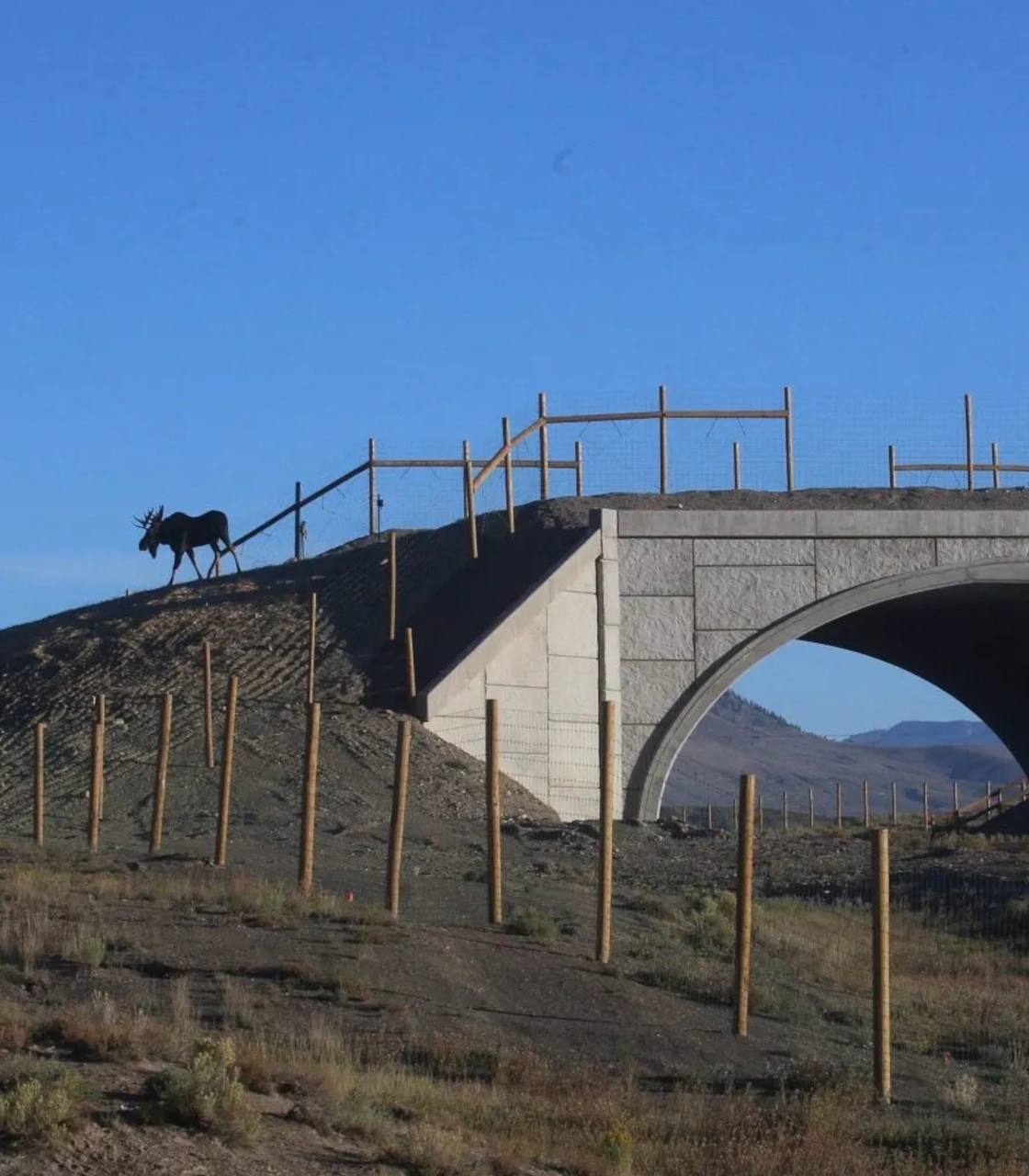
Colorado has recorded a major improvement in wildlife safety after investing $15 million in one of North America’s largest wildlife overpasses, designed to help animals cross a busy highway without encountering traffic.
The Greenland Wildlife Overpass stretches across Interstate 25 near Larkspur and Monument, connecting wildlife habitats on both sides of the six-lane highway. Since the crossing opened in December 2025, cameras have captured elk, pronghorn and other wildlife using the structure.
A report published in September 2026 found that wildlife-vehicle collisions along the wider I-25 South Gap corridor had fallen by 91% in the final year examined. The results suggest that the broader wildlife-protection system is making a substantial difference for animals and motorists.
The Greenland Wildlife Overpass measures approximately 209 feet long and 200 feet wide. Its surface is covered with soil and vegetation to create a more natural environment for animals crossing above the highway.
The structure was designed especially for large animals such as elk and pronghorn, which can be reluctant to use enclosed tunnels. Its open layout gives animals a clearer view of their surroundings as they move between habitats.
The overpass also forms part of a larger wildlife-safety network that includes five underpasses and fencing to guide animals toward safe crossing points. Together, these measures help reduce the risk of animals wandering onto the highway.
Before the wider crossing system was installed, this section of Interstate 25 experienced frequent collisions involving wildlife, particularly during seasonal animal movements in spring and autumn.
A state-commissioned study found that wildlife-vehicle collisions declined substantially after most of the mitigation system had been built. The final year examined recorded a 91% reduction, while the average annual reduction across the study period was approximately 85%.
Officials have also reported encouraging footage of elk herds using the overpass and pronghorn crossing into habitat on the other side of the interstate. These movements are important because highways can separate animal populations and restrict their access to food, water and breeding areas.
However, the collision figures reflect the combined effect of the wider crossing system and fencing, rather than the overpass alone. Researchers are continuing to study how the new bridge affects wildlife movement and whether it helps reconnect animal populations over time.
The overpass was completed in December 2025 as part of Colorado’s wider effort to improve highway safety and protect wildlife. According to the Colorado Department of Transportation, the project cost approximately $15 million and connects around 39,000 acres of habitat on both sides of Interstate 25.
The investment serves two purposes: reducing the likelihood of dangerous collisions for motorists and allowing animals to move through their natural environment more safely. Wildlife-related crashes can cause serious injuries, damage vehicles and result in the deaths of animals.
The project also demonstrates how infrastructure can be designed to accommodate both human transportation needs and the movement of wildlife.
Colorado’s results could offer useful lessons for other regions where highways cut through animal habitats.
Wildlife overpasses, underpasses and roadside fencing are increasingly being used to reduce collisions and preserve connections between ecosystems. The effectiveness of these projects depends on factors such as their location, design, the species they serve and whether animals are guided toward the crossings.
Researchers are also investigating whether the Greenland crossing will help improve genetic diversity by allowing animal populations on opposite sides of the highway to interact more frequently. Those long-term benefits will take additional time to measure.
For now, the sharp decline in reported wildlife collisions across the corridor offers encouraging evidence that investing in wildlife-safe infrastructure can produce meaningful results.
Discover more from Scoop Hub
Subscribe to get the latest posts sent to your email.