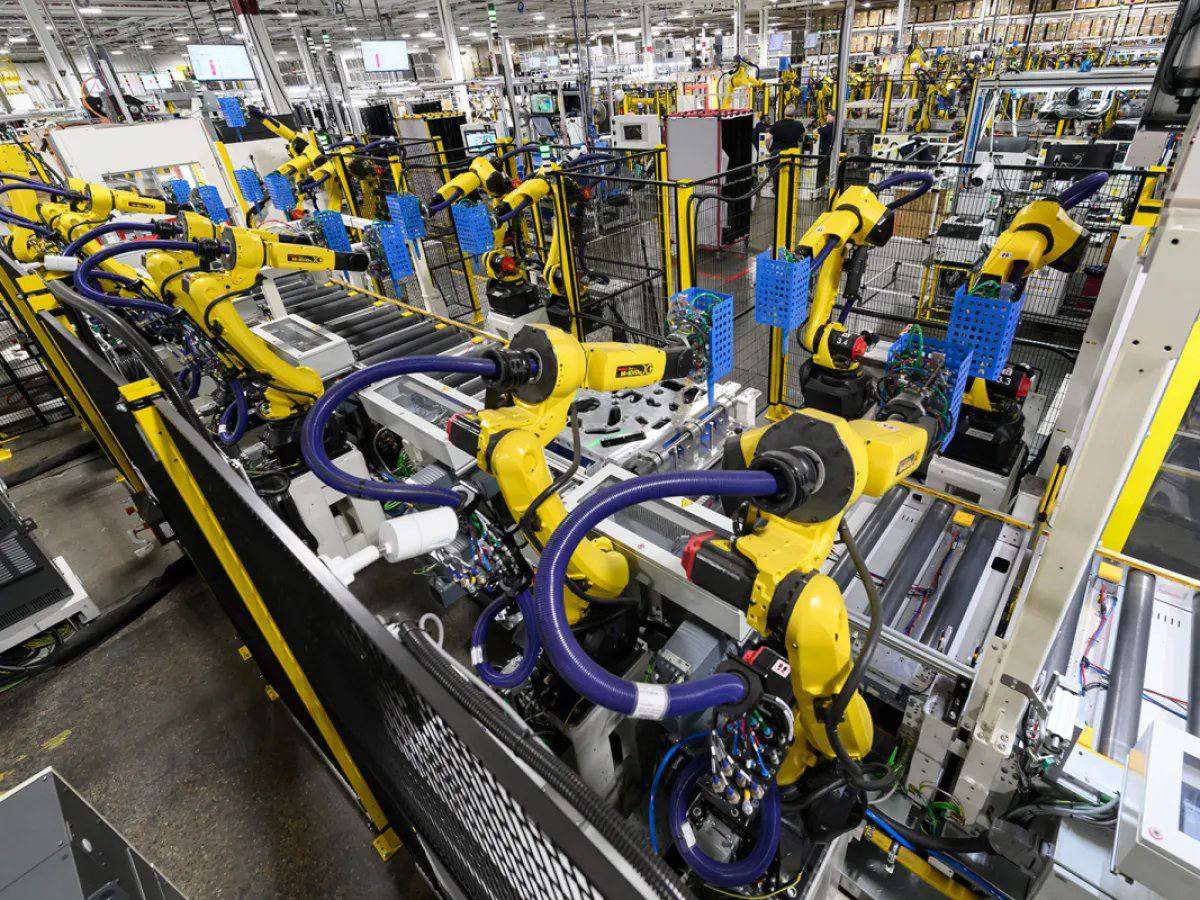
General Motors has come under intense criticism from labor unions after replacing more than 1,000 workers with robotic systems at one of its major manufacturing facilities in Detroit, Michigan.
The move is part of the automaker’s broader effort to modernize its production process through automation. At its Factory ZERO assembly plant, GM has introduced approximately 50 collaborative robots, commonly known as “cobots,” to assist with vehicle production tasks. The machines are now being used to attach vehicle body panels along the assembly line, working alongside the remaining workforce.
The decision follows the company’s recent adjustment of its electric vehicle production goals and has sparked concerns about the future of manufacturing jobs in the United States.
General Motors defended the rollout of the robotic units, saying the technology is designed to improve workplace safety, enhance efficiency, and help the company remain competitive in an increasingly automated industry.
According to GM spokesperson Kevin Kelly, the company has been expanding the use of cobots across its manufacturing operations as part of a long-term strategy to integrate advanced technologies into production processes.
Kelly explained that the robots are intended to support employees rather than completely replace them, adding that the systems help reduce physical strain on workers while increasing operational flexibility.
However, labor representatives have strongly challenged that narrative.
James Cotton, President of United Auto Workers (UAW) Local 22, expressed frustration over the introduction of the robots, arguing that the technology is eliminating jobs that once belonged to union members.
Cotton noted that the arrival of the robotic systems comes shortly after significant workforce reductions, making it difficult for workers to view the automation effort positively. He warned that while automation may be promoted as the future of manufacturing, it is already having a direct impact on employment opportunities for thousands of workers.
The controversy is further fueled by the company’s strong financial performance. General Motors reported profits of $4.25 billion during the first quarter of 2026, representing a 22 percent increase compared to the same period last year.
The developments have reignited a broader debate about the growing role of artificial intelligence, robotics, and automation in the workplace. While companies argue that technological innovation is necessary to remain competitive in a rapidly evolving market, labor groups continue to raise concerns about job displacement and the long-term impact on workers and local communities.
As manufacturers increasingly adopt automated systems, the balance between technological advancement and workforce protection is expected to remain a major issue across the global automotive industry.
Discover more from Scoop Hub
Subscribe to get the latest posts sent to your email.