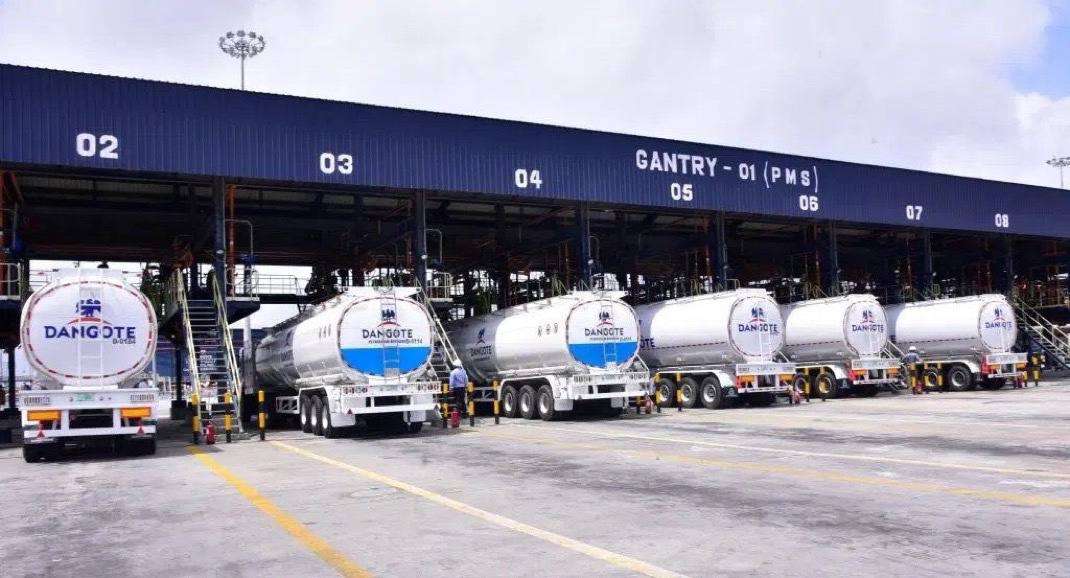
The Dangote Petroleum Refinery and Petrochemicals has officially begun direct aviation fuel deliveries to Ethiopian Airlines, marking another major step in its expansion into international energy markets.
The development comes as global fuel markets continue to face pressure linked to disruptions caused by the ongoing U.S.-Iran crisis, which has tightened supply chains and pushed up energy prices across several regions.
Speaking at the NAEE Conference in Lagos, the Managing Director of Dangote Refinery, David Bird, confirmed that the refinery has started supplying aviation fuel directly to Ethiopian Airlines while also exporting other petroleum products to customers outside Nigeria.
According to Bird, the refinery is now supplying not only jet fuel, but also diesel and petrol to international markets, reflecting its growing production strength and export capacity.
He explained that the refinery has moved beyond focusing solely on Nigeria’s domestic fuel needs and is now positioned to serve broader African and global demand.
Bird noted that the refinery is currently producing enough to meet local consumption requirements, with additional output being exported to neighbouring countries and international buyers.
He emphasised that Dangote’s strategy remains heavily focused on Africa, describing the company’s export policy as “Africa first.”
According to him, the direct fuel delivery to Ethiopian Airlines reflects that commitment, as the refinery prioritises supplying surplus products to African markets wherever possible.
Bird revealed that since the Middle East crisis began on February 28, the refinery has already exported petroleum products to more than 11 African countries.
He said the refinery is currently operating at full production capacity after completing maintenance work earlier this year, enabling it to generate enough excess supply for export.
The expansion comes at a time when aviation fuel markets are facing heightened volatility.
Bird acknowledged that several countries are currently grappling with fuel scarcity and rising costs, especially as global oil prices continue to climb.
He attributed the surge in aviation fuel prices to broader international market conditions, noting that crude oil had reached $112 per barrel as of Wednesday morning.
According to him, high prices are a global challenge, but an even bigger risk for many countries is the outright shortage of available fuel.
He pointed out that both developed and developing nations are being affected by supply disruptions, particularly countries heavily dependent on fuel imports.
Bird cited countries such as Australia, Bangladesh, Sri Lanka, and the Philippines as examples of economies vulnerable to fuel supply shocks.
Despite global pressures, he maintained that Nigeria currently remains relatively stable in terms of petroleum product availability. He credited this stability to the country’s growing domestic refining capacity, particularly the operational impact of the Dangote Refinery.
According to Bird, Nigeria now enjoys an improved level of fuel availability, helping shield the country from the worst effects of international shortages.
While acknowledging that Nigeria cannot fully escape the influence of global oil price fluctuations, he said domestic production ensures that the country at least has reliable access to fuel and other essential industrial products.
Beyond fuel, Bird also referenced the refinery’s broader industrial output, including fertiliser production, describing the project as a major strategic investment for Nigeria. He added that petroleum products are sold to multiple counterparties on a free-on-board (FOB) basis, with conscious efforts made to direct surplus volumes toward African buyers.
The direct supply deal with Ethiopian Airlines is likely to strengthen Dangote Refinery’s growing reputation as a major regional energy supplier and reinforce its role in Africa’s evolving fuel market.
For the continent, the development signals increasing intra-African trade in refined petroleum products, potentially reducing dependence on imports from outside the region.
As Dangote Refinery continues scaling operations, its growing export footprint is expected to play a larger role in shaping Africa’s energy security and refining landscape.
Discover more from Scoop Hub
Subscribe to get the latest posts sent to your email.