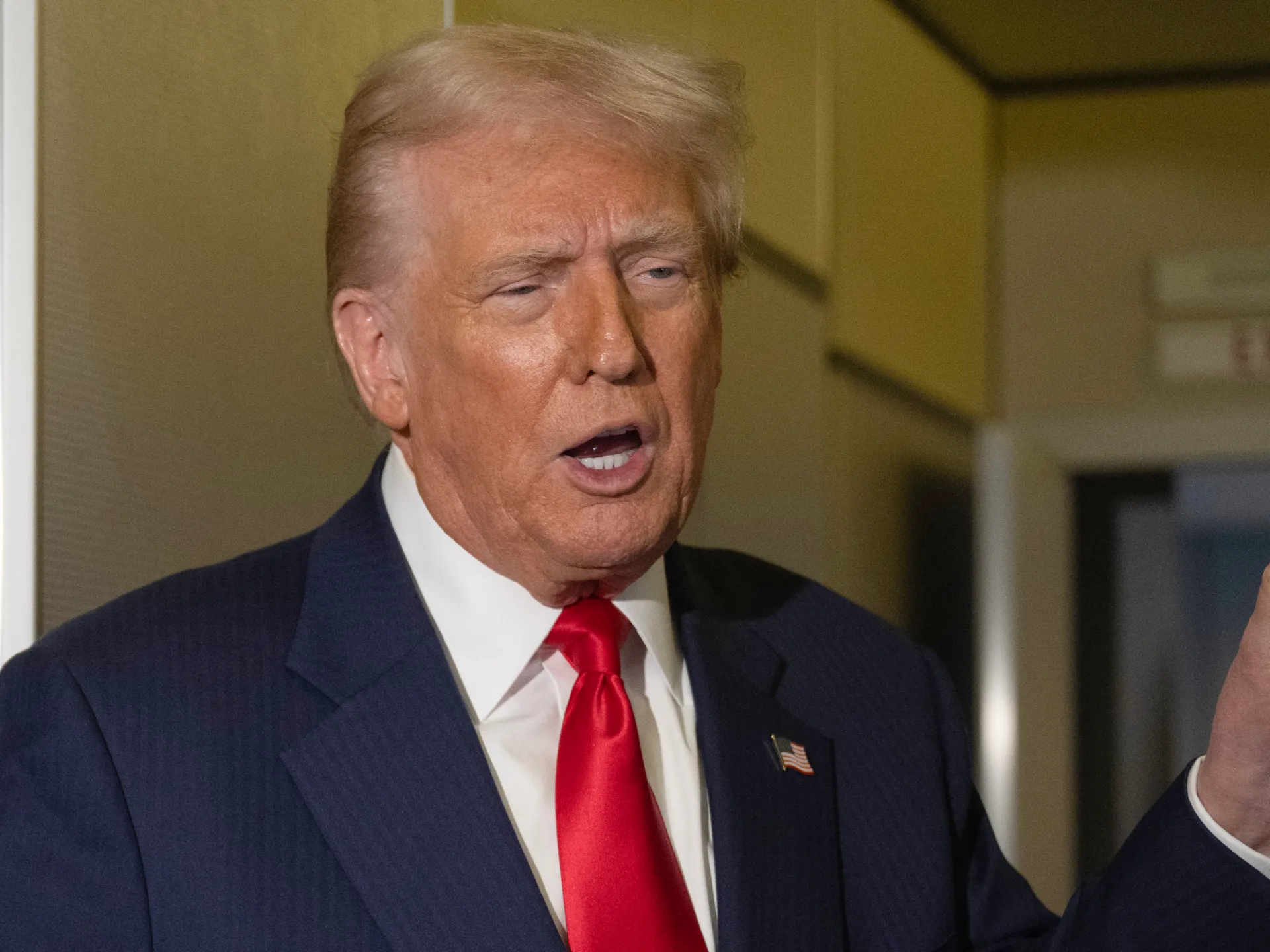
President Donald Trump has indicated that he may consider reducing or withdrawing U.S. troops stationed in Spain and Italy, escalating tensions with key NATO allies as disagreements over defense commitments and foreign policy deepen.
Speaking to reporters on Thursday, Trump suggested troop withdrawals could be on the table when asked whether he was considering reducing the American military presence in both countries.
According to the president, his frustration stems from what he described as a lack of sufficient support from some European allies on critical international security issues.
Trump specifically criticized Spain and Italy, claiming they have not provided the level of cooperation the United States expects from NATO partners.
He said Spain had been particularly disappointing, while also expressing dissatisfaction with Italy’s role.
The comments came just one day after Trump revealed he was also reviewing the possibility of reducing U.S. troop numbers in Germany.
That earlier statement followed remarks by German Chancellor Friedrich Merz, who reportedly said the United States was being “humiliated” by Iran — a comment that appears to have further strained relations between Washington and Berlin.
Trump has in recent weeks repeatedly criticized NATO allies over what he sees as inadequate contributions to international security efforts, particularly around the Strait of Hormuz, one of the world’s most strategically important oil transit routes.
The president has voiced frustration that allied nations were not doing enough to support efforts aimed at ensuring maritime stability and keeping the waterway open amid heightened Middle East tensions.
Spain has been one of the more vocal European critics of the recent U.S.-Israeli military actions involving Iran.
Spanish Prime Minister Pedro Sánchez has publicly opposed the conflict from its early stages, distancing his government from the military campaign.
Italy, meanwhile, had initially taken a more cautious diplomatic approach.
However, tensions reportedly increased after Rome declined permission for the use of an airbase in Sicily by U.S. aircraft transporting weapons linked to the conflict.
The decision was seen as a significant signal of Italy’s reluctance to be directly involved in operational support for the war effort.
Trump’s latest remarks have already drawn responses from Italian officials.
Italy’s Defence Minister, Guido Crosetto, said he did not understand the reasoning behind Trump’s threat and rejected suggestions that Italy had failed to support the United States.
Crosetto insisted that Rome has been cooperative, particularly on maritime security matters.
He also pushed back against accusations related to shipping activity in the Strait of Hormuz, stating that some of the claims made by Trump did not align with the facts.
According to Crosetto, Italy had offered support for a mission focused on protecting commercial shipping routes, an effort he said was well received by U.S. military officials.
Italy currently hosts approximately 13,000 U.S. military personnel across seven naval and military installations, making it one of Washington’s most important strategic defense locations in Europe and the Mediterranean.
Any move to reduce the American presence in Italy or Spain would carry significant geopolitical implications, potentially reshaping military logistics, NATO coordination, and U.S. influence in Southern Europe.
Trump has long pressured NATO members to increase defense spending and contribute more actively to shared security responsibilities, often threatening policy shifts or troop reviews when dissatisfied.
His latest comments suggest that military deployment decisions may once again become a tool in broader diplomatic disputes with allied nations.
As tensions rise, attention will now turn to whether Trump’s remarks represent a negotiating tactic or the beginning of a genuine strategic realignment of U.S. forces in Europe.
Discover more from Scoop Hub
Subscribe to get the latest posts sent to your email.