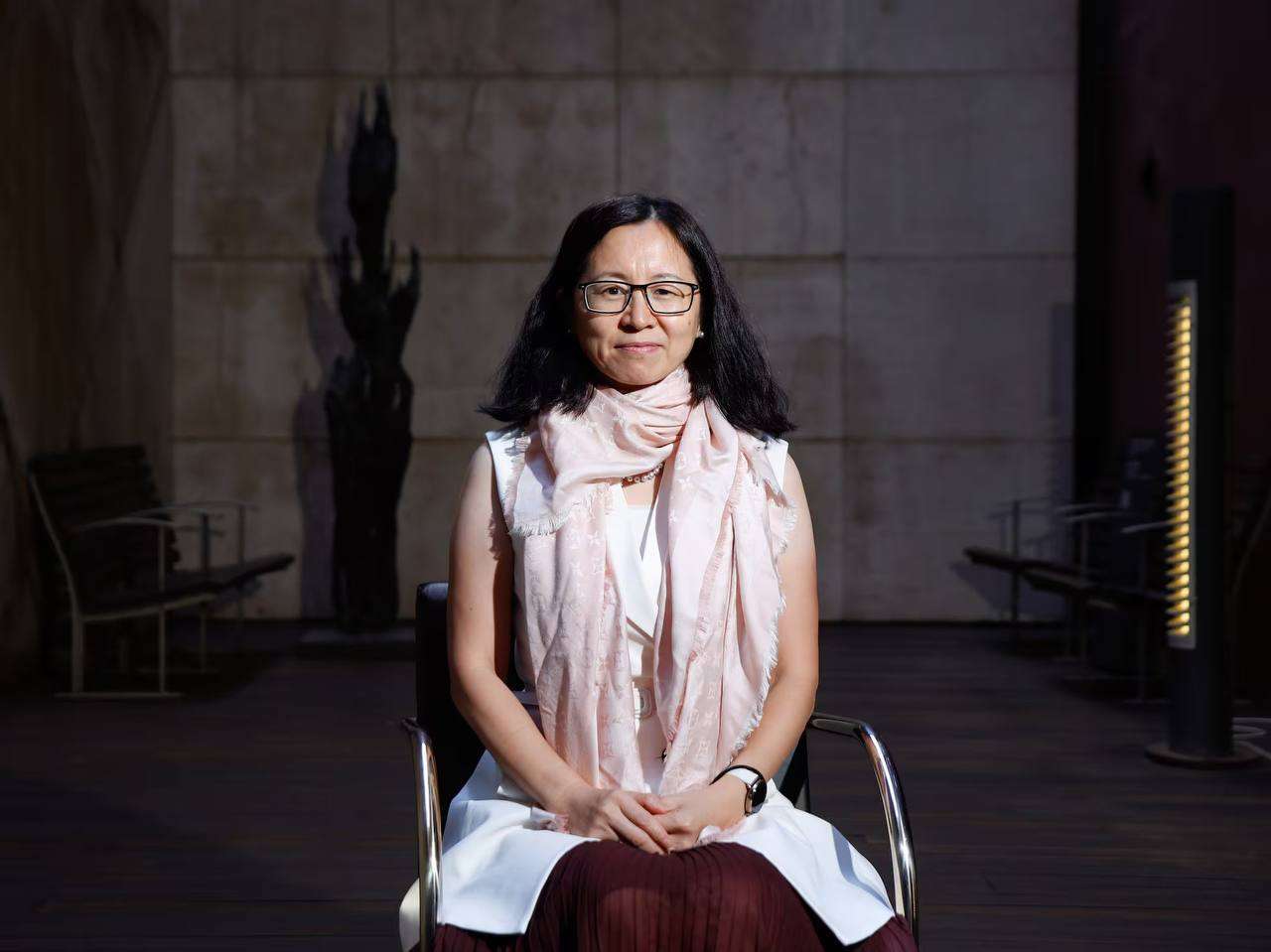
A Chinese biologist, Hongmei Wang, is reportedly exploring a scientific approach aimed at extending women’s reproductive lifespan by reducing the frequency of menstruation to once every three months.
The concept is based on the theory that fewer menstrual cycles over a woman’s lifetime could help preserve a larger number of viable eggs, potentially extending the fertile window and delaying age-related fertility decline.
According to reports, the research focuses on the biological relationship between ovulation, menstruation, and ovarian aging. Women are born with a finite number of eggs, and as age increases, both egg quantity and quality naturally decline. This gradual depletion is one of the primary reasons fertility decreases over time and why menopause eventually occurs.
Wang’s proposed idea suggests that if menstruation and related reproductive cycles can be medically adjusted to occur less frequently, the ovaries may theoretically conserve more eggs over a longer period.
Under this concept, menstruation would occur approximately once every three months instead of monthly, potentially reducing the total number of ovulatory cycles a woman experiences throughout her life.
The broader goal of the research is to examine whether slowing down reproductive cycling could help delay ovarian aging and extend the years during which women can naturally conceive.
The idea has quickly attracted attention due to its potential implications for reproductive medicine, fertility planning, and women’s health.
In theory, extending fertility could provide women with more flexibility in family planning, particularly as more women globally choose to delay childbirth for educational, professional, or personal reasons.
As a result, simply reducing menstruation frequency may not automatically guarantee extended fertility or delayed menopause.
Researchers would need to determine whether altering menstrual cycles in this way could truly preserve ovarian function without causing unintended health consequences.
Potential concerns could include hormonal side effects, impacts on uterine health, and broader metabolic or reproductive implications.
Advances in fertility science have increasingly focused on egg freezing, ovarian tissue preservation, IVF technologies, and hormonal therapies. Wang’s proposal adds another possible direction to ongoing discussions about how science may one day help women manage reproductive timelines more effectively.
While the concept remains in its early stages, it has already sparked debate within both medical and public circles about the future of fertility science and how far reproductive interventions should go.
For now, experts say more clinical research will be needed to determine whether reducing menstruation frequency can genuinely slow reproductive aging or whether the theory remains more promising on paper than in practice.
Discover more from Scoop Hub
Subscribe to get the latest posts sent to your email.