Nigeria’s federal lawmakers have approved a $6.9 billion external loan request by Bola Tinubu, marking a significant step in the government’s plan to finance key development projects and strengthen the country’s fiscal framework.
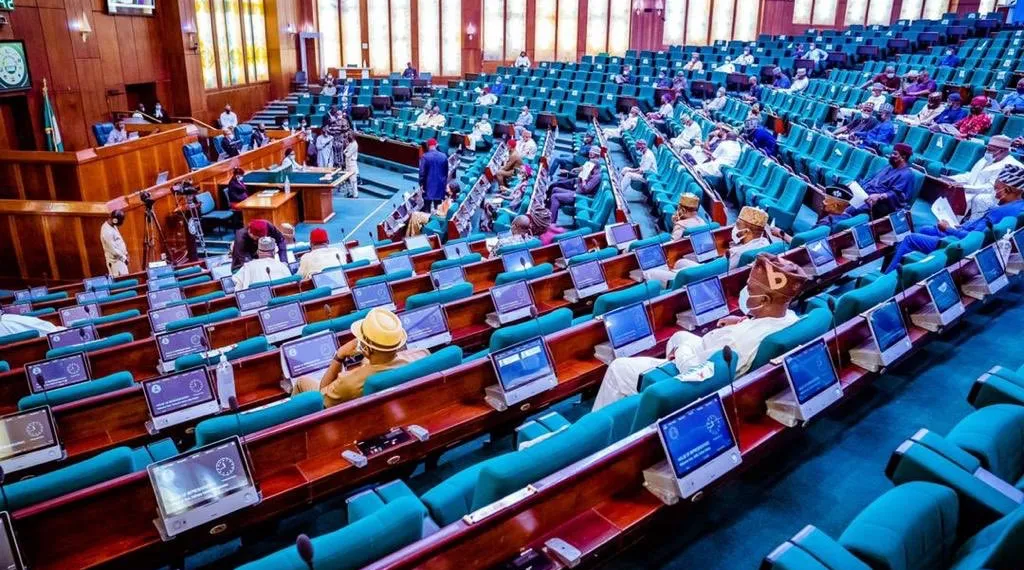
The approval was granted by the National Assembly following the review of a report presented by the Senate Committee on Local and Foreign Debt. A major highlight of the decision is the requirement that at least 40 percent of the loan be directed toward capital projects in the 2025 and 2026 budgets, ensuring that the funds are tied directly to infrastructure and long-term development.
The Senate acted swiftly during plenary to consider and pass the request, reflecting the urgency attached to the government’s financing strategy. Prior to this, President Tinubu had formally written to the legislature seeking adjustments to the 2026 Appropriation Bill. In his proposal, he requested an increase of ₦9 trillion, raising the total budget from ₦58.4 trillion to ₦67.4 trillion.
The letter, read on the Senate floor by Godswill Akpabio, outlined the administration’s intention to enhance fiscal transparency and ensure the smooth implementation of priority national programmes.
According to the President, the revised budget framework is designed to address several critical areas. One of the key objectives is to regularise and account for outstanding financial obligations carried over from previous budgets, preventing them from disrupting the execution of the 2026 fiscal plan. The proposal also aims to fully capture existing government debt within a more transparent structure while making room for a limited number of strategic projects.
Tinubu emphasized that the broader financing plan aligns with efforts to maintain macroeconomic stability and reduce pressure on Nigeria’s domestic financial market. By sourcing funds externally, the government hopes to ease borrowing constraints at home while sustaining growth-oriented spending.
The initial 2026 budget proposal, presented in December, stood at ₦58.18 trillion under the theme “Budget of Consolidation, Renewed Resilience and Shared Prosperity.” It included a ₦5.41 trillion allocation for defence and security, accounting for about 9.3 percent of total expenditure.
Key projections in the budget framework include total revenue of ₦34.33 trillion against projected spending of ₦58.18 trillion, resulting in a deficit of ₦23.85 trillion—approximately 4.28 percent of Nigeria’s GDP. The government’s medium-term outlook from 2026 to 2028 is based on a crude oil benchmark of $64.85 per barrel, daily production of 1.84 million barrels, and an exchange rate of ₦1,400 to the US dollar.
For the administration, the figures represent more than just fiscal planning. They signal a commitment to disciplined spending, improved debt transparency, and strategic investment aimed at driving economic growth and national development.
Discover more from Scoop Hub
Subscribe to get the latest posts sent to your email.