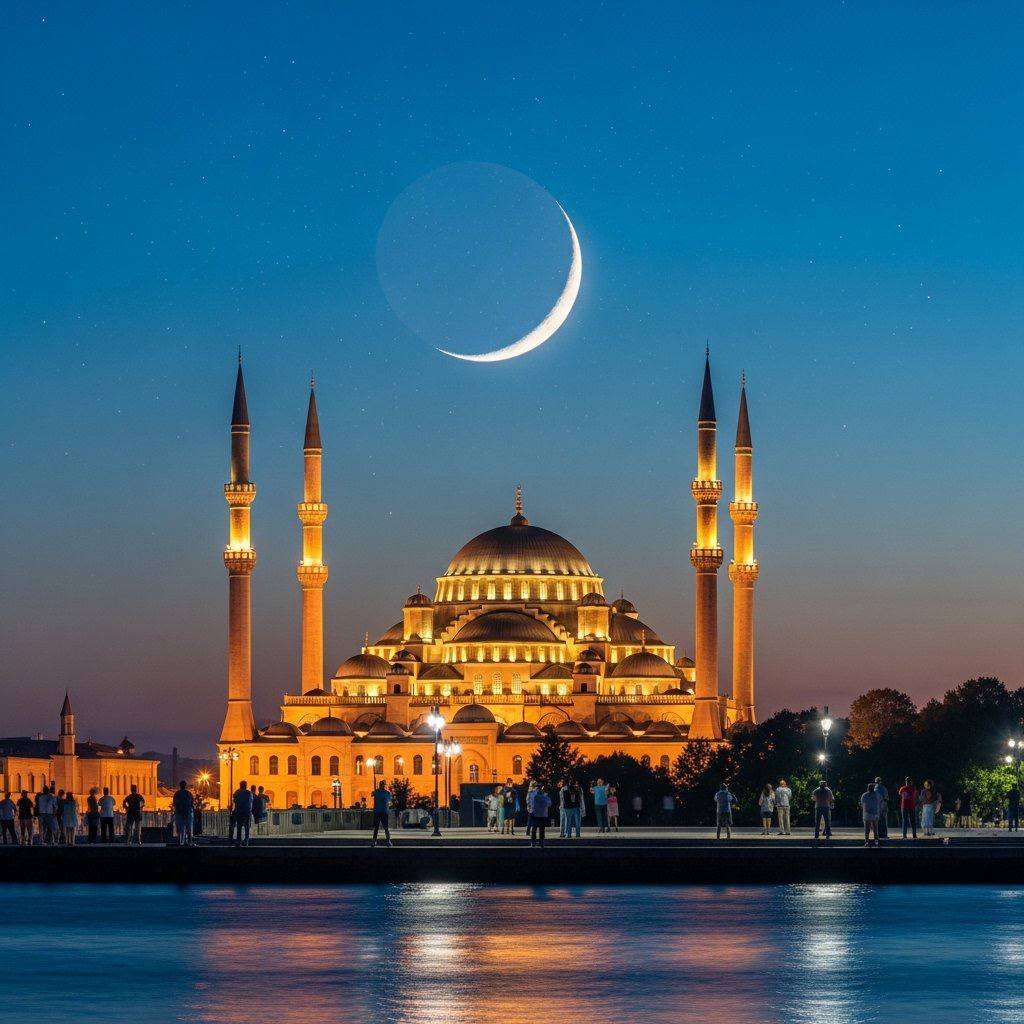
Turkey has officially announced that Thursday, February 19, will mark the beginning of the holy month of Ramadan, following astronomical calculations that determined the crescent moon would not be visible on the expected observation date.
The announcement was made by the Presidency of Religious Affairs, the country’s highest religious body responsible for determining Islamic calendar dates.
According to its statement, scientific assessments conducted on the 29th day of the lunar month showed that crescent visibility would not be possible on Tuesday, February 17 — not only in Turkey but across much of the Arab and Islamic world, as well as the Americas. As a result, officials concluded that the new Hijri month could not begin the following day, setting Thursday as the official start of Ramadan.
Unlike some countries that rely solely on physical moon sightings, Turkey uses pre-calculated astronomical data to determine the beginning of all Hijri months. The system evaluates whether the crescent moon could be seen — either with the naked eye or through telescopes — in any region that shares nighttime hours with the country. If visibility is scientifically deemed possible, the new lunar month begins. If not, the current month completes 30 days before transitioning.
This method, grounded in astronomical modeling, aims to provide consistency and clarity in marking important Islamic dates. It has long been Turkey’s official approach to determining the start of Ramadan and other significant religious observances.
Beyond Turkey, both Australia and Singapore also confirmed Thursday, February 19, as the first day of Ramadan after their own astronomical evaluations ruled out crescent visibility on the observation night.
Ramadan, the ninth month of the Islamic calendar, is observed by millions of Muslims worldwide as a period of fasting, prayer, reflection, and community. The official declaration provides clarity for worshippers preparing for the month-long spiritual journey, which includes daily fasting from dawn to sunset and increased charitable acts.
Discover more from Scoop Hub
Subscribe to get the latest posts sent to your email.