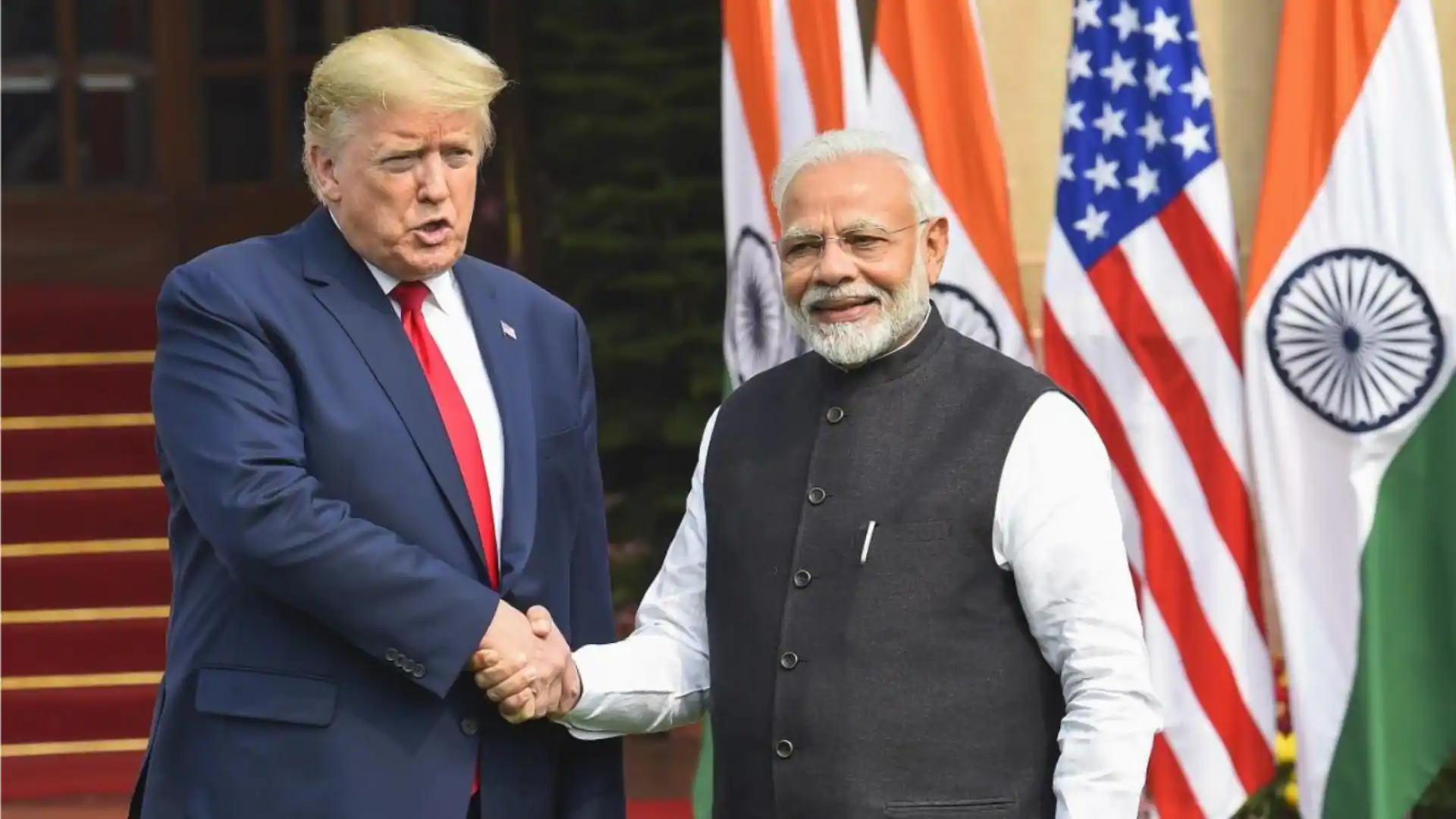
India and the United States have reached a framework for an interim trade agreement, breaking a months-long deadlock between Prime Minister Narendra Modi’s government and President Donald Trump’s administration. The announcement marks a significant thaw in bilateral economic relations after a period of rising tensions, tariffs, and stalled negotiations.
The agreement was confirmed just days after President Trump spoke with Prime Minister Modi, following Washington’s decision to impose steep tariffs on Indian imports. The US had earlier levied a 50 per cent tariff on goods from India, including a 25 per cent penalty linked to New Delhi’s continued purchases of Russian oil—moves the Trump administration said were indirectly supporting Russia’s war in Ukraine.
According to a joint statement released by the Indian government early Saturday, the interim deal will see India open its market to most US industrial goods and a selection of food and agricultural products. In return, Indian exports to the US will be subject to an 18 per cent “reciprocal” tariff under the new framework.
As part of the understanding, India also signalled its intention to significantly increase imports from the United States. Over the next five years, New Delhi plans to purchase around $500 billion worth of US goods, including energy products, aircraft and aircraft components, metals, technology items, and coking coal. If achieved, this would amount to roughly double India’s current import levels from the US.
Both countries also agreed to address long-standing non-tariff barriers that have complicated trade relations. India pledged to reform and remove what it described as restrictive import licensing procedures, an issue that US businesses have complained about for years.
Trade talks between the two nations had originally gained momentum last year during Prime Minister Modi’s visit to Washington, where both sides agreed to work towards a broader bilateral trade pact. However, negotiations later stalled, particularly over India’s reluctance to open its vast and politically sensitive agricultural market. As positions hardened, the Trump administration moved ahead with punitive tariffs, escalating the dispute.
In an executive order issued late Friday in the US, President Trump said India had committed to stopping both direct and indirect imports of Russian oil, expanding defence cooperation with Washington, and increasing purchases of US energy products. On the basis of these commitments, the president said he had decided to remove the additional duties imposed on Indian imports. While India has not yet detailed how it plans to fully end Russian oil purchases, imports from Russia have declined, even though Moscow remains India’s largest crude oil supplier.
Reacting to the breakthrough, Prime Minister Modi welcomed the development, calling it a positive step for both countries. “Great news for India and USA!” he wrote on X, adding that the two sides had agreed on a framework for an interim trade agreement. He also thanked President Trump for his “personal commitment to robust ties between our countries.”
US Trade Representative Jamieson Greer described the deal as a major win for American workers and producers, saying it would open one of the world’s largest economies to US industrial and agricultural exports while lowering tariffs across a wide range of products.
Although India maintained a firm stance during negotiations on protecting its core foodgrain and dairy sectors, the joint statement indicated some movement. New Delhi said it would remove or reduce tariffs on a variety of US food and agricultural products, including animal feed grains, nuts, fruits, soya bean oil, as well as wine and spirits.
India’s commerce minister, Piyush Goyal, said the agreement would unlock a massive opportunity for Indian exporters, describing the US as a $30 trillion market. He stressed that despite the concessions, India’s most sensitive agricultural and dairy products—such as wheat, rice, maize, milk, cheese, poultry, and soya—would remain fully protected.
The interim trade deal comes on the heels of India’s recently concluded trade agreement with the European Union, reflecting a broader shift in New Delhi’s approach to trade. After decades of cautious protectionism, India is increasingly opening its market through strategic trade partnerships, with the US deal now standing as one of the most consequential steps in that direction.
Discover more from Scoop Hub
Subscribe to get the latest posts sent to your email.