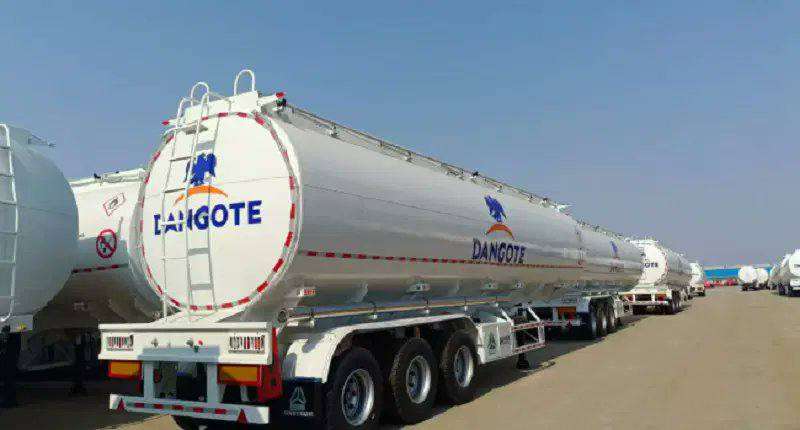
The Government of Ghana has reaffirmed its plan to import petroleum products from the Dangote Petroleum Refinery in Lagos, Nigeria, strengthening regional energy cooperation and highlighting the growing role of Africa’s largest refinery in meeting the continent’s fuel demand.
The commitment was announced at the ongoing Nigerian International Energy Summit (NIES) in Abuja by the Chief Executive Officer of Ghana’s National Petroleum Authority, Godwin Kudzo Tameklo. He explained that Ghana’s existing refineries are too small to satisfy the country’s fuel requirements, making continued reliance on imports unavoidable.
According to Tameklo, Ghana operates two major refineries alongside a modular facility with a capacity of about 5,000 to 6,000 barrels per day. While that output may appear modest when compared with Nigeria’s scale, it remains significant within Ghana’s context. However, it still falls far short of meeting national demand, reinforcing the need for imports of both crude oil and refined petroleum products.
With a capacity of 650,000 barrels per day, the Dangote Petroleum Refinery has indicated that it can comfortably supply Nigeria’s domestic market while also serving customers across Africa. Tameklo said Ghana sees the refinery as a natural and reliable partner, noting that discussions are already underway to establish a strong commercial relationship.
He emphasized that Ghana represents a major offtake market for the Dangote Refinery and that sourcing fuel from Nigeria offers clear economic advantages. Due to the close geographic proximity between both countries, importing refined products from Nigeria is expected to significantly lower fuel delivery and logistics costs for Ghana.
Beyond bilateral trade, Tameklo called for greater regulatory alignment and macroeconomic stability across Africa to support seamless intra-African energy trade. He stressed that exchange-rate stability is particularly important for sustaining cross-border petroleum transactions and attracting long-term investments.
He also warned against heavy-handed price regulation in downstream petroleum markets, arguing that such policies could distort competition and undermine efficiency within the sector.
Ghana’s pledge marks a notable step toward deeper regional integration in Africa’s energy industry, with the Dangote Refinery emerging as a central hub for refining and distribution. As the refinery scales up supply across the continent, partnerships like this could reshape fuel trade in West Africa and reduce reliance on imports from outside the region.
Discover more from Scoop Hub
Subscribe to get the latest posts sent to your email.