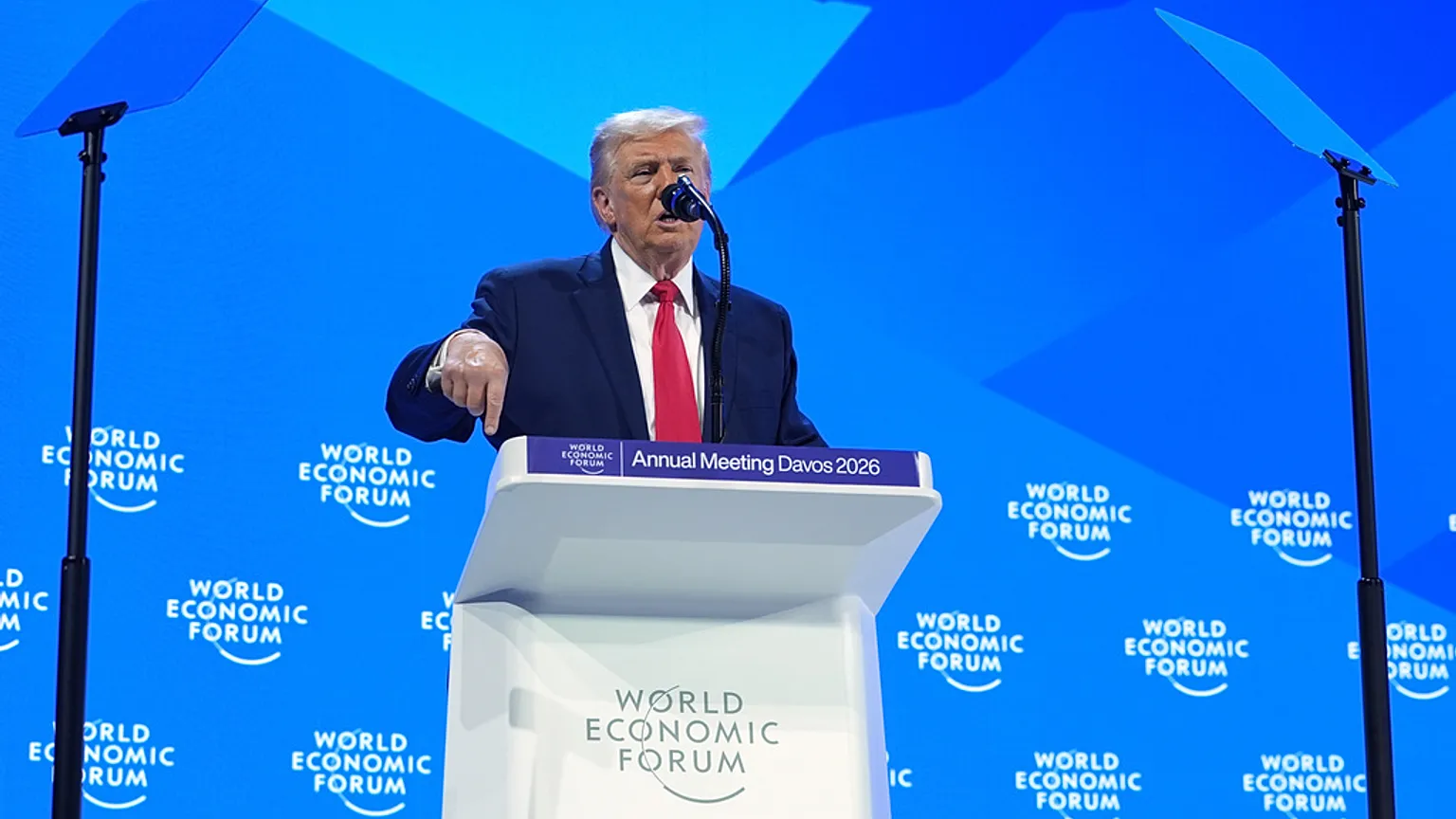
U.S. President Donald Trump on Wednesday appeared to ease weeks of escalating tensions over Greenland, stepping back from earlier threats to impose tariffs and ruling out the use of force in a dispute that had strained relations between the United States and its European allies.
Speaking while attending the World Economic Forum in Davos, Switzerland, Trump signaled a shift in tone after meeting with NATO Secretary General Mark Rutte. His remarks suggested that a negotiated agreement could soon resolve the standoff over Greenland, a Danish territory whose strategic importance has drawn growing attention amid rising Arctic competition.
In recent weeks, Trump’s rhetoric had unsettled the NATO alliance and raised fears of a renewed global trade war. Over the weekend, he had threatened to impose escalating tariffs on U.S.-bound exports from eight European countries as leverage in the dispute. Those comments sparked concern across European capitals about the possibility of the most serious rupture in transatlantic relations in decades.
However, following his discussions in Davos, Trump said Western Arctic allies could reach a comprehensive, long-term arrangement that addresses U.S. security concerns while preserving cooperation with Europe. He indicated that such a deal would support his vision of a “Golden Dome” missile defense system, ensure access to critical minerals, and counter the growing influence of Russia and China in the Arctic region.
According to Trump, the proposed agreement would benefit all parties involved and strengthen collective security. He described it as a lasting solution that would place the United States and its allies in a stronger strategic position, particularly in areas related to defense and resource access.
While details of the potential deal were not disclosed, Trump’s softer stance marked a notable departure from his earlier threats and appeared aimed at calming markets and reassuring allies. Analysts say the shift could help prevent a damaging trade confrontation and restore stability within NATO at a time of heightened global uncertainty.
Discover more from Scoop Hub
Subscribe to get the latest posts sent to your email.