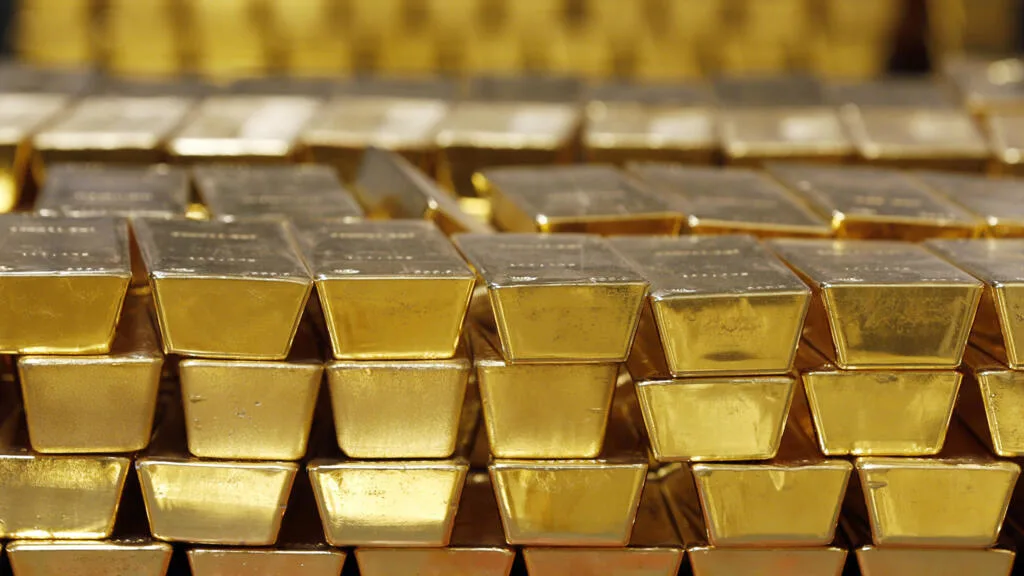
France has completed a significant shift in its financial strategy, bringing home the last of its gold reserves previously held in the United States. The move marks the end of a long-standing arrangement with the Federal Reserve Bank of New York, as Paris consolidates full control of one of the world’s largest gold holdings.
According to the Banque de France, the transition was not only strategic but highly profitable. Between July 2025 and January 2026, the central bank upgraded 129 tonnes of gold—roughly five percent of its total reserves—generating an impressive €12.8 billion in capital gains.
Rather than transporting and refining older gold stored abroad, France chose a more efficient route: selling the remaining stock in New York and purchasing modern, internationally compliant bullion within Europe.
This decision reflects a broader modernization effort that dates back to 2005. Over the years, France has been gradually replacing older, non-standard gold bars with those that meet current global trading requirements. The latest move completes that transition for the portion once held overseas.
Historically, France had already reduced its reliance on foreign storage decades ago. Between 1963 and 1966, the country transferred the majority of its gold reserves out of both the United States and the United Kingdom. What remained in New York until recently was a relatively small but symbolic portion—now fully repatriated.
With this shift, France’s entire gold reserve—estimated at around 2,437 tonnes, making it the fourth-largest in the world—is now held domestically in Paris. This includes about 134 tonnes of older bars and coins that are still being upgraded to meet modern standards, a process expected to be completed by 2028.
Governor Francois Villeroy de Galhau emphasized that the decision was driven by practicality rather than politics. European markets, he noted, offer easier access to high-standard gold, making it more efficient to acquire compliant bullion locally than to refine existing reserves abroad.
The timing of the move also proved advantageous. By executing 26 transactions during a period of record-high gold prices, the Banque de France was able to maximize returns. These gains played a key role in boosting the bank’s financial performance, contributing to a net profit of €8.1 billion in 2025—a sharp turnaround from a €7.7 billion loss the previous year.
France’s gold repatriation highlights a growing trend among nations seeking greater control over their financial assets while adapting to evolving global standards. In an era of economic uncertainty, gold remains a cornerstone of monetary stability—and France has made it clear that it prefers to keep that security firmly within its own borders.
Discover more from Scoop Hub
Subscribe to get the latest posts sent to your email.