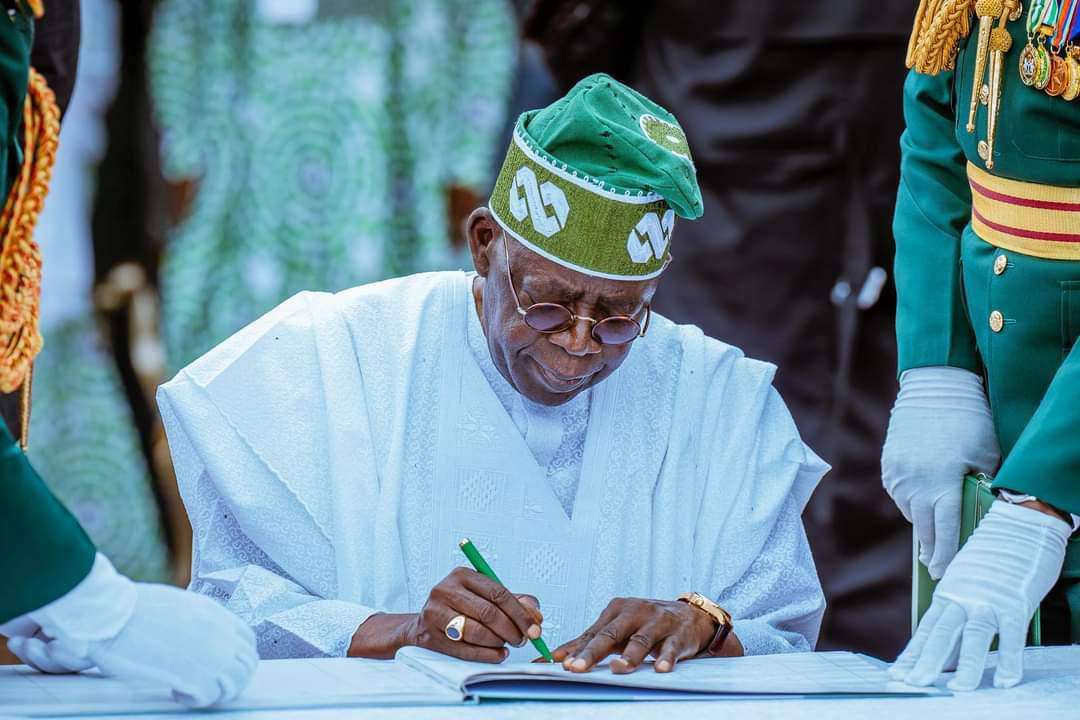
President Bola Ahmed Tinubu has asked the Nigerian Senate to approve a fresh external borrowing plan worth approximately $20.52 billion and €1.05 billion to address funding gaps under the Federal Government’s 2026–2027 Supplementary External Borrowing Plan.
The request was conveyed in a letter read by Senate President Godswill Akpabio during plenary on Tuesday, October 27, 2026. The proposed loans are intended to finance projects across key sectors of the economy, including infrastructure, agriculture, healthcare, education, water supply, security and employment generation.
In his letter, Tinubu said the borrowing plan was designed to close Nigeria’s infrastructure funding gap and support the implementation of projects considered important to the country’s socioeconomic development.
The President stated that the proposed projects had been selected following technical and economic evaluations. He added that the initiatives were expected to create jobs, promote skills acquisition and entrepreneurship, reduce poverty and improve food security. The funds would also support infrastructure development, particularly in the power, transportation and healthcare sectors, alongside financial management reforms.
According to the President, most of the projects and programmes are expected to be implemented across Nigeria’s 36 states and the Federal Capital Territory.
Following the presentation of the presidential letter, Akpabio referred the borrowing proposal to the Senate Committee on Local and Foreign Debts, working with the committees on Appropriation and Finance. The committees have been directed to examine the proposal and report back to the Senate within one week.
The review will help lawmakers assess the proposed financing and its intended uses before the Senate determines the next steps in the approval process. The borrowing request has not yet received final approval through this process.
The proposed borrowing comes amid continued debate over Nigeria’s public debt, the cost of servicing existing loans and the government’s ability to generate sufficient revenue.
Nigeria has relied on both domestic and external borrowing to finance budget deficits, infrastructure projects and other government obligations. While the Federal Government maintains that additional financing is necessary to address major infrastructure needs, concerns remain about repayment obligations and the long-term impact on public finances.
The effectiveness of the proposed borrowing will depend partly on the terms of the loans, how the funds are spent and whether the projects generate lasting economic and social benefits.
Details such as the individual lenders, interest rates and repayment schedules were not fully outlined in the reports available on the request.
Discover more from Scoop Hub
Subscribe to get the latest posts sent to your email.