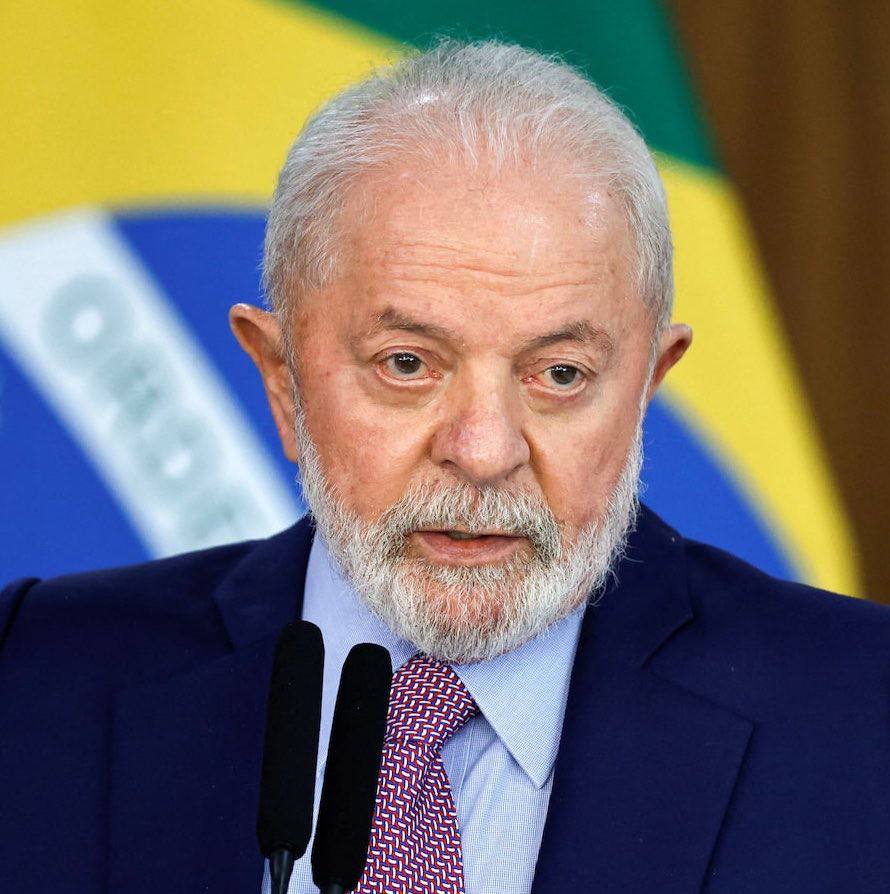
Brazilian President Luiz Inácio Lula da Silva has officially won re-election, securing a fourth, non-consecutive term after defeating Senator Flávio Bolsonaro in the country’s presidential runoff on October 25, 2026.
According to Brazil’s Superior Electoral Court (TSE), Lula received 51.79% of valid votes, equivalent to 64.26 million votes. His opponent, Flávio Bolsonaro, the son of former President Jair Bolsonaro, secured 48.21%, or approximately 59.83 million votes. The electoral authority announced Lula’s victory on Sunday.
The result gives Lula, 80, another four years in office leading Latin America’s largest economy. He previously served as president from 2003 to 2010 before returning to power in January 2023.
Lula represents the Workers’ Party (PT) and campaigned on continuing social welfare programmes, reducing inequality, supporting employment and strengthening Brazil’s economy. His platform also emphasised environmental protection and maintaining Brazil’s independent role in international affairs.
His re-election follows a closely contested race against Flávio Bolsonaro, a conservative senator who entered the runoff after finishing ahead of Lula in the first round.
The election highlighted Brazil’s continuing political divisions between supporters of Lula’s left-wing Workers’ Party and the conservative movement associated with the Bolsonaro family.
Flávio Bolsonaro’s campaign focused on public security, private investment and reducing the state’s role in parts of the economy, offering voters an alternative to Lula’s policy agenda.
The final result leaves Lula facing the challenge of advancing his proposals in a politically divided country, where gaining support from other political groups will be important for legislation and economic reforms.
Lula is expected to begin his new four-year term on January 5, 2027, according to reports on the election result.
His administration will face key issues including economic growth, public spending, social inequality, security and environmental protection. Brazil’s relationships with major global partners and its role in international climate discussions will also remain important during the next term.
The election outcome marks another significant chapter in Lula’s long political career and sets the direction for Brazil’s leadership through 2031.
Discover more from Scoop Hub
Subscribe to get the latest posts sent to your email.