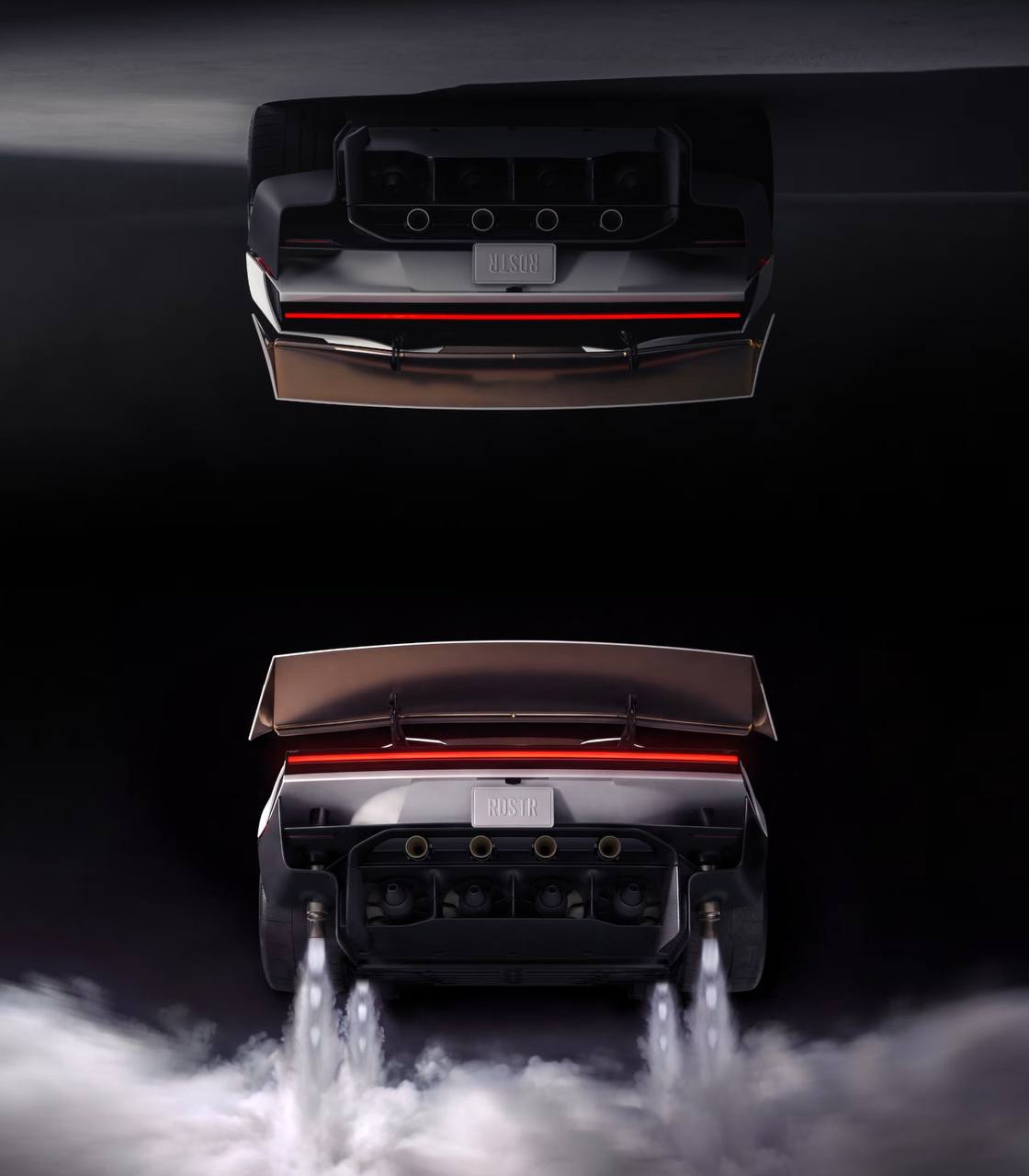
Tesla CEO Elon Musk has unveiled a spectacular demonstration of the company’s long-awaited next-generation Roadster, showing the electric sports car leap over several vehicles, perform a mid-air flip and land safely on its wheels.
The demonstration took place on October 15, 2026, at a SpaceX testing facility in Texas. The event was livestreamed, with footage quickly drawing attention across social media and the technology industry. Unlike a conventional sports car, the showcased Roadster prototype used technology developed through collaboration between Tesla and SpaceX to perform its unusual aerial manoeuvres.
During the demonstration, the Roadster moved up a large curved ramp and travelled upside down before launching into the air. It then rotated mid-flight and landed on the ground. The vehicle also appeared to propel itself over a line of Tesla vehicles, including the Cybertruck, Tesla Semi and Cybercab.
According to reports of the event, the prototype combines a suction system to help it grip the curved ramp with cold-gas thrusters that provide the force needed for its airborne movements. The technology represents an unusual combination of automotive engineering and aerospace concepts.
The demonstration was designed to showcase the vehicle’s capabilities, although it does not establish that such manoeuvres would be suitable or legal on public roads.
Musk also highlighted the Roadster’s extraordinary performance claims. During the event, Tesla showed a demonstration in which the vehicle accelerated from zero to 60 miles per hour in approximately 0.81 seconds with assistance from its thruster system.
The company has also presented the Roadster as a high-performance electric sports car with a projected top speed exceeding 230 mph and a range of more than 300 miles. These figures are manufacturer claims and have not yet been independently established through production-car testing.
The rocket-assisted features distinguish the new Roadster from conventional electric vehicles, but questions remain about cost, practicality, safety and the regulatory requirements for any version intended for road use.
Despite the dramatic unveiling, customers should not expect to see the new Roadster widely available immediately. Musk said production is planned to begin in 2028. The vehicle has faced repeated delays since Tesla first introduced its second-generation concept in 2017.
The company has also indicated that versions equipped with the full flight system will face restrictions on public-road use. That means the technology showcased during the demonstration should not be confused with an ordinary road-legal production car.
The Roadster’s latest appearance has reignited interest in Musk’s long-running ambition to combine electric vehicles with rocket-inspired technology.
Supporters see the demonstration as evidence of ambitious engineering and a new approach to vehicle performance. Skeptics, however, have questioned how useful the aerial features will be for everyday drivers and whether the car’s most extraordinary capabilities can be delivered safely and affordably.
For now, the demonstration offers a striking glimpse of what Tesla is attempting to build, rather than proof that flying cars are ready for everyday transportation.
As Tesla works toward its planned production date, attention will turn to whether the company can turn the prototype’s headline-grabbing stunts into a commercially viable vehicle.
Discover more from Scoop Hub
Subscribe to get the latest posts sent to your email.