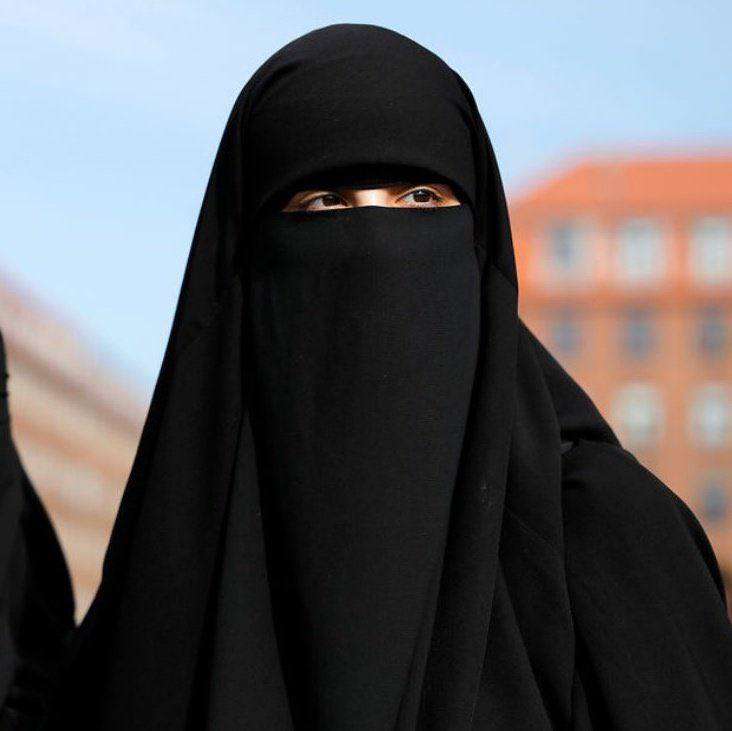
Italy has approved a new decree-law banning the wearing of burqas and niqabs in schools, marking a significant expansion of restrictions on face coverings in the country’s education system.
The decree was approved by Prime Minister Giorgia Meloni’s Council of Ministers on September 24 as part of a wider package of measures focused on integration and education.
Under the new rules, students will not be permitted to participate in school activities with their faces covered in a way that prevents identification. The restrictions apply to curricular and extracurricular activities as well as school-family activities, with exceptions for specific health or security reasons.
Violations can attract fines ranging from €200 to €1,000, with penalties applying to parents when the person wearing the face covering is a minor, according to the final measure reported by Italian news agency ANSA.
The government has also introduced a 30% limit for certain non-Italian students in classrooms, particularly students who lack sufficient Italian-language preparation. The measure includes exceptions where the limit cannot reasonably be met and provides additional funding for schools that need to strengthen Italian-language support.
The government says the measures are intended to support integration and prevent the concentration of students with limited Italian-language skills in particular classrooms. Meloni described the measures as tools to help schools integrate students while maintaining common rules.
The face-covering measure specifically targets the burqa and niqab. It does not impose a general ban on the hijab, which covers the hair but leaves the face visible.
Although the decree-law takes effect immediately, it must be approved by Italy’s Parliament within 60 days to remain in force. President Sergio Mattarella has also expressed concern about measures that could create barriers to education.
The decision has drawn criticism from opposition politicians, teachers’ unions and some school leaders, who have questioned whether the new classroom rules can be effectively implemented in areas with larger migrant populations.
Italy now joins several European countries that have introduced restrictions on face coverings, although the scope and legal basis of those restrictions vary from country to country.
Discover more from Scoop Hub
Subscribe to get the latest posts sent to your email.