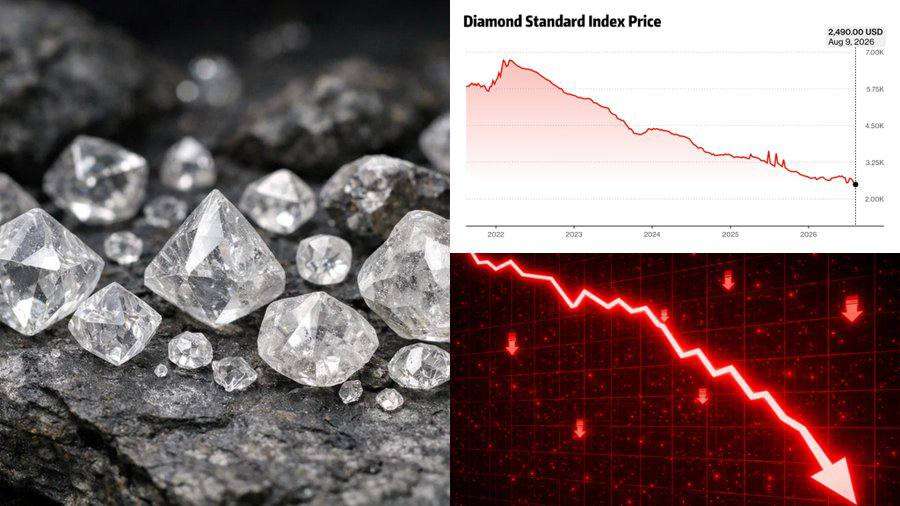
The global diamond industry is facing one of its most significant disruptions in decades, with natural diamond prices falling to their lowest level this century as lab-grown alternatives continue to gain ground.
The Diamond Standard Index, tracked on the Bloomberg Terminal, reached an all-time low in the first half of August. The decline represents a drop of more than 50 per cent from 2022 levels, highlighting the growing pressure on the traditional diamond market.
At the centre of the disruption is the rapid expansion of lab-grown diamonds. Advances in technology have made it possible to produce diamonds with essentially the same physical and chemical characteristics as naturally mined stones, but at a fraction of the price.
Lab-grown diamonds are now reportedly selling for around 70 to 80 per cent less than comparable natural diamonds. Their growing affordability has also changed consumer behaviour, particularly in the United States, where they now account for about 45 per cent of engagement rings, compared with roughly 5 per cent in 2019.
The shift is putting pressure on an industry that has traditionally relied on the scarcity of natural diamonds to support their value and appeal.
Diamond producers have attempted to respond by reducing supply. Global output has fallen by about 20 per cent over the past four years to approximately 98 million carats. However, the production cuts have failed to stop the decline in prices, suggesting that the market is facing a deeper structural change rather than a temporary imbalance between supply and demand.
One factor that could add further pressure is the growing supply of second-hand diamonds. Market commentator Saul Sadka has argued that as members of the Baby Boomer generation die, more inherited diamonds could enter the resale market, increasing the amount of natural stones available to buyers.
Sadka believes the diamond industry could eventually experience a shift similar to what happened with pearls, which once represented luxury and social status but later became far more commonplace and less exclusive.
The impact of the downturn is already visible in major diamond-producing and trading centres. Israel’s diamond industry, for example, has contracted sharply, with its contribution to the country’s economy falling from about 3 per cent of GDP to less than 0.2 per cent.
The changing market raises a difficult question for the traditional diamond industry: if consumers can purchase a laboratory-created stone with virtually identical physical and chemical properties at a substantially lower price, how much are they willing to pay for the story, rarity and natural origin associated with a mined diamond?
For decades, the diamond industry successfully positioned natural stones as symbols of love, wealth and prestige. But the rise of lab-grown diamonds is challenging that model by giving consumers a cheaper alternative that does not sacrifice the basic characteristics they associate with diamonds.
The continued decline in natural diamond prices suggests that the industry may be entering a new era in which scarcity alone is no longer enough to guarantee high value.
Whether natural diamonds regain their appeal or continue losing market share to lab-grown alternatives will depend largely on how producers respond to changing consumer preferences. For now, however, the figures point to a major transformation in one of the world’s most established luxury markets.
Discover more from Scoop Hub
Subscribe to get the latest posts sent to your email.