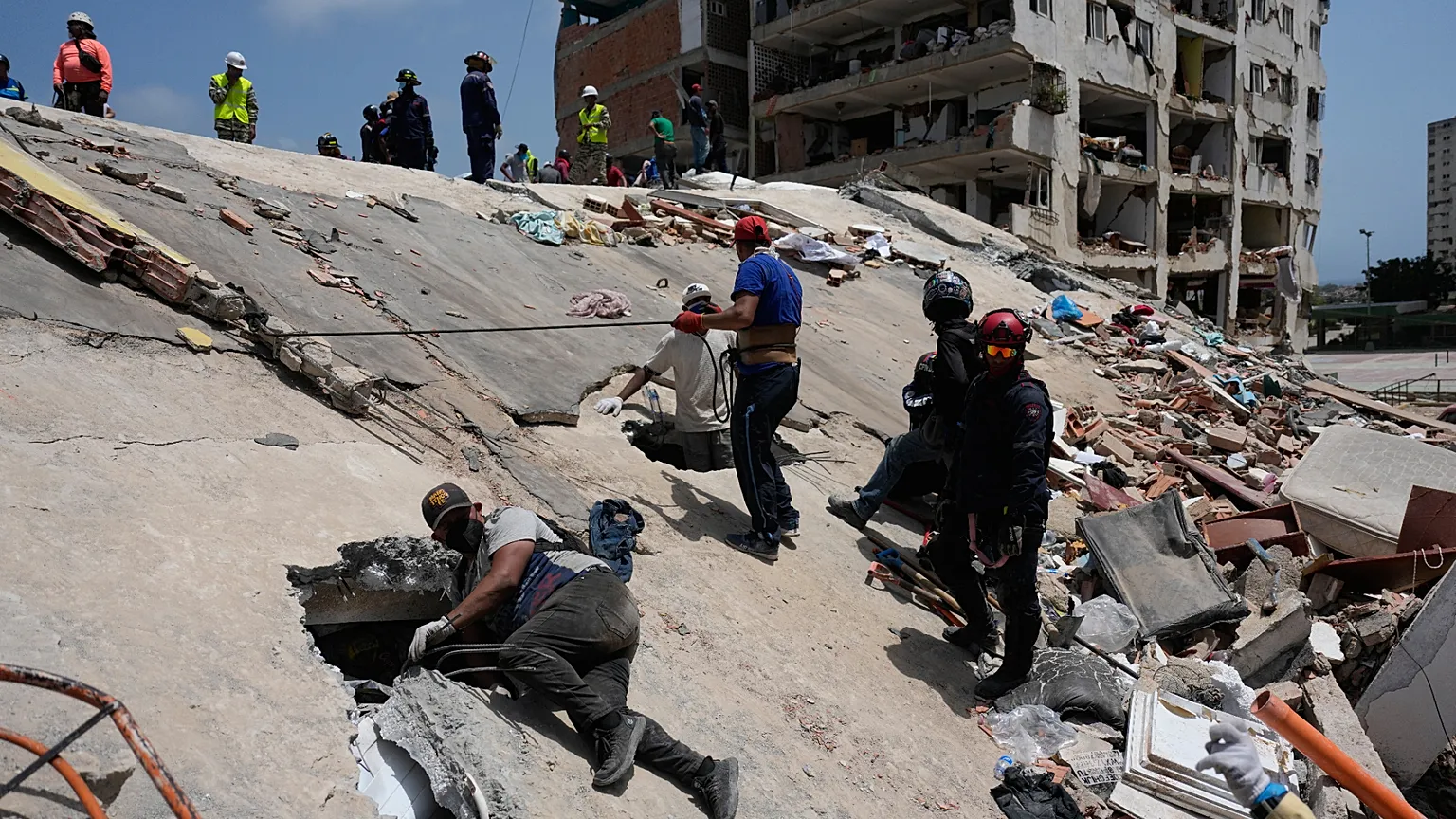
The death toll from Venezuela’s devastating twin earthquakes has risen to 1,430, as rescue teams race against time to locate survivors beneath collapsed buildings while millions of people face an escalating humanitarian crisis.
The powerful earthquakes, measuring 7.2 and 7.5 in magnitude, struck on Wednesday, leaving widespread destruction across several parts of the country. Authorities have confirmed that 3,238 people were injured, while thousands remain missing as emergency responders continue search-and-rescue operations.
The United Nations has warned that the full scale of the disaster may be far greater than current figures suggest. According to the UN’s humanitarian agencies, as many as 6.76 million people could require urgent assistance, including emergency shelter, clean drinking water, sanitation, healthcare, protection services, and other essential relief supplies.
International support has begun arriving as Venezuela struggles to cope with the disaster. The United States announced that military transport aircraft had started landing at Simón Bolívar International Airport after one of its runways became operational. A U.S. naval vessel has also arrived off Venezuela’s coast to support humanitarian efforts.
Meanwhile, the United Nations Office for the Coordination of Humanitarian Affairs (OCHA) said search-and-rescue teams from at least 17 countries are being mobilized to assist local authorities in locating survivors trapped beneath the rubble.
In many of the hardest-hit communities, residents have joined rescue efforts using their bare hands and basic tools to search through collapsed apartment buildings, hoping to find loved ones before time runs out. Disaster experts note that the first 72 hours after a major earthquake are considered the most critical period for rescuing survivors.
One of the few moments of hope came in the coastal state of La Guaira, north of Caracas, where local residents successfully rescued an infant from the debris approximately 32 hours after the earthquakes struck. The emotional rescue has become a symbol of resilience amid the widespread devastation.
According to National Assembly President Jorge Rodriguez, the disaster has caused enormous human and economic losses. The United Nations estimates that physical damage has reached approximately $6.7 billion, representing nearly six percent of Venezuela’s gross domestic product (GDP).
UN Emergency Relief Coordinator Tom Fletcher warned that the death toll could continue to rise significantly, noting that more than 50,000 people remain unaccounted for as rescue operations continue across affected areas.
The disaster has also intensified public frustration with the government’s emergency response. Many Venezuelans, already facing years of economic hardship and political instability, have criticized local authorities for what they describe as a slow and inadequate reaction to the crisis.
Addressing the nation, U.S.-backed interim Venezuelan leader Delcy Rodríguez sought to reassure citizens that international assistance was arriving and emphasized that Venezuela was “not alone” in confronting one of the country’s worst natural disasters in recent history.
As humanitarian organizations expand relief operations and international rescue teams continue searching for survivors, millions of Venezuelans remain in urgent need of food, shelter, medical care, clean water, and sanitation. With the humanitarian situation evolving rapidly, global aid agencies have warned that sustained international support will be critical to helping the country recover from the catastrophic earthquakes.
Discover more from Scoop Hub
Subscribe to get the latest posts sent to your email.