The Taliban government in Afghanistan has introduced a new family law regulation that outlines rules governing marriage, divorce, guardianship, and child marriage under its interpretation of Islamic law.
The newly approved 31-article decree, titled Principles of Separation Between Spouses, was signed by Taliban supreme leader Hibatullah Akhundzada and published in Afghanistan’s official gazette.
According to the new regulation, girls who are married without their consent now have the legal right to challenge such unions in court and seek annulment.
The decree explicitly states that a girl’s consent is a fundamental right and cannot be ignored or overridden by family members or guardians.
Under the new framework, if a marriage is arranged without a girl’s approval, she can file a complaint through religious courts and request that the marriage be dissolved.
The law also addresses broader marital disputes, including separation, divorce procedures, allegations of adultery, guardianship matters, and cases involving absent spouses.
One of the most widely discussed provisions in the decree is a clause stating that the silence of a “virgin girl” may be interpreted as consent to marriage.
However, the same principle does not apply to boys or previously married women, whose silence cannot be taken as approval.
The regulation also permits child marriages in certain circumstances.
Under the law, fathers and grandfathers retain authority to arrange marriages involving minor children, provided certain religious and social conditions are met.
These conditions include whether the prospective husband is considered socially suitable and whether the agreed dowry aligns with accepted religious standards.
The decree incorporates the Islamic legal concept known as khiyar al-bulugh, or “option after puberty.”
This provision allows individuals whose marriages were arranged before adolescence to seek annulment once they reach puberty.
However, the cancellation of such marriages is not automatic and must be approved by religious courts.
The law also states that a marriage may be declared invalid if a partner is deemed unsuitable or if the dowry arrangement is considered excessively unfair or religiously inappropriate.
In addition, Taliban judges have been granted authority to intervene in cases involving religious conversion, allegations of adultery, prolonged disappearance of husbands, and zihar—a traditional Islamic legal concept in which a husband compares his wife to a female relative he is forbidden to marry.
Depending on the circumstances, judges may order separation, imprisonment, or other forms of punishment.
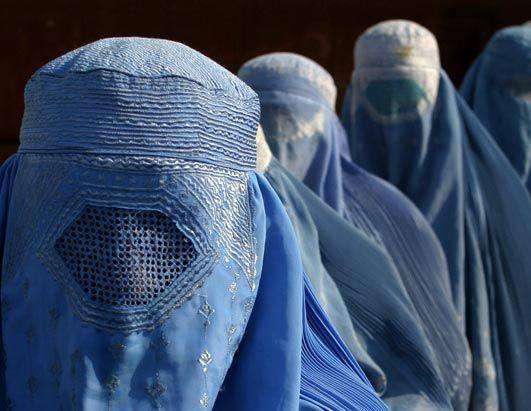
The introduction of the new family law comes as the Taliban continues to face growing international criticism over its treatment of women and girls since returning to power in August 2021.
Since regaining control, the Taliban has imposed sweeping restrictions on female education, employment, travel, and participation in public life.
Girls in Afghanistan remain barred from education beyond sixth grade, while women have been excluded from universities and many workplaces.
The latest decree is likely to generate mixed reactions globally, with some focusing on the legal recognition of a girl’s right to challenge forced marriage, while others raise concerns over provisions that continue to permit child marriage and interpret silence as consent.
The regulation reflects the Taliban’s ongoing effort to formalize governance and legal systems under its interpretation of Sharia law, even as debates over women’s rights and personal freedoms remain central to international scrutiny of its rule.
Discover more from Scoop Hub
Subscribe to get the latest posts sent to your email.