A U.S.-based technology startup is reimagining the future of artificial intelligence infrastructure with an ambitious plan to move data centers from land to the open ocean.
Panthalassa, an ocean technology company focused on wave energy innovation, is developing offshore AI data centers powered by ocean motion and cooled naturally by seawater.
The company’s futuristic concept is gaining serious investor attention after securing a fresh $140 million funding round led by billionaire investor Peter Thiel, co-founder of PayPal and an early investor in Facebook.
The new investment reportedly pushes Panthalassa’s valuation close to $1 billion, highlighting growing confidence in alternative energy solutions for AI infrastructure.
Panthalassa has spent the last decade developing wave energy systems and is now shifting that expertise toward solving one of the biggest challenges facing the AI industry: the enormous energy and cooling demands of data centers.
As global demand for artificial intelligence computing continues to rise, traditional land-based data centers are facing increasing pressure from power consumption, cooling costs, and grid limitations.
Panthalassa believes the ocean offers a practical solution to these challenges. Its concept combines renewable energy generation and offshore computing by harnessing the natural motion of ocean waves to generate electricity directly at sea.
The company’s system works by using wave movement to force seawater through turbines, producing energy capable of powering AI processors without relying on traditional electrical grids.
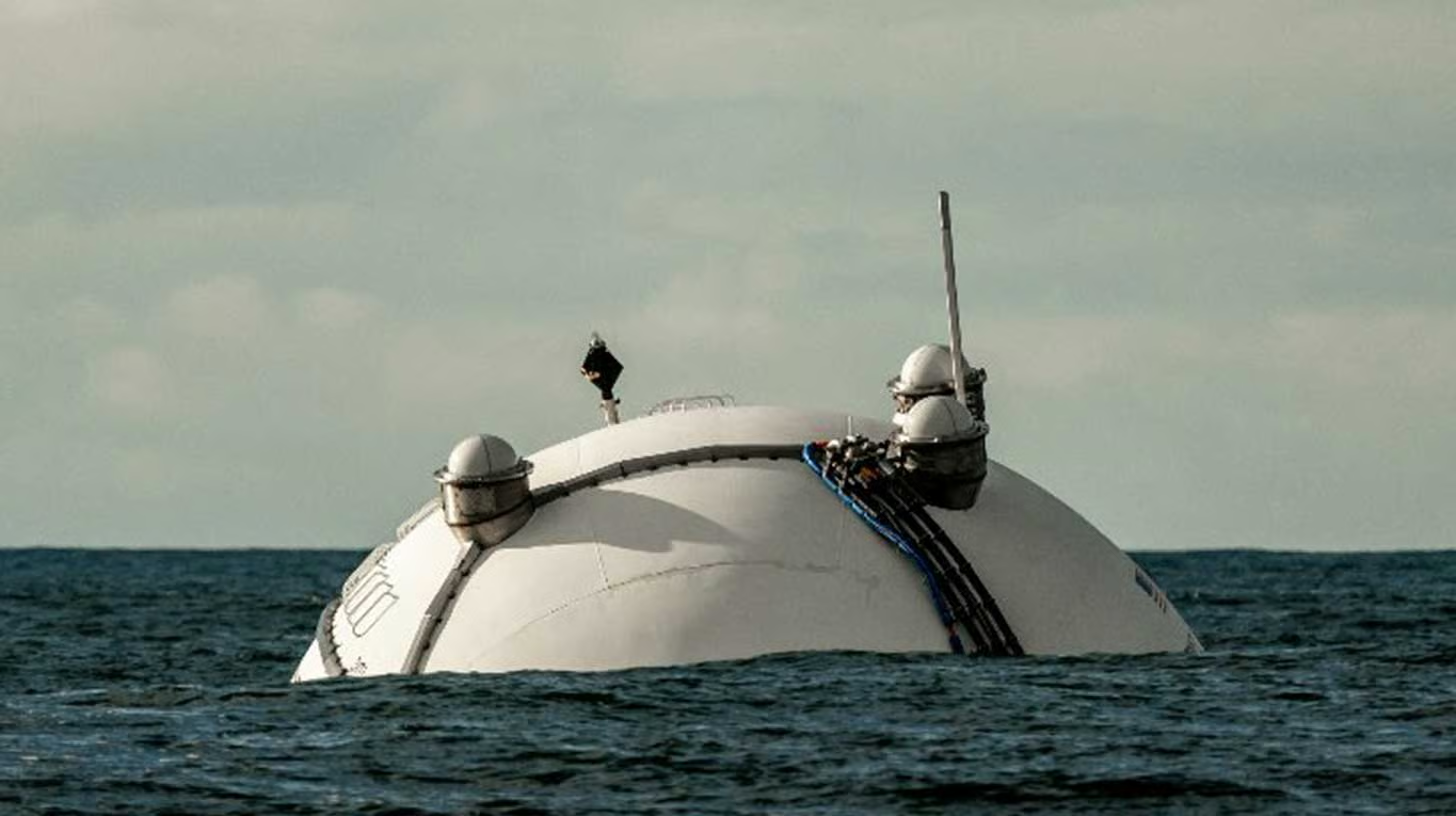
This infrastructure is housed inside what the company calls a node—an 85-meter-long steel structure designed to remain mostly submerged beneath the ocean surface. Inside the structure is a hermetically sealed container that houses AI servers.
Rather than depending on expensive mechanical cooling systems, the servers are naturally cooled by the surrounding ocean water, significantly reducing energy costs and thermal challenges.
Another distinctive feature of the design is mobility. The floating data center units are reportedly capable of navigating themselves to deployment locations using hull design and ocean dynamics, eliminating the need for engines or fuel.
Unlike most renewable energy projects, Panthalassa does not plan to transmit electricity back to land. Instead, the AI servers will process data directly offshore. User requests will be received through satellite internet provided by SpaceX’s Starlink network, allowing queries to be sent to offshore servers and responses returned the same way.
This means the energy generated at sea is used immediately for computation rather than being routed through transmission infrastructure.
Panthalassa CEO and co-founder Garth Sheldon-Coulson said the company is now entering a new phase focused on scaling operations. According to him, the startup is preparing to build factories, deploy fleets of offshore nodes, and establish what it sees as a more sustainable source of computing power for the future.
The concept arrives at a time when AI companies worldwide are racing to secure energy resources capable of supporting increasingly powerful models and expanding cloud infrastructure.
As concerns grow around the environmental footprint of AI, offshore data centers powered by renewable ocean energy could represent a radical new direction for the tech industry.
While the idea remains unconventional, Panthalassa’s approach reflects a growing willingness among technology companies to rethink where and how computing infrastructure is built.
If successful, the company’s floating AI data centers could reshape conversations around sustainable technology, renewable energy, and the future of global computing infrastructure.
Discover more from Scoop Hub
Subscribe to get the latest posts sent to your email.