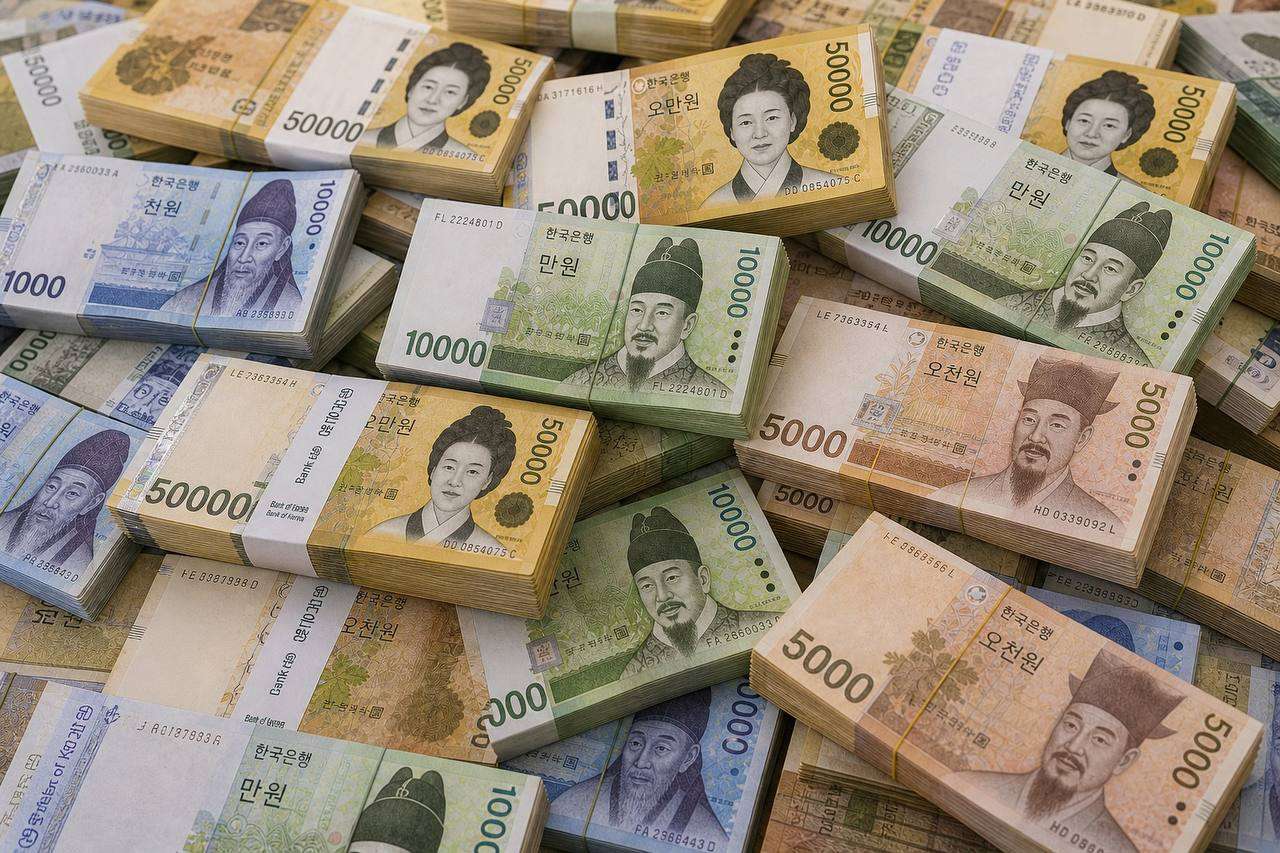
South Korea is strengthening its position as one of the world’s most influential cryptocurrency markets, with won-denominated trades now accounting for 30 percent of all global spot crypto trading volume in 2026.
New data from crypto research firm Kaiko shows that South Korea now ranks second only to U.S. dollar markets in global cryptocurrency trading activity. The development highlights the country’s growing importance in digital asset markets, fueled by strong retail participation and rising investor appetite for alternative assets.
With a population of approximately 52 million people, South Korea is currently generating around $26 billion in weekly cryptocurrency turnover, underscoring the scale of trading activity within the country. Much of this activity is concentrated on two major domestic exchanges: Upbit and Bithumb.
Together, these platforms dominate South Korea’s crypto ecosystem and account for the majority of the country’s trading volume. The latest figures suggest South Korea’s crypto market has become increasingly fast-paced and retail-driven, distinguishing it from other major Asian markets.
A key characteristic of the Korean market is its strong preference for altcoins. According to the data, approximately 85 percent of weekly crypto trading volume in South Korea flows into digital assets outside of Bitcoin.
This trend points to an investor base with a relatively high tolerance for risk and strong interest in higher-volatility tokens rather than more established cryptocurrencies. Despite its massive trading volume, South Korea’s crypto market still operates with relatively thinner order books compared to neighboring Japan.
Market depth on Upbit reportedly ranges between $1 million and $1.2 million, while Japan-based bitFlyer maintains deeper liquidity at approximately $3.5 million across its books.
Japan’s crypto market is smaller in terms of trading volume but is generally viewed as more stable and institutionally balanced. Yen-denominated crypto trading is estimated at between $2 billion and $3 billion monthly across four exchanges.
The contrast highlights the structural differences between the two markets. While South Korea is characterized by high-volume, rapid retail trading, Japan continues to maintain deeper liquidity and a more measured institutional profile.
South Korea’s crypto boom is unfolding alongside a strong rally in the country’s stock market, particularly within technology and semiconductor sectors.
The iShares MSCI South Korea ETF (EWY) has reportedly returned more than 37 percent year-to-date through March 11, 2026. The rally has largely been driven by surging demand for memory chips powering the global artificial intelligence boom.
Major South Korean companies such as Samsung Electronics and SK Hynix account for roughly 45 percent of the ETF’s holdings, positioning them at the center of the AI-driven technology surge. Investor optimism around Korean equities also appears to be growing.
Options market data reportedly shows call open interest on EWY reaching approximately $5.5 billion in notional value, the highest level on record and above previous peaks seen in 2015 and 2021.
The simultaneous growth of South Korea’s crypto and equity markets suggests a broader surge in investor confidence tied to technology, innovation, and digital finance.
As global digital asset adoption continues to expand, South Korea is increasingly emerging not just as an active crypto participant, but as a major force shaping the future of global cryptocurrency trading.
Discover more from Scoop Hub
Subscribe to get the latest posts sent to your email.