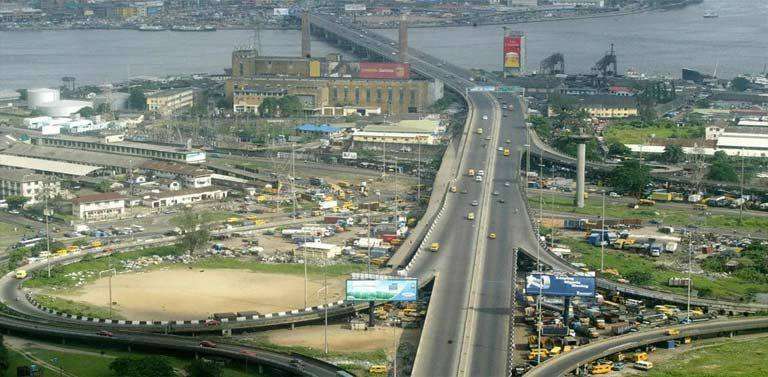
The Federal Government of Nigeria has approved the complete demolition and reconstruction of the iconic Carter Bridge in Lagos State at an estimated cost of N548.98 billion, following reports that the aging structure has deteriorated beyond repair.
The announcement was made by the Minister of Works, Dave Umahi, after Thursday’s Federal Executive Council (FEC) meeting, where approval was granted for the large-scale infrastructure project.
According to Umahi, the decision to demolish and rebuild the bridge came after several years of technical investigations revealed severe structural damage beneath the bridge, particularly in its underwater foundation.
He explained that detailed assessments carried out in 2013, 2019, and again under the current administration all reached the same conclusion — the bridge’s underwater piles and pile caps had deteriorated extensively and could no longer be rehabilitated.
Umahi noted that both local and international experts were consulted through a stakeholders’ engagement process, and there was unanimous agreement that rehabilitation was no longer a practical option.
He said the deterioration of the underwater components had progressed rapidly, making total demolition and reconstruction the safest and most viable solution.
The reconstruction contract was awarded to China Civil Engineering Construction Corporation (CCCC) after what the government described as a competitive bidding process involving several major construction firms, including Julius Berger, CCECC, CBC, and China Harbour High Tech.
Beyond rebuilding the bridge, the government also plans to expand and redesign the structure to improve traffic movement in one of Lagos’ busiest transport corridors.
Umahi disclosed that the new Carter Bridge will be longer than the current one, with the project length increasing from 1.525 kilometres to 1.93 kilometres.
The expansion includes the addition of a new flyover ramp intended to eliminate one of the longstanding traffic bottlenecks that has contributed to severe congestion in the area for years.
According to the minister, the redesign is aimed at improving traffic flow between Lagos Island and the mainland, where the bridge serves as a critical transport link for thousands of commuters daily.
The new structure will also include a navigational waterway spanning 105 metres by two, improving maritime access beneath the bridge.
In addition to the Carter Bridge project, the Federal Executive Council also approved N24.89 billion for work on the underwater components of the Third Mainland Bridge, with the contract awarded to Julius Berger.
The government says the projects form part of a broader infrastructure renewal agenda, with several major works expected to be commissioned ahead of President Bola Ahmed Tinubu’s third anniversary in office on May 29.
The Carter Bridge remains one of Lagos’ most historically important transport structures.
Originally named after Gilbert Carter, a former British governor of the Lagos Colony, the bridge has connected Lagos Island to the mainland for decades and plays a central role in the city’s daily transportation network.
Over the years, concerns about the bridge’s safety and structural integrity have repeatedly surfaced due to its age, constant heavy traffic usage, and exposure to the corrosive saltwater conditions of the Lagos Lagoon.
Authorities have previously introduced restrictions on heavy-duty vehicles and carried out multiple repair works in an effort to preserve the structure, but long-term deterioration has continued.
With the newly approved reconstruction, Lagos residents can expect one of the city’s most important transport assets to undergo a complete transformation.
While the project is likely to trigger concerns about possible traffic disruptions during construction, many commuters and transport analysts are expected to welcome the move as a necessary long-term investment in Lagos’ infrastructure future.
Once completed, the rebuilt Carter Bridge is expected to improve traffic efficiency, enhance structural safety, and better support the transportation demands of Nigeria’s busiest city.
Discover more from Scoop Hub
Subscribe to get the latest posts sent to your email.