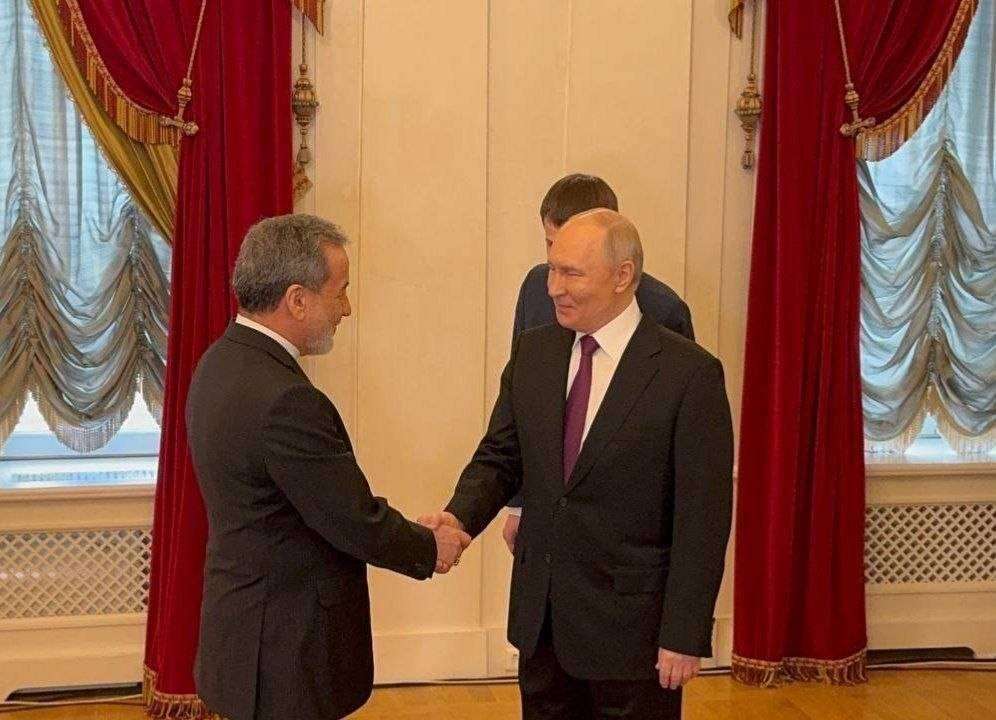
Iran’s top diplomat, Abbas Araghchi, has arrived in Saint Petersburg for high-level talks with Vladimir Putin, as diplomatic efforts to ease tensions between Tehran and Washington remain uncertain.
The visit comes at a critical moment, following a series of intense diplomatic engagements across multiple regions. Araghchi’s trip to Russia follows earlier stops in Oman and Islamabad, where mediators have been working behind the scenes to keep communication channels open between Iran and the United States.
Recent developments, however, have complicated those efforts. A planned visit to Pakistan by U.S. envoys was abruptly cancelled by Donald Trump, raising questions about the immediate future of direct talks. The cancellation followed signals from Iranian officials that no formal meeting with U.S. representatives was scheduled during that window.
Despite the setback, indirect communication appears to be ongoing. Iranian media reports indicate that Tehran has sent written messages to Washington through intermediaries, outlining key conditions and “red lines,” particularly on sensitive issues such as nuclear policy and the strategic Strait of Hormuz. While these exchanges are not part of formal negotiations, they suggest that both sides are still exploring potential pathways to de-escalation.
The Strait of Hormuz remains central to the crisis. Iran’s decision to close the vital waterway has disrupted global flows of oil, gas, and fertiliser, triggering sharp increases in prices and raising concerns about broader economic fallout, especially in developing countries. At the same time, a U.S. blockade has further heightened tensions, creating a complex and volatile standoff in one of the world’s most critical energy corridors.
There are also emerging reports that Iran may have floated a proposal aimed at reopening the strait and ending hostilities, while postponing nuclear negotiations to a later stage. Though not officially confirmed, the reports have fueled cautious optimism that a diplomatic breakthrough could still be possible.
For President Trump, the situation carries both international and domestic implications. Rising fuel prices linked to the disruption in the Strait of Hormuz are adding pressure at home, particularly as the country approaches midterm elections. Public sentiment has also shown growing concern over the conflict, increasing the urgency for a diplomatic resolution.
As Araghchi meets with Putin, the outcome of these discussions could play a pivotal role in shaping the next phase of the crisis. With global markets on edge and diplomatic channels under strain, the coming days may determine whether tensions ease—or escalate further.
Discover more from Scoop Hub
Subscribe to get the latest posts sent to your email.