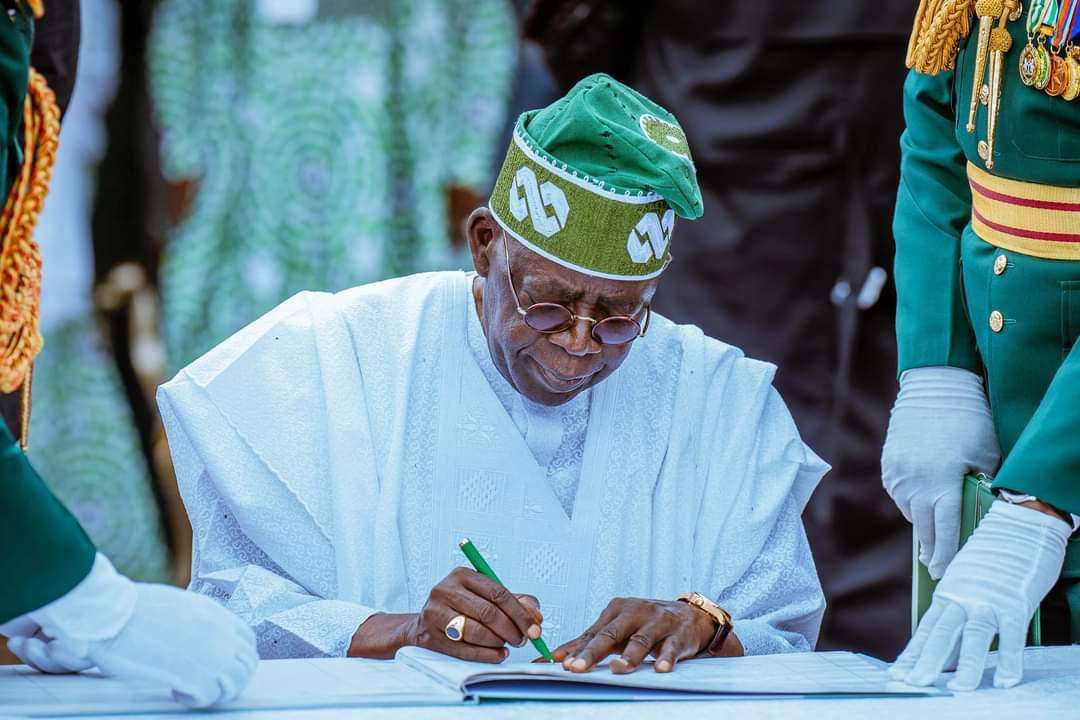
Nigeria has officially entered a new fiscal chapter as President Bola Ahmed Tinubu signs the 2026 Appropriation Bill into law, setting the country’s total budget at a record ₦68.32 trillion. Alongside this, the President also approved an extension of the 2025 budget implementation, moving its deadline from March 31 to June 30, 2026, in a move aimed at ensuring ongoing projects are fully completed.
The newly signed budget reflects the administration’s broader economic direction, placing significant emphasis on infrastructure, national security, and long-term growth. According to details released by the presidency through Special Adviser on Information and Strategy, Bayo Onanuga, the financial plan is carefully structured to balance existing obligations with future-focused investments.
A closer look at the figures shows that ₦4.799 trillion has been allocated for statutory transfers, while ₦15.8 trillion will go toward servicing Nigeria’s debt. Recurrent expenditure accounts for ₦15.4 trillion, covering the day-to-day operations of government, while a substantial ₦32.2 trillion has been earmarked for capital projects through the Development Fund. This means nearly half of the total budget is dedicated to capital expenditure, signaling a strong push toward infrastructure development and economic expansion.
The presidency describes this allocation as a deliberate effort to drive productivity and improve living standards, aligning with the government’s “Renewed Hope Agenda.” By prioritizing capital investment, the administration aims to stimulate growth, create jobs, and strengthen critical sectors of the economy.
Equally significant is the decision to extend the lifespan of the 2025 budget. The extension specifically targets the capital component, allowing more time for the completion of key infrastructure projects that are already at advanced stages. This move is expected to prevent rushed spending and ensure that allocated funds deliver tangible results.
President Tinubu has also issued a directive to Ministries, Departments, and Agencies to maintain strict discipline in the use of public funds. Transparency, efficiency, and value for money are expected to guide all spending, with a clear focus on delivering projects on time and within budget.
In his remarks, the President acknowledged the role of the National Assembly, praising lawmakers for their cooperation and swift passage of the budget. Their collaboration, the presidency noted, was crucial in ensuring that the fiscal plan was approved in time for implementation, which officially commenced on April 1, 2026.
As Nigeria begins to execute one of its largest budgets to date, attention will now shift to how effectively these allocations translate into real economic impact. For many Nigerians, the success of this budget will ultimately be measured not in figures, but in visible improvements in infrastructure, security, and everyday living conditions.
Discover more from Scoop Hub
Subscribe to get the latest posts sent to your email.