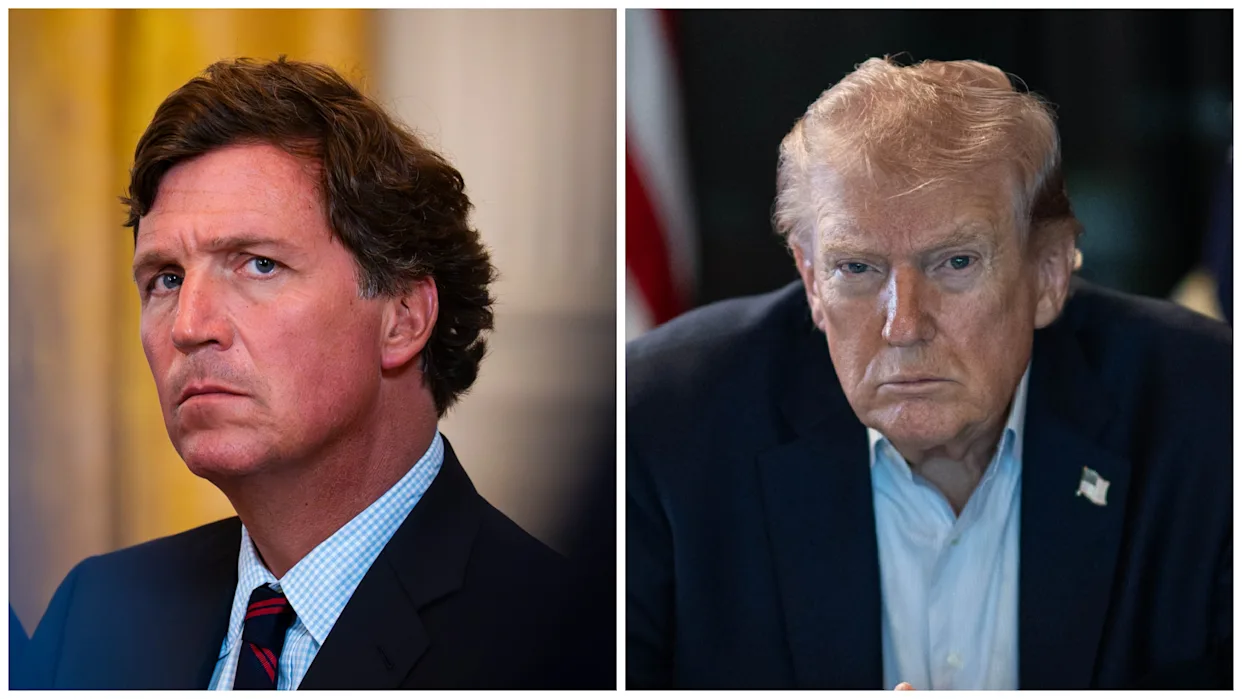
Tensions within U.S. political circles are escalating as Tucker Carlson publicly calls on government officials to resist any directive from President Donald Trump that could result in harm to Iranian civilians. The remarks mark a sharp and highly visible break between the conservative commentator and the former ally he once supported.
Speaking on his podcast, Carlson delivered a direct and uncompromising message, urging officials to stand their ground if faced with orders that could lead to large-scale civilian casualties. He emphasized that there should be a clear refusal, even suggesting that leaders tell the president to handle the nuclear command process on his own—a pointed reference to the highly sensitive system used to authorize nuclear strikes.
Carlson didn’t stop there. He also criticized Trump’s recent rhetoric surrounding the Strait of Hormuz, a vital global oil route. Describing the remarks as deeply troubling, he accused the president of making statements that disregard both moral and religious values, arguing that such language risks inflaming an already volatile situation.
The response from Trump was swift and dismissive. In an interview, the president rejected Carlson’s criticism outright, questioning his credibility and making it clear that he no longer engages with him. The exchange highlights a widening divide within political and media circles over how the U.S. should approach the escalating situation involving Iran.
Adding to the political friction, Marjorie Taylor Greene, a longtime supporter of Trump, also voiced strong opposition. She warned against any actions that could lead to widespread destruction, stressing that the United States should not pursue a path that risks devastating an entire nation. Her comments reflect growing concern among some political figures about the potential consequences of increasingly aggressive rhetoric.
The controversy intensified following statements attributed to Trump on social media, where he issued stark warnings tied to Iran’s actions in the Strait of Hormuz. The language used has raised alarms among critics, who fear it could signal a dangerous escalation if translated into policy.
As the situation unfolds, the debate is no longer just about foreign policy—it is becoming a broader conversation about leadership, accountability, and the limits of executive power in times of crisis. With voices from across the political spectrum weighing in, the coming days could prove pivotal in shaping both U.S. strategy and global stability.
Discover more from Scoop Hub
Subscribe to get the latest posts sent to your email.