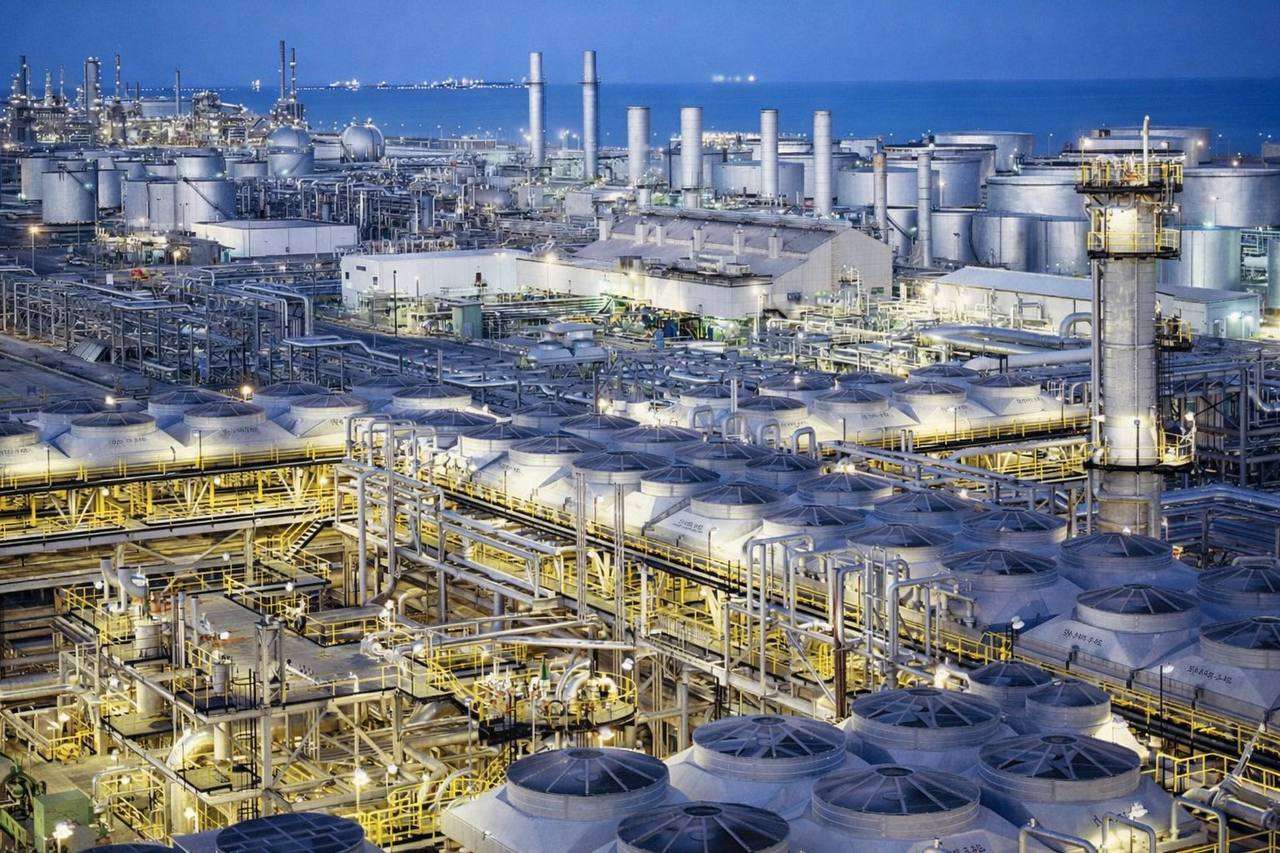
The world’s largest oil company, Saudi Aramco, has reportedly begun reducing production at two of its oil fields as tensions in the Middle East continue to disrupt energy flows through the critical Strait of Hormuz.
According to sources cited by Reuters, the production cuts come as shipping activity through the narrow waterway slows significantly due to rising security risks linked to the growing conflict involving Iran, Israel, and the United States. The move by the Saudi energy giant signals that the escalating crisis is beginning to directly affect oil supply from the Gulf region, which normally exports around one-fifth of the world’s crude.
The company has not officially confirmed which oil fields have been affected or the scale of the production cuts. Aramco declined to comment on the reports. The development comes just hours before the company is scheduled to release its 2025 financial results, a moment when global markets are closely watching how the world’s top oil exporter is managing the growing disruption.
The Strait of Hormuz has long been one of the most critical shipping lanes for global energy markets. A significant portion of crude exports from Gulf countries passes through the narrow channel, linking the oil-rich Persian Gulf to international markets. However, in recent days, tanker traffic through the route has slowed sharply as military tensions, security threats, and soaring insurance costs make shipping operations increasingly risky.
In response to the growing bottleneck, Saudi Arabia has begun redirecting some crude shipments away from the Gulf. The kingdom is reportedly rerouting oil cargoes to the Red Sea port of Yanbu by using its east-west pipeline network. This pipeline system allows crude to be transported from the country’s eastern oil fields to export terminals on the Red Sea, effectively bypassing the Strait of Hormuz.
While the pipeline provides an alternative route, it cannot fully replace the enormous volumes of crude that typically leave Saudi Arabia through the Gulf. As a result, export bottlenecks are beginning to emerge, with storage facilities gradually filling up.
The disruption is not limited to Saudi Arabia. Other major Gulf oil producers are also facing serious export constraints as tanker movements slow across the region.
In Iraq, crude production from southern oil fields has reportedly plunged by about 70 percent since the conflict intensified. Output has dropped to roughly 1.3 million barrels per day from about 4.3 million barrels previously. Southern Iraq accounts for the vast majority of the country’s oil production and exports, making the decline particularly significant for global supply.
Officials at the Basra Oil Company said storage capacity has already reached its limit. With fewer tankers available to transport crude, much of the remaining production is now being diverted to domestic refineries rather than export markets.
Export operations have slowed dramatically. On Sunday, only two tankers were loaded at Iraq’s southern terminals, each carrying approximately two million barrels of crude. Vessel-tracking data showed the ships still positioned in the Persian Gulf, highlighting the uncertainty surrounding safe shipping routes.
Meanwhile, Kuwait has begun taking similar measures. As storage facilities approach full capacity, the country has reportedly started shutting in production at several oil fields due to the lack of available export channels.
The situation underscores how rapidly geopolitical tensions can ripple through the global energy system. With the Strait of Hormuz under increasing strain, oil markets are becoming more volatile, and concerns about supply disruptions continue to push prices higher worldwide.
Discover more from Scoop Hub
Subscribe to get the latest posts sent to your email.