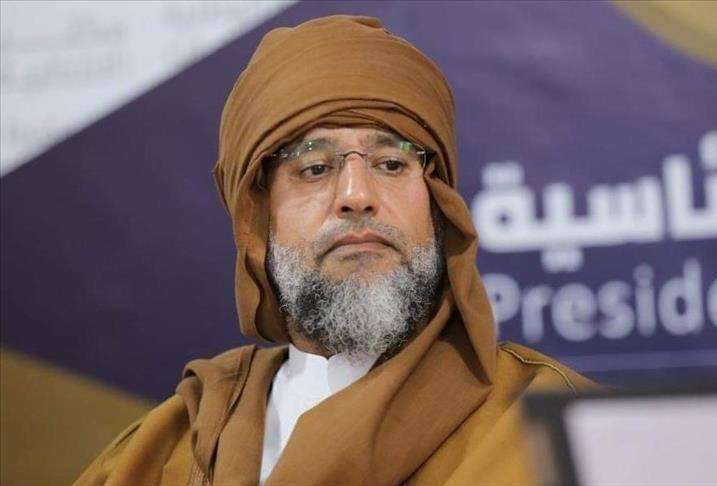
Saif al-Islam Gaddafi, the son of former Libyan leader Muammar Gaddafi and long considered the most prominent surviving figure of the old regime, has reportedly been killed, according to Libyan media sources. The news, which broke on Tuesday, has sent shockwaves across Libya and reignited debate over the country’s unresolved political and security crises.
Reports of his death were announced by the head of his political team, as cited by the Libyan News Agency. However, Libyan authorities have yet to issue an official confirmation, and key details surrounding the incident remain unclear.
Adding to the uncertainty, Saif al-Islam’s sister told Libyan television that her brother died near Libya’s border with Algeria but did not disclose the cause of death. Conflicting accounts in local media have fueled speculation, with no definitive explanation of how or why he died.
At 53, Saif al-Islam Gaddafi was widely regarded as the most influential member of the Gaddafi family after the fall of his father in 2011. Born in 1972, he emerged in the early 2000s as the international face of Libya’s political rebranding, playing a central role in restoring relations with Western governments. He was instrumental in negotiations that led Libya to abandon its nuclear weapons programme and was often portrayed as a reform-minded figure within an otherwise hardline regime.
Although he never held a formal government position, Saif al-Islam wielded enormous influence behind the scenes and was frequently described as his father’s presumed successor. He later rejected that label, insisting that leadership was “not a farm to inherit.”
His fortunes changed dramatically during the 2011 uprising that ended Muammar Gaddafi’s four-decade rule. Saif al-Islam was accused of helping orchestrate the violent suppression of anti-government protests and became a wanted figure internationally. He was captured by a militia in the western city of Zintan and held in detention for nearly six years.
The International Criminal Court sought his prosecution on charges of crimes against humanity related to the crackdown on protesters. In 2015, a Libyan court sentenced him to death in absentia, further complicating his political future and legal status.
Despite his past, Saif al-Islam re-emerged on Libya’s political scene in 2021, announcing plans to run for president in elections that were ultimately postponed indefinitely. His attempted comeback underscored the enduring divisions within Libya, where figures linked to the former regime still command loyalty in parts of the country.
Discover more from Scoop Hub
Subscribe to get the latest posts sent to your email.