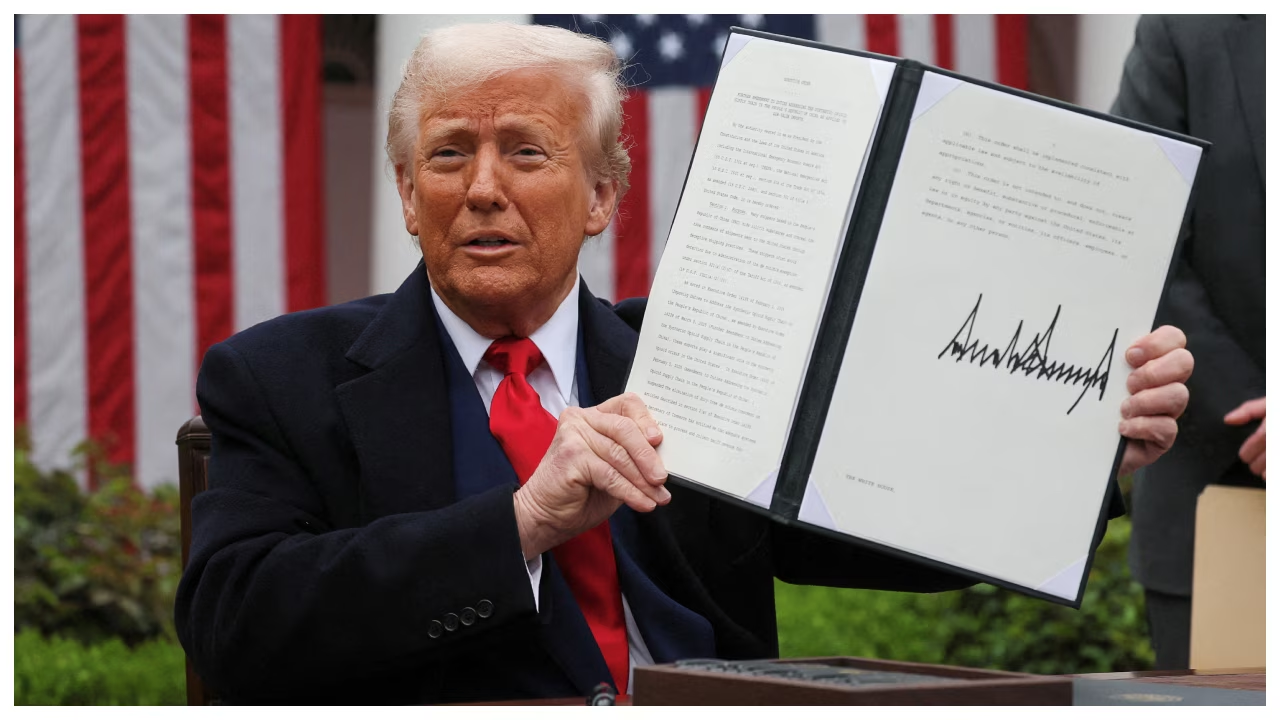
A storm is brewing in Africa’s trade relations with the United States after President Donald Trump’s administration imposed steep tariffs on imports from several African nations. Among the hardest hit is the small kingdom of Lesotho, which now faces a 50% tariff— the highest imposed on any single country.
Other nations, including Madagascar (47%), Mauritius (40%), Botswana (37%), Equatorial Guinea (30%), and South Africa (30%), are also reeling from the shock of Trump’s “reciprocal tariffs.”
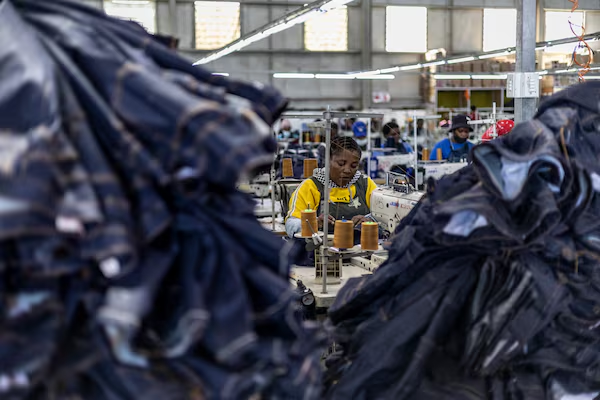
For Lesotho, where the economy heavily depends on textile exports, the sudden tariff hike is an existential threat. Trade Minister Mokhethi Shelile urgently announced that a government delegation would travel to the U.S. to negotiate a way forward.

“We need to urgently travel to the U.S. to engage with its executives and plead our case,” Shelile told reporters in Maseru, warning that factory closures and massive job losses could follow if no solution is found.
READ ALSO: Court Orders Trump to Pay £625,000 in Failed Lawsuit Against Ex-MI6 Agent
Lesotho, a landlocked nation of 2.3 million people, generates a significant portion of its $2 billion annual GDP from textile exports—primarily jeans and other clothing items destined for the U.S. The garment industry employs around 12,000 workers across 11 factories, many of which now face uncertainty.
Despite the crisis, Shelile has urged businesses to keep their doors open while the government explores alternatives. “We are working on solutions, including diversifying our trade partnerships,” he added.

The U.S. administration justified the tariffs by accusing Lesotho of maintaining high import duties on American goods, branding it as one of the “worst offenders.” This move has sparked growing concerns over the future of the African Growth and Opportunity Act (AGOA), which has provided duty-free access for certain African exports to the U.S. for years.
READ ALSO: Macron Urges Freeze on U.S. Investments Amid Trump’s Tariff Offensive
Lesotho is not alone in its struggle. Madagascar’s government has already reached out to the U.S. embassy, seeking clarity on the tariffs and possible adjustments. “We will mobilize all diplomatic and commercial levers to obtain a review of these measures,” the government stated.
South Africa, the continent’s most developed economy and the second-largest U.S. trading partner in Africa, also faces severe consequences. President Cyril Ramaphosa criticized the tariffs as “a barrier to trade and shared prosperity” and called for “a new bilateral and mutually beneficial trade agreement.”

The South African automotive industry, which accounts for 22% of the country’s exports to the U.S., will be particularly hard-hit. In addition to the new 30% tariffs, Washington also imposed a separate 25% tariff on foreign-made cars—an economic blow that will ripple through one of South Africa’s most vital sectors.
Kenya, however, has emerged in a slightly better position, facing only the baseline 10% tariff. Viewing this as a potential advantage, Nairobi sees an opportunity to gain a competitive edge over other African textile-exporting nations that are now burdened with much higher rates. “These tariffs present both challenges and opportunities,” a Kenyan trade official noted.
With AGOA set for review in September, many are questioning its viability in the wake of these new tariffs. South African economist Dawie Roodt didn’t mince words: “This must be the end of AGOA. How can you have tariffs and AGOA? It doesn’t make sense.”

However, senior Kenyan foreign affairs official Korir Sing’Oei pointed out that AGOA is a Congressional framework and argued that the new tariffs should not legally apply until the deal is either repealed or expires.
Lesotho’s King Letsie III had already warned last month that an AGOA termination could put as many as 40,000 jobs at risk. Meanwhile, South African Minister of Trade Parks Tau stressed the need for African nations to turn inward and bolster regional trade.
“We now have to look amongst ourselves within the Southern African Development Community and within Africa as a whole to see how we’re going to respond,” he said.
In response to the tariff hikes, economists and trade experts are urging African countries to rethink their trade strategies.
South Africa-based economics professor Raymond Parsons suggested Pretoria should use this crisis as an opportunity to negotiate new trade adjustments. “We must see what trade adjustments can be made to win concessions and ameliorate the situation,” he advised.
But finding new trade partners won’t be easy. “Everybody is going to look for new trading partners,” said Roodt. “Of course, we must try. But it’s going to be tough.”
As African nations scramble to mitigate the impact of the U.S. tariffs, the road ahead is uncertain. Will diplomatic pressure convince Washington to reconsider? Can Africa pivot to regional trade and new markets in Asia and Europe?
Stay tuned to Scoophub for updates on this developing story and other global trade dynamics.
AFP
Discover more from Scoop Hub
Subscribe to get the latest posts sent to your email.