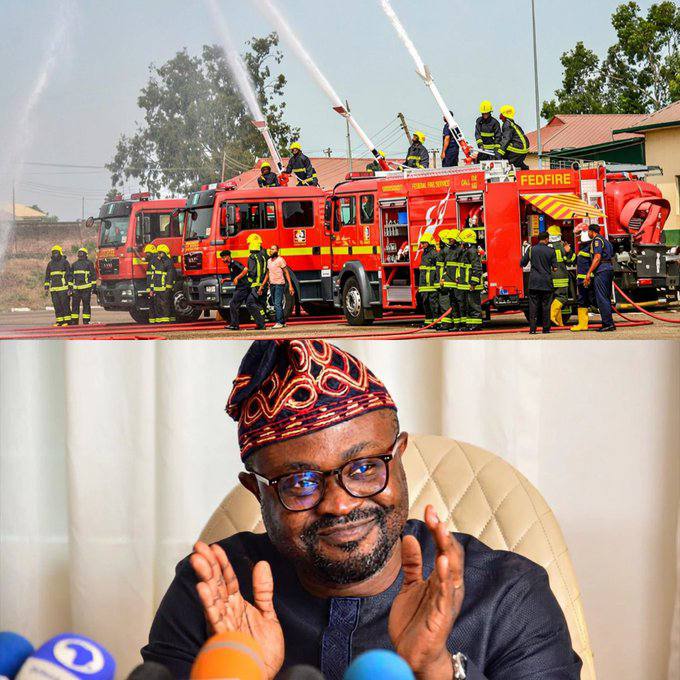
The Federal Government is making plans to transform Nigeria’s emergency response system by replacing the existing Federal Fire Service with a more comprehensive Federal Fire and Rescue Service.
The proposed reform will be backed by a new Federal Fire and Rescue Service Act, which is expected to expand the agency’s responsibilities beyond fighting fires to handling medical emergencies, accident rescues, disaster response and other life-threatening situations.
The Minister of Interior, Olubunmi Tunji-Ojo, announced the development on Monday, November 2, 2026, during the 2026 National Fire Safety Week in Abuja.
According to the minister, the proposed legislation will repeal the existing Fire Service Act of 1963, which he described as outdated and inadequate for the demands of modern emergency management.
He explained that the current law limits the Federal Fire Service’s ability to respond to emergencies outside its traditional firefighting responsibilities. The new legislation is therefore intended to provide the agency with the legal authority needed to take on a wider rescue and emergency response role.
Under the proposed framework, the Federal Fire and Rescue Service will operate as a broader emergency response agency, capable of intervening in different types of emergencies.
Its expanded responsibilities are expected to include emergency medical assistance and first aid, search and rescue operations during road accidents and natural disasters, hazardous materials management, disaster response and fire safety inspections. This means that the agency could play a more active role when people are trapped in collapsed buildings, injured in road accidents or exposed to dangerous substances such as toxic gases.
The minister also stressed the importance of improving fire prevention through regular safety inspections and stronger enforcement of building safety regulations.
Beyond restructuring the agency, the Federal Government also wants Nigerians to become more prepared to respond to emergencies.
Tunji-Ojo called for basic rescue techniques and lifesaving skills to be introduced into school curricula across the country. He noted that teaching people how to provide basic first aid and perform resuscitation could help save lives before professional emergency responders arrive.
The proposal is aimed at building a stronger culture of safety, where individuals and communities understand how to respond when emergencies occur.
As part of efforts to strengthen the country’s emergency response capacity, the Federal Government is also developing a National Fire Academy in Kwali, Abuja.
The facility, which occupies approximately 23 hectares, is expected to provide specialised training for firefighters and rescue personnel. It will feature training classrooms, a library, a health centre and accommodation facilities capable of hosting more than 3,000 trainees.
The government has set December 2026 as the target for completing the academy. The minister also disclosed that the number of Federal Fire Service commands had increased from six to 18, while the agency’s leadership structure had been expanded to improve administration and operations.
Discover more from Scoop Hub
Subscribe to get the latest posts sent to your email.