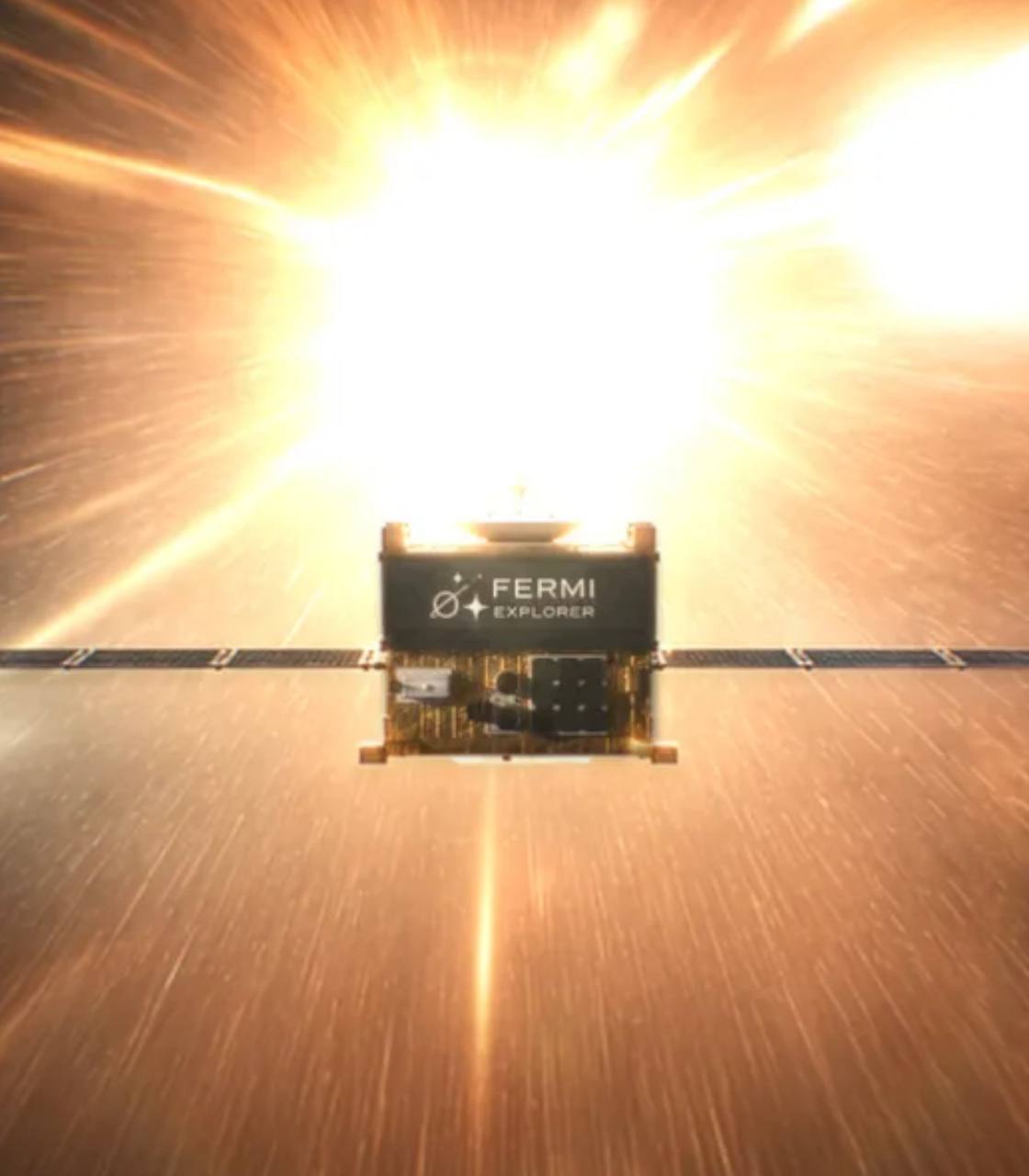
Humanity could be preparing to take a historic step beyond our solar system, with the proposed Fermi Explorer mission aiming to send a spacecraft toward Alpha Centauri, the nearest star system to Earth, on a journey expected to last around 80,000 years.
The ambitious project is being developed by the Fermi Explorer Mission, a nonprofit organization that hopes to launch the spacecraft by the end of 2029. If successful, the mission would mark a major milestone in humanity’s efforts to explore beyond the neighbourhood of our Sun.
Unlike missions designed to reach planets or explore distant regions of our solar system, the Fermi Explorer is being planned with another star system as its destination.
Alpha Centauri is approximately 4.4 light-years from Earth and contains a pair of Sun-like stars, Alpha Centauri A and B, alongside the nearby red dwarf Proxima Centauri. Although this distance is relatively small on the scale of the Milky Way, it presents an enormous challenge for spacecraft using technologies available today.
The Fermi Explorer team aims to send its spacecraft at least 99 per cent of the way to Alpha Centauri within approximately 80,000 years. The mission’s precise targeting plan accounts for the fact that stars move through space over time, meaning the spacecraft must be directed toward where the system will be in the distant future.
The project is not designed to deliver quick scientific results. Instead, its goal is to demonstrate that humanity can begin attempting interstellar journeys using existing and proven technologies.
Rather than relying on a futuristic propulsion system that has yet to be demonstrated, the project proposes using electric propulsion technology, including ion thrusters, alongside a carefully planned flight path.
According to the mission team, the spacecraft could use repeated manoeuvres near the Sun to increase its eventual departure speed. This approach is intended to make the mission possible without requiring an entirely new generation of engines.
The proposed spacecraft would be relatively small, with a target launch mass of approximately 100 to 110 kilograms under one mission design. The organization is aiming to keep the total cost of designing, building, launching and operating the mission below $15 million. These figures describe the project’s current targets and proposed design, rather than a completed spacecraft or a guaranteed outcome.
The mission could carry a payload weighing at least one kilogram, potentially including scientific experiments, artistic contributions and messages intended for future generations.
The organization has also proposed carrying a copy of the Golden Record, inspired by the famous records launched aboard NASA’s Voyager spacecraft in 1977. Another planned initiative would invite children around the world to contribute short messages in their own languages. If included, these messages would become a small record of humanity carried toward another star system long after today’s societies have changed.
However, the journey’s extraordinary duration presents a major limitation: most experiments would not return results to Earth during the lifetimes of anyone involved in the mission’s launch.
The Fermi Explorer is intended to do more than send a spacecraft into deep space. Its supporters want to make interstellar exploration a practical engineering goal rather than an idea confined to science fiction. The mission also draws attention to the Fermi paradox, a longstanding question about why humanity has not found convincing evidence of extraterrestrial civilizations despite the vast number of stars in the universe.
By attempting to send a spacecraft toward another star, the project hopes to demonstrate that interstellar exploration can be attempted without waiting for revolutionary advances in propulsion technology. Even if faster spacecraft are developed in the future, the first attempt could hold historical significance as an early step toward exploring other star systems.
As of October 2026, the Fermi Explorer remains a planned mission. Its team is targeting a launch before the end of 2029, and the spacecraft’s final design, construction and launch still need to progress.
The project also faces the usual uncertainties associated with space missions, including engineering challenges, funding and launch arrangements. Its proposed 80,000-year journey is a target, not a guaranteed arrival date. If the mission succeeds, the spacecraft could begin a voyage that will continue long after every person involved in its development has passed away.
Discover more from Scoop Hub
Subscribe to get the latest posts sent to your email.