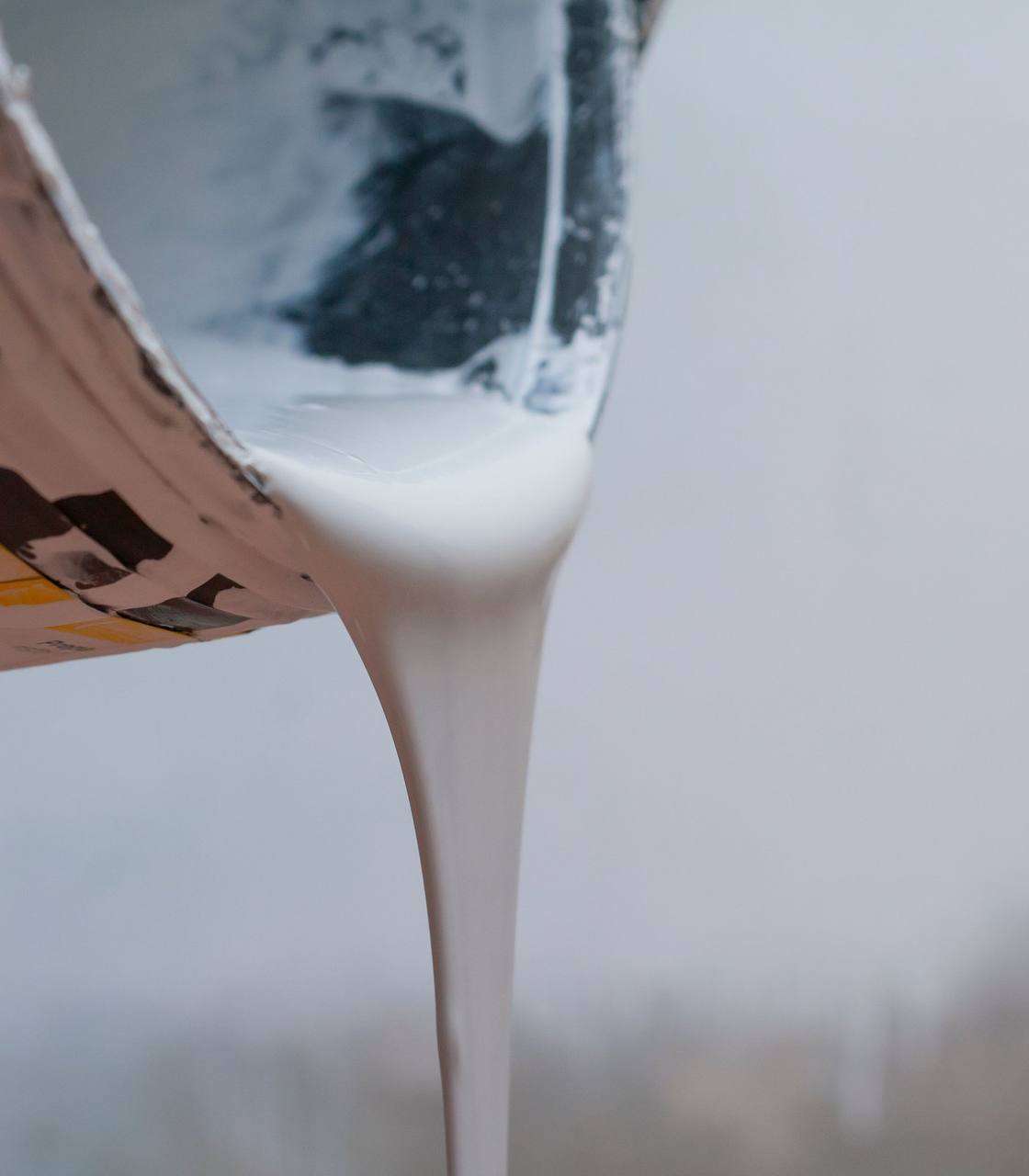
China has begun mass production of a new cooling coating that can reportedly reduce the temperature of painted surfaces by as much as 25°C (77°F), offering a potential new way to reduce heat without using electricity or conventional air-conditioning systems.
The coating, developed in China, uses a technology known as passive radiative cooling. Instead of consuming electricity to remove heat, the material is designed to reflect incoming sunlight while simultaneously releasing thermal energy as infrared radiation.
According to reporting by the South China Morning Post, the coating underwent six months of real-world testing at a petrochemical facility in Hainan. Tests reportedly showed that surfaces treated with the coating could be significantly cooler than untreated surfaces during hot weather.
Ordinary white paint can reflect a portion of sunlight, helping prevent surfaces from becoming excessively hot. Radiative cooling coatings take the idea further. Their surfaces are engineered to reflect a very high percentage of incoming solar radiation while emitting heat in infrared wavelengths that can pass through the atmosphere and escape toward space.
Because the process does not require electricity, refrigerants or moving parts, radiative cooling coatings are being investigated as a way to reduce cooling demands in buildings and industrial facilities.
Recent research has demonstrated that different radiative-cooling paints can produce substantial reductions in roof and surface temperatures under real-world conditions. One 2026 study, for example, recorded an average roof-surface temperature reduction of 15.5°C on a factory building in a tropical climate, although the reduction in indoor air temperature was much smaller.
What makes China’s latest development notable is its move beyond laboratory testing. The coating has reportedly been tested at an operating petrochemical facility and has now moved into mass production, according to China’s state-run Science and Technology Daily as reported by the South China Morning Post.
Potential applications include buildings, industrial facilities and other infrastructure exposed to intense sunlight. The technology could be particularly useful in hot regions where reducing the amount of heat absorbed by roofs and walls could lower the workload on air-conditioning systems.
However, the 77°F figure should not be interpreted as meaning that indoor room temperatures will automatically fall by 77°F. The reported reduction refers to the temperature of the coated surface under specific testing conditions. Research on actual buildings has generally found much smaller reductions in indoor air temperature, depending on the climate, building design, insulation and other factors.
China’s development is part of a wider global push to commercialize passive radiative cooling materials.
Researchers are experimenting with different combinations of reflective particles and infrared-emitting materials to create coatings that can remain cool even under direct sunlight. A September 2026 study reported another water-based radiative-cooling paint that achieved a 6°C temperature advantage over commercial white paint in extreme hot weather.
If these materials can maintain their performance over years of sunlight, rain, dust and weathering, they could become another tool for reducing energy consumption in hot climates. For now, China’s latest coating represents an interesting step in that direction: a paint designed not just to cover a surface, but to actively help it stay cool without consuming electricity.
Discover more from Scoop Hub
Subscribe to get the latest posts sent to your email.