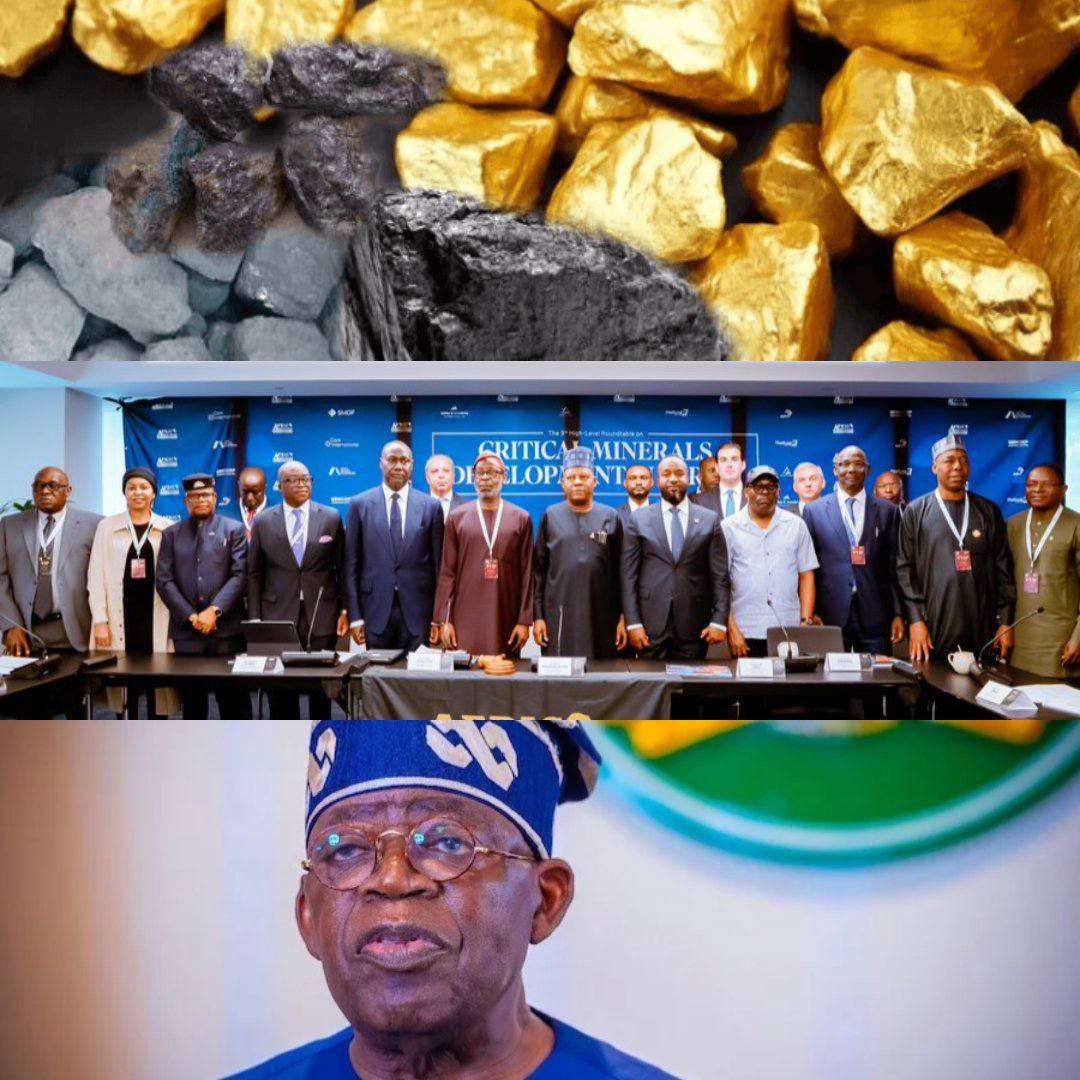
President Bola Ahmed Tinubu has called on African countries to unite in protecting the continent’s vast mineral resources and move away from exporting raw materials without significant processing or value addition.
Tinubu made the call in New York during the Third Africa Minerals Strategy Group (AMSG) High-Level Roundtable on Critical Minerals Development, held on the sidelines of the 81st Session of the United Nations General Assembly.
The President was represented at the meeting by Vice President Kashim Shettima. The roundtable was convened alongside Minister of Solid Minerals Development and AMSG Chairman, Dele Alake, under the theme, “From Resources to Wealth: Continental Cooperation for Mineral Value Addition, Data Sovereignty, Innovative Financing and Critical Minerals Security.”
Tinubu argued that Africa must transition from being a supplier of raw minerals to developing industries that process resources locally and retain more of the resulting economic value on the continent. He pointed to the growing importance of minerals such as lithium, cobalt, copper and rare earth elements to industries including clean energy, artificial intelligence and advanced manufacturing.
According to the President, Africa’s response should include processing, refining, battery production, component manufacturing, technology development and skills development. He said mineral-rich communities should benefit through jobs, infrastructure, technology transfer and greater participation in businesses built around the resources extracted from their areas.
The Nigerian leader warned that African countries could weaken their bargaining power if they compete with one another by offering lower royalties, weaker local-content requirements and excessive concessions to investors. He argued that greater cooperation could give African countries larger markets, more integrated industries, stronger financing options and greater negotiating power in the global minerals market.
Tinubu also called for African countries to speak with one voice where their interests align, while emphasising that international partnerships should be based on mutual benefit, sovereign equality and respect for national priorities.
Tinubu said Nigeria was pursuing policies designed to increase local value addition in the mining sector. Among the measures he highlighted were requirements for local value addition in new mining licences, improved geological data, greater investor access, formalisation of artisanal mining through cooperatives, efforts to combat illegal mining and stronger regulatory oversight.
He also said revenue from Nigeria’s mining sector had increased from about ₦6 billion in 2023 to more than ₦38 billion in 2024, and to between ₦68.1 billion and ₦70 billion in 2025.
The President cited foreign investment commitments and lithium-processing developments in Nasarawa State as examples of the opportunities available when mineral resources are processed closer to their source.
The meeting also adopted the Continental Integration and Economic Assurance Declaration (CIEAD), which is intended to support cooperation around Africa’s critical and solid-mineral value chains. Tinubu said the declaration should go beyond a symbolic agreement and be supported by clear timelines, financing arrangements, implementation mechanisms and public accountability.
The broader objective is to develop integrated mineral corridors and value chains that allow African countries to capture more of the economic benefits generated by their natural resources.
Discover more from Scoop Hub
Subscribe to get the latest posts sent to your email.