Pakistan has reportedly requested a $10 billion Exchange Stabilization Facility from the United States as the country continues efforts to strengthen its economy, stabilize its currency, and reduce pressure on its foreign exchange reserves.
According to reports, Islamabad submitted the request to U.S. Treasury Secretary Scott Bessent, seeking a Bilateral Exchange Stabilization Support Facility with a repayment period of up to five years. If approved, the financial arrangement could provide significant support to Pakistan as it continues to recover from one of the most severe economic crises in its recent history.
The request comes while Pakistan remains under a $7 billion International Monetary Fund (IMF) Extended Fund Facility, which has required the government to implement difficult economic reforms, including higher taxes, tighter public spending, and broader structural adjustments aimed at restoring fiscal stability.
Although the IMF programme has helped the country avoid an immediate financial collapse, Pakistan continues to face challenges in rebuilding its foreign exchange reserves and reducing its dependence on external financial assistance.
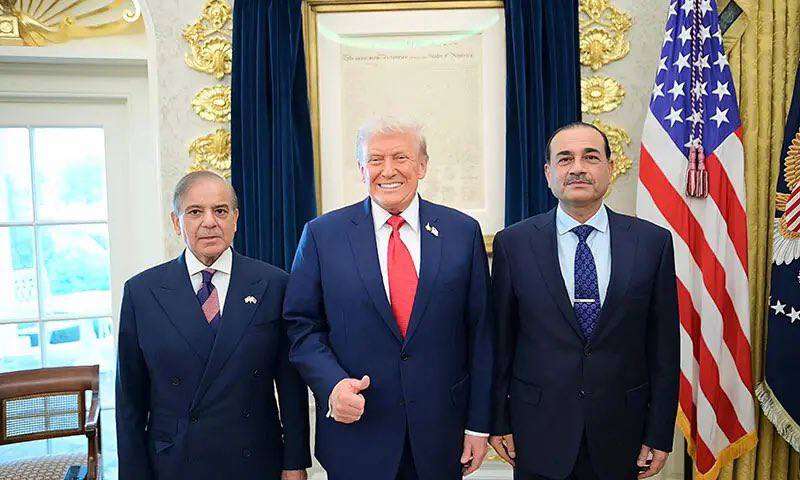
The reported appeal to Washington also follows Pakistan’s recent diplomatic engagements during tensions between the United States and Iran, a role that analysts believe has elevated Islamabad’s international profile and may have strengthened its efforts to secure additional economic support from key global partners.
If the proposed facility receives U.S. approval, it is expected to boost Pakistan’s foreign exchange reserves, ease pressure on the Pakistani rupee, improve investor confidence, and reduce the country’s reliance on multilateral financing institutions.
Neither the United States government nor the Government of Pakistan had officially confirmed or commented on the reported request at the time of publication.
However, Pakistan’s Finance Minister, Muhammad Aurangzeb, confirmed that he discussed the country’s economic vulnerabilities and the impact of regional geopolitical developments during a meeting this week with U.S. Treasury Secretary Scott Bessent.
In a statement, Pakistan’s Ministry of Foreign Affairs said Aurangzeb sought stronger U.S. support to improve Pakistan’s access to international capital markets, increase foreign exchange reserves, and strengthen the country’s sovereign credit ratings. The ministry added that both countries reaffirmed their commitment to expanding bilateral economic cooperation, encouraging greater U.S. investment, and advancing strategic development projects.
Pakistan’s economy has remained under considerable pressure in recent years. In 2023, the country narrowly avoided a sovereign debt default after securing a $3 billion IMF standby arrangement. That programme was later replaced with the current $7 billion Extended Fund Facility, alongside an additional $1.3 billion financing package designed to improve the country’s resilience to climate-related disasters and other external shocks.
Despite these financial interventions, Pakistan’s external reserves remain heavily dependent on IMF disbursements, bilateral financial support, and loan rollovers from major partners, including China and Saudi Arabia. This dependence continues to expose the country’s economy to risks whenever external financing is delayed.
Earlier this year, Pakistan’s central bank projected that its foreign exchange reserves could rise to approximately $20 billion by the end of 2026, potentially returning to levels last seen in 2021 if ongoing economic reforms and external financial support continue as planned.
Exchange Stabilization Facilities are relatively rare financial instruments administered through the U.S. Treasury’s Exchange Stabilization Fund. Unlike conventional IMF loans, these facilities are specifically designed to support a country’s currency and foreign exchange reserves through mechanisms such as dollar funding, currency swaps, or financial guarantees.
Such arrangements are not commonly granted. One of the most notable recent examples involved Argentina in 2025, while Uruguay previously received a similar support package in 2002. Mexico has also maintained a long-standing currency swap arrangement with the United States for decades.
Should Washington approve Pakistan’s request, the facility would represent a significant boost for the country’s economic recovery efforts while further strengthening financial cooperation between both nations during a period of continued global economic uncertainty.
Discover more from Scoop Hub
Subscribe to get the latest posts sent to your email.