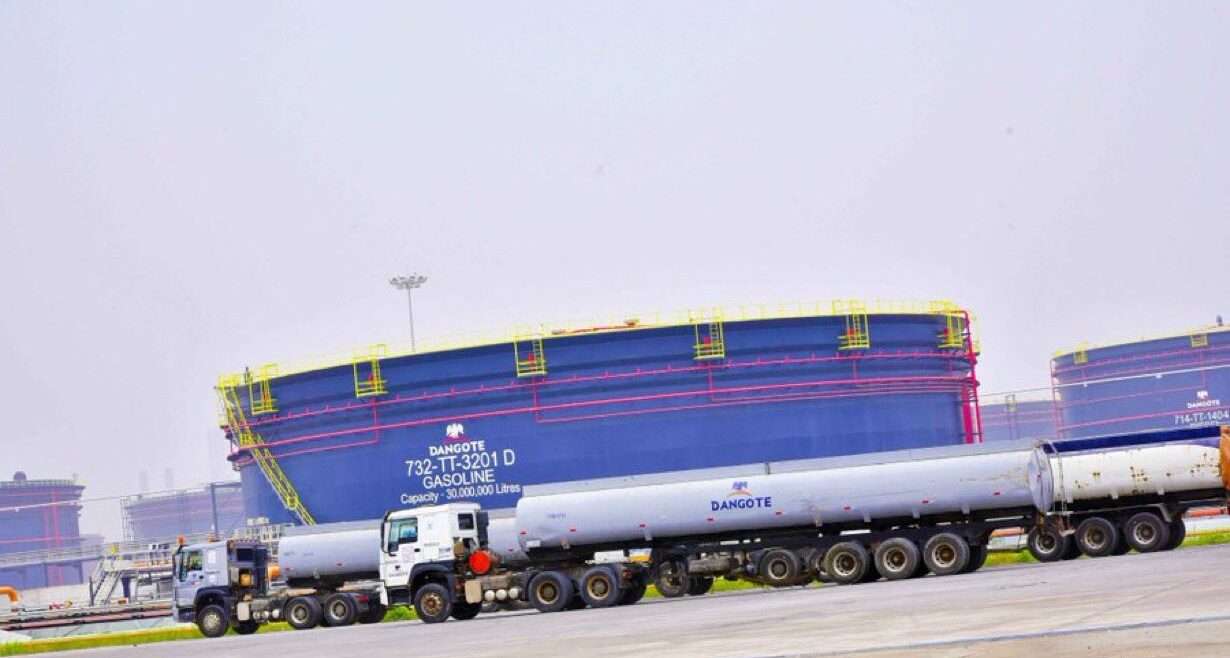
Dangote Petroleum Refinery & Petrochemicals recorded a major milestone in April 2026 after exporting an estimated 1.66 billion litres of refined petroleum products, reinforcing Nigeria’s growing role as an emerging fuel export hub.
Fresh figures released by the Nigerian Midstream and Downstream Petroleum Regulatory Authority (NMDPRA) showed that the refinery shipped massive volumes of petrol, diesel, and aviation fuel during the month under review.
According to the regulator’s April 2026 fact sheet, the refinery exported approximately 513 million litres of Premium Motor Spirit (petrol), 534 million litres of Automotive Gas Oil (diesel), and 615 million litres of aviation fuel.
The combined export volume translates to an average of about 55.4 million litres of petroleum products exported daily. This marks the first time the refinery has recorded exports at such a significant scale, particularly in jet fuel and diesel, underscoring the growing importance of the 650,000-barrel-per-day facility located in Lekki, Lagos.
As Nigeria’s largest and currently most functional refinery, Dangote has increasingly become central to both domestic fuel supply and international petroleum trade. The surge in exports comes at a time of heightened geopolitical tensions in the Middle East, particularly involving the United States and Iran.
Growing concerns over the security of the Strait of Hormuz—one of the world’s most critical oil shipping routes—have triggered fears of disruptions to global fuel supply chains.
Industry analysts say this uncertainty has boosted demand for refined petroleum products from alternative suppliers, including Nigeria, as markets in Europe, Africa, and parts of Asia seek more secure energy sources.
The NMDPRA report also revealed that local refineries operated at an average capacity utilisation of 99.12 percent in April, with Dangote accounting for the overwhelming majority of output. According to the regulator, the refinery achieved 100 percent operational capacity for most days during the month.
Crude oil supply to domestic refineries also rose sharply, with 18.37 million barrels delivered in April compared to 13.11 million barrels recorded in March. Despite growing export activity, the refinery continued to meet substantial domestic supply obligations. Average daily petrol production stood at 53.6 million litres, with 40.7 million litres supplied locally and 17.1 million litres exported daily.
Diesel production averaged 23.6 million litres per day, while exports accounted for 17.8 million litres daily—more than double the 8 million litres supplied to the domestic market.
Aviation fuel exports were even stronger, reaching 20.5 million litres daily compared to domestic supply of 2.6 million litres. The strong jet fuel export numbers come shortly after concerns from Nigerian airline operators over rising aviation fuel costs, which had threatened flight operations in the country.
Industry observers say Nigeria may now be transitioning into a net exporter of petrol for the first time in decades, driven largely by Dangote refinery’s rising output.
The refinery had already exported approximately 434 million litres of petrol in March after production levels exceeded domestic demand.
The April figures further highlight Nigeria’s gradual shift from long-term dependence on imported refined petroleum products to a more strategic position as an exporter within Africa and beyond.
However, despite increased local refining capacity, fuel prices in Nigeria remained elevated. The NMDPRA attributed this partly to high global crude prices, which averaged $120.55 per barrel in April, while gasoline prices stood at $1,074.97 per metric tonne.
Domestic petrol consumption averaged 51.1 million litres daily during the month, slightly above the regulator’s benchmark of 50 million litres. Diesel consumption was recorded at 17.3 million litres daily, while aviation fuel demand averaged 2.5 million litres per day.
With global fuel markets facing increasing volatility, Dangote refinery is expected to play an even more critical role in Nigeria’s energy security, foreign exchange generation, and long-term economic diversification.
Discover more from Scoop Hub
Subscribe to get the latest posts sent to your email.